🔐 Private Research Portal

Epstein Research Portal

Access the full investigative corpus, ranked smoking guns, OCR-linked imagery, and intel briefs.

Front-of-house site Sign In / Sign Up
Same BENED DNA · Investigative Skin
← Back to Entities

📁 Congress Dossier

11 documents connected to this entity

Page 1 of 1 (11 items)
#1 Strength: 4.0/10
Document preview

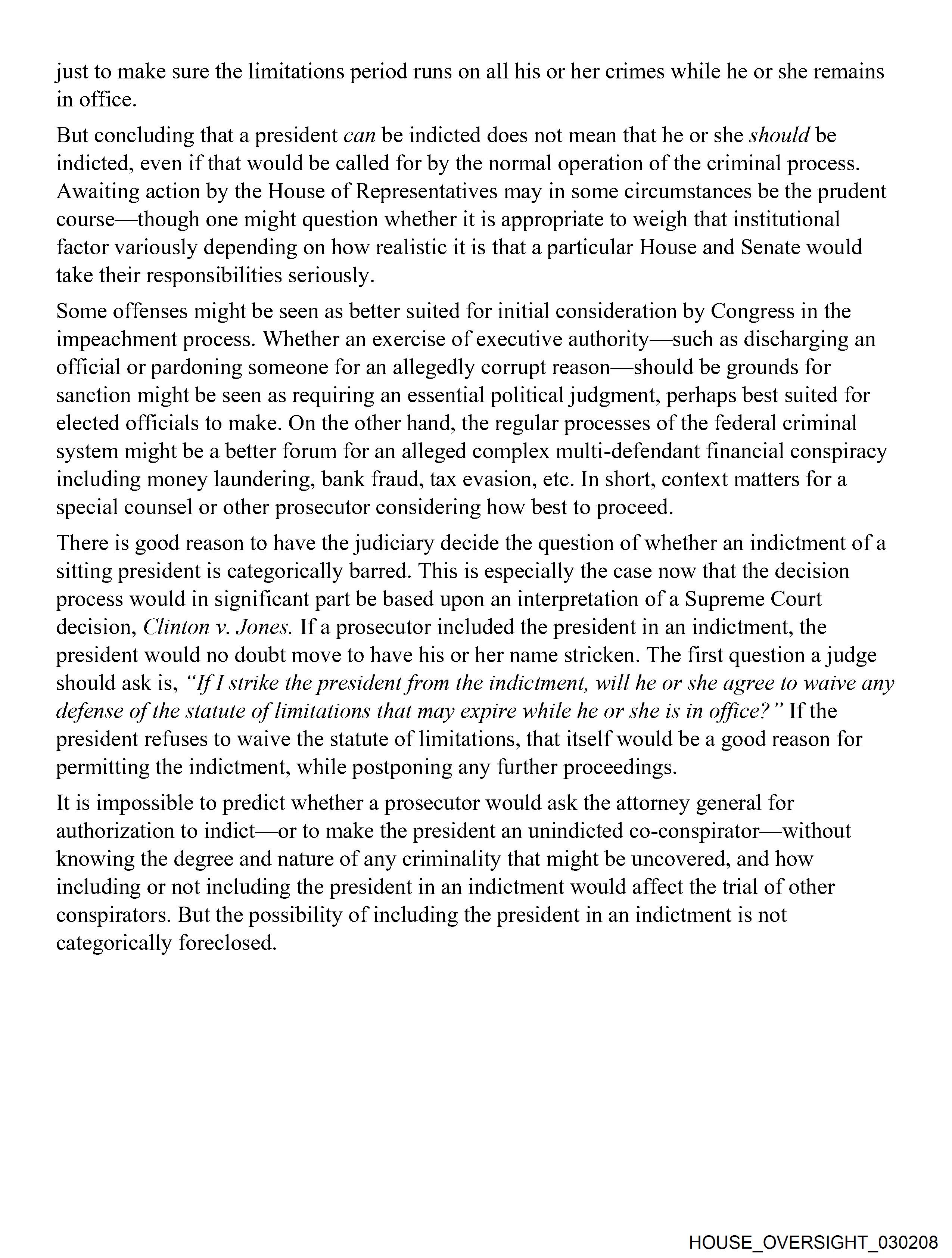
HOUSE_OVERSIGHT_014045

This document outlines the Crime Victims' Rights Act (CVRA) and emphasizes the importance of victim participation in the criminal justice process. While it does not directly implicate individuals or reveal new evidence of misconduct, it highlights systemic issues that may have allowed Epstein's activities to persist without adequate victim support or legal recourse.

🔑 Key Evidence:
  • The CVRA extends broad rights to crime victims, including the right to be treated with fairness and respect for their dignity and privacy.
  • Congress sought to change the system’s obliviousness to crime victims that often left them victimized yet again.
  • The Act provides that rights can be asserted by the crime victim or the crime victim’s lawful representative, indicating a legal framework for victims to engage in the justice process.
👥 Connected Entities:
U.S. Department of Justice Congress Victims of Epstein's crimes
From: Bates: HOUSE_OVERSIGHT_014045
No comments yet.
#2 Strength: 5.0/10
Document preview

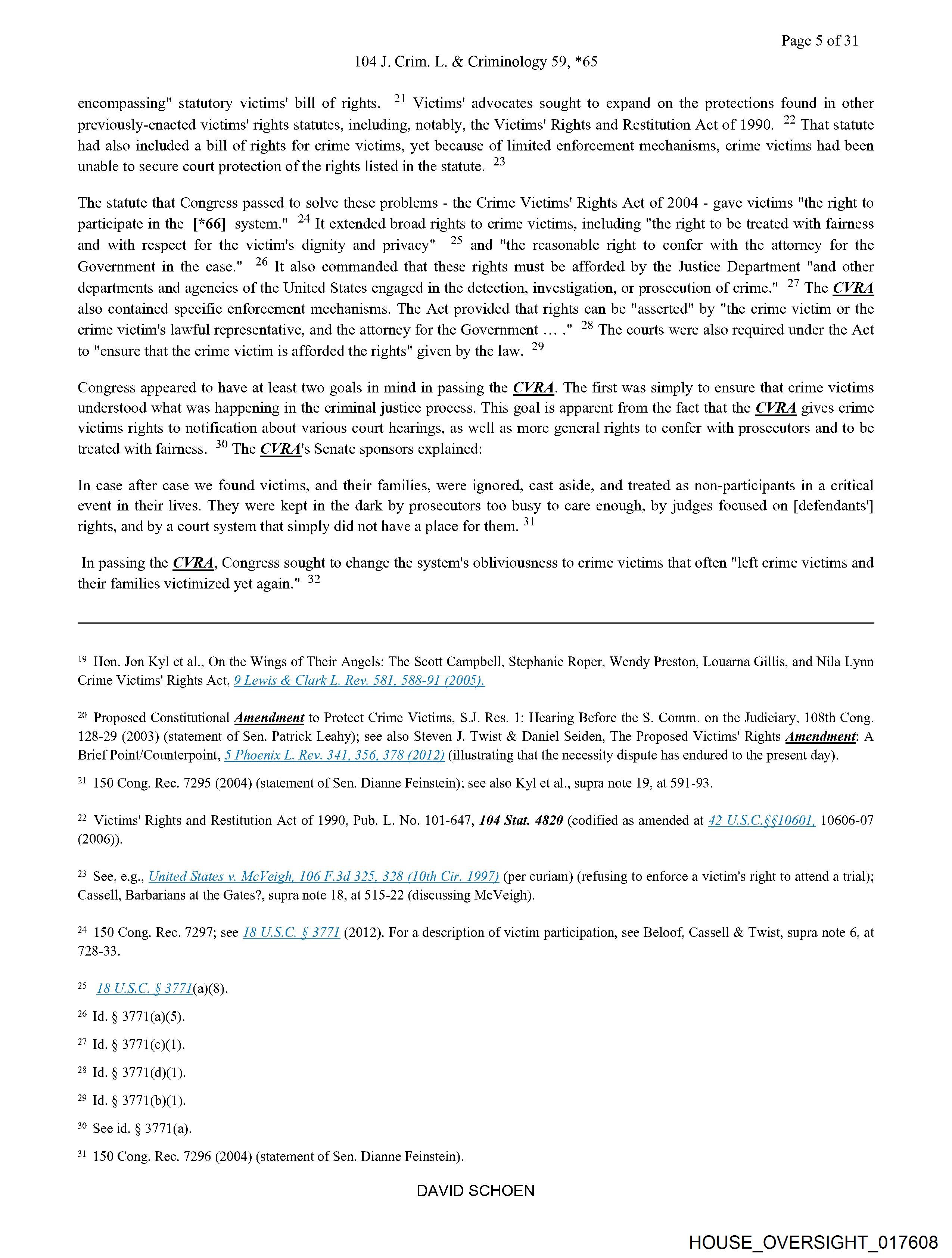
HOUSE_OVERSIGHT_017608

This document outlines the legislative framework established by the Crime Victims’ Rights Act of 2004, which is significant in the context of the Epstein case as it highlights the rights of victims within the criminal justice system. While it does not provide direct evidence of misconduct, it underscores the systemic failures that may have allowed Epstein's activities to persist unchecked, particularly regarding victim treatment and rights enforcement.

🔑 Key Evidence:
  • The CVRA gives victims 'the right to participate in the system.'
  • 'the right to be treated with fairness and with respect for the victim's dignity and privacy.'
  • 'the courts were also required under the Act to ensure that the crime victim is afforded the rights given by the law.'
👥 Connected Entities:
U.S. Congress Justice Department Victims' advocates
From: Bates: HOUSE_OVERSIGHT_017608
No comments yet.
#3 Strength: 5.0/10
Document preview

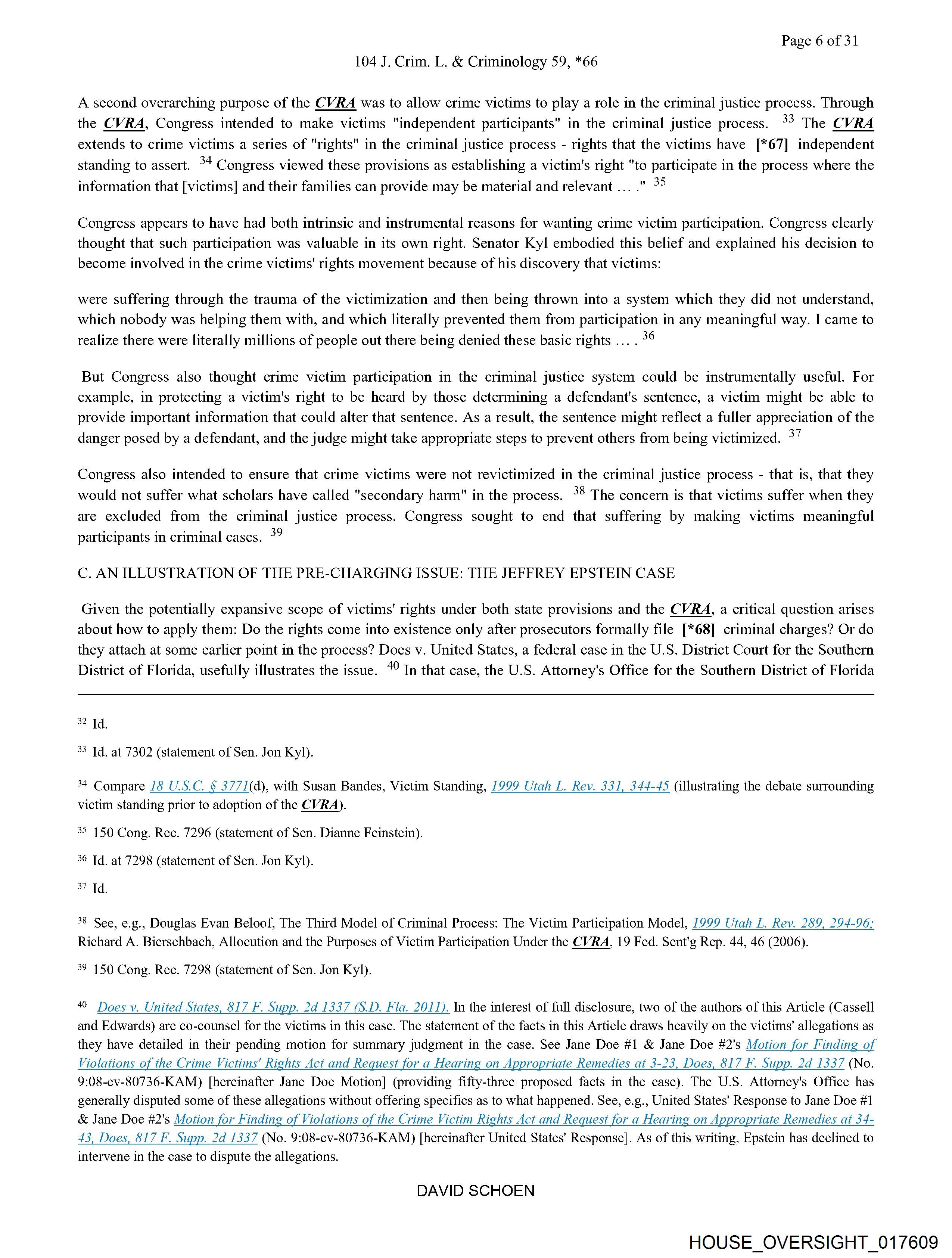
HOUSE_OVERSIGHT_017609

This document highlights the rights of crime victims under the Crime Victims' Rights Act (CVRA) and discusses the importance of victim participation in the criminal justice process. While it does not provide direct evidence of misconduct, it underscores the systemic issues that may have allowed Jeffrey Epstein's alleged crimes to persist without adequate victim support or legal recourse.

🔑 Key Evidence:
  • Congress intended to make victims 'independent participants' in the criminal justice process.
  • Senator Kyl explained his involvement in the crime victims’ rights movement due to the suffering of victims being denied basic rights.
  • The document raises the question of when victims' rights come into existence, particularly in the context of the Epstein case.
👥 Connected Entities:
Senator Jon Kyl U.S. Attorney's Office for the Southern District of Florida Congress
From: Bates: HOUSE_OVERSIGHT_017609
No comments yet.
#4 Strength: 5.0/10
Document preview

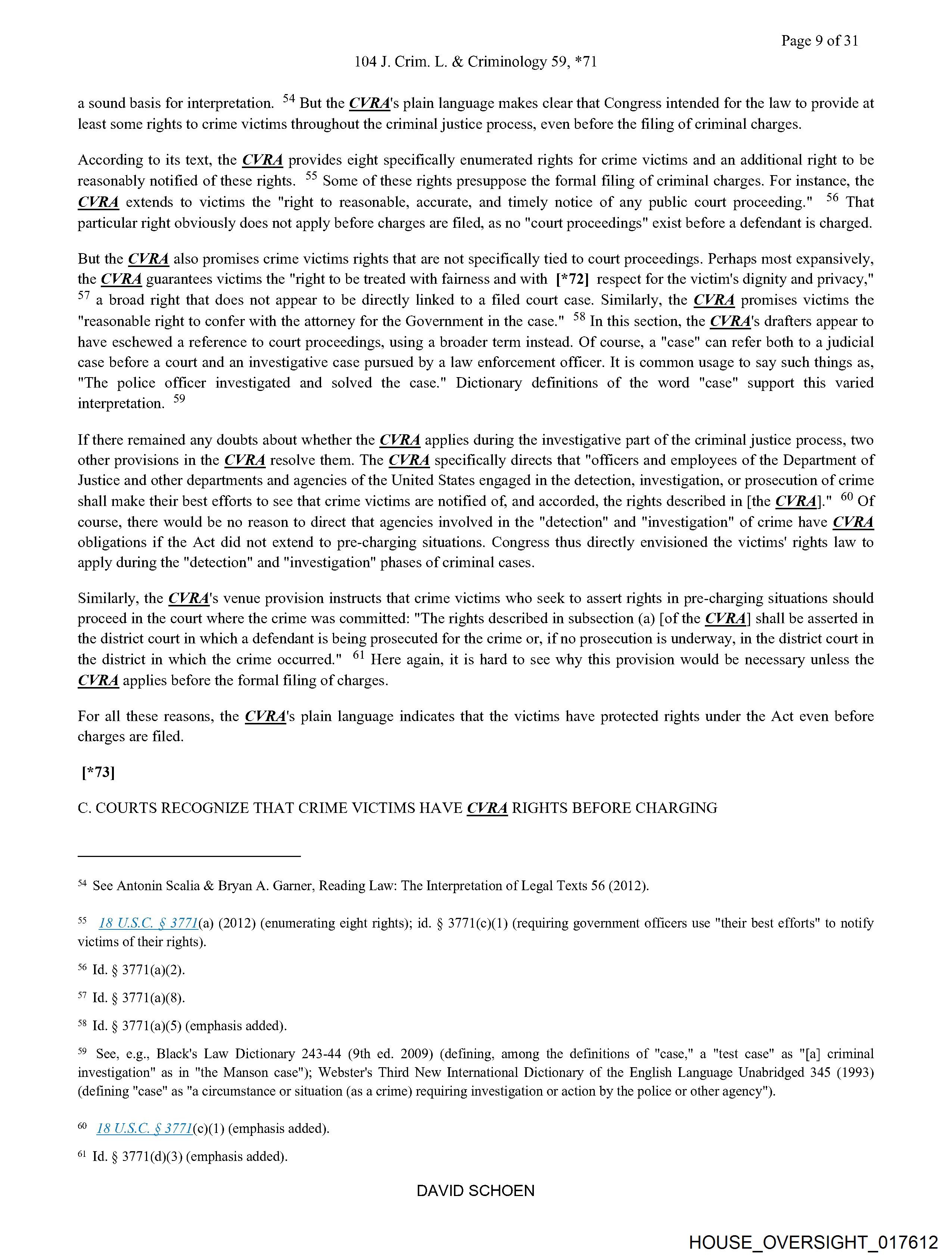
HOUSE_OVERSIGHT_017612

This document outlines the rights of crime victims under the Crime Victims' Rights Act (CVRA), emphasizing that these rights extend to the investigative phase of criminal cases. While it does not provide direct evidence of misconduct, it highlights the obligations of law enforcement and government agencies to inform victims of their rights, which is particularly relevant in the context of the Epstein case where victim intimidation and discrediting were prevalent.

🔑 Key Evidence:
  • The CVRA provides eight specifically enumerated rights for crime victims and an additional right to be reasonably notified of these rights.
  • The CVRA guarantees victims the 'right to be treated with fairness and with respect for the victim's dignity and privacy.'
  • The CVRA specifically directs that 'officers and employees of the Department of Justice and other departments and agencies of the United States engaged in the detection, investigation, or prosecution of crime shall make their best efforts to see that crime victims are notified of, and accorded, the rights described in [the CVRA].'
👥 Connected Entities:
Department of Justice Congress Victims of Jeffrey Epstein
From: Bates: HOUSE_OVERSIGHT_017612
No comments yet.
#5 Strength: 5.0/10
Document preview

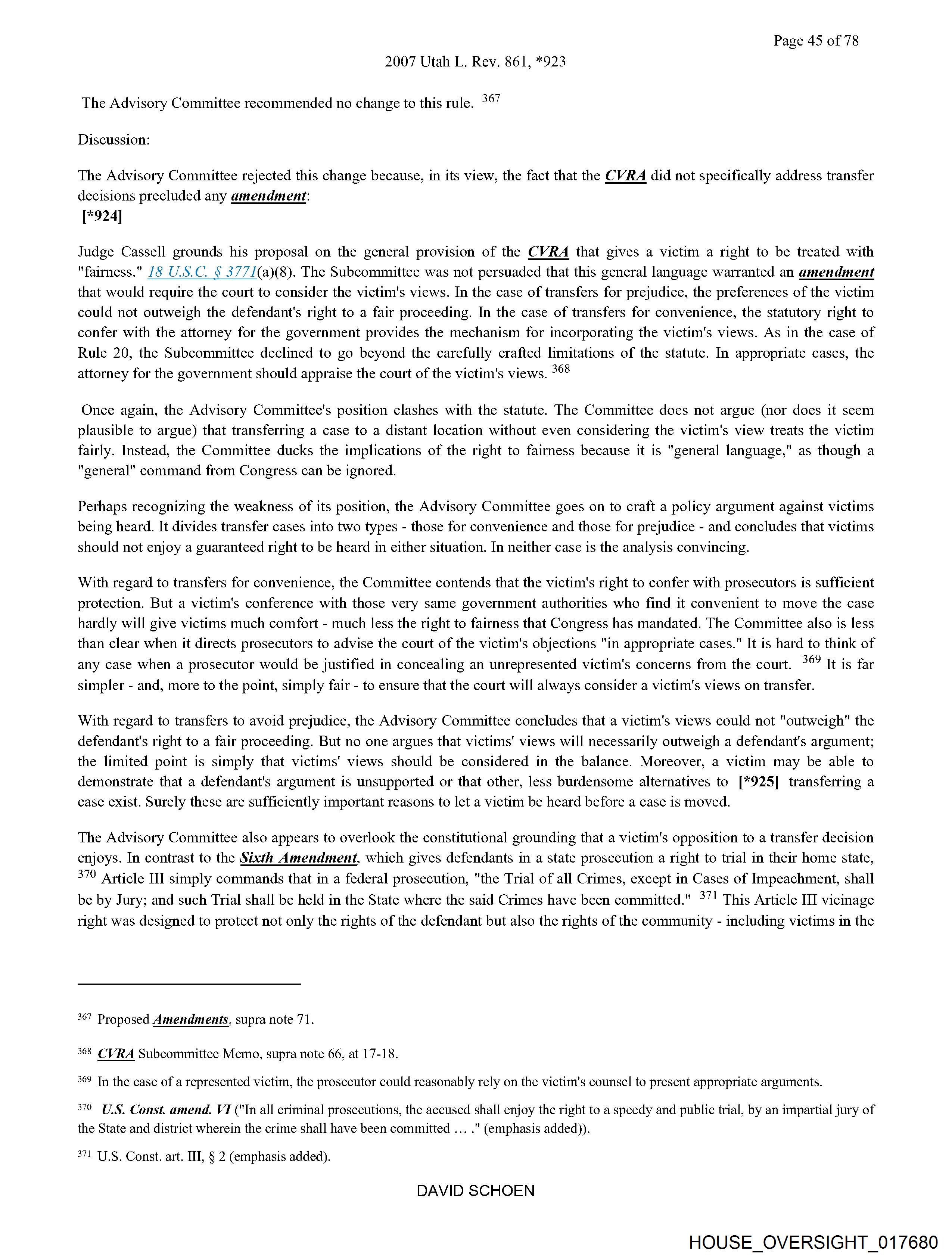
HOUSE_OVERSIGHT_017680

This document highlights the Advisory Committee's stance on victim rights within the context of legal proceedings, particularly regarding case transfers. While it does not directly implicate individuals in criminal activity, it raises concerns about the treatment of victims and the potential for their voices to be marginalized in the judicial process, which is relevant to the broader issues of victim intimidation and discrediting in the Epstein case.

🔑 Key Evidence:
  • The Advisory Committee rejected this change because, in its view, the fact that the CVRA did not specifically address transfer decisions precluded any amendment.
  • The Committee does not argue (nor does it seem plausible to argue) that transferring a case to a distant location without even considering the victim's view treats the victim fairly.
  • It is hard to think of any case when a prosecutor would be justified in concealing an unrepresented victim's concerns from the court.
👥 Connected Entities:
Advisory Committee on Rules U.S. Congress Victims of Epstein's trafficking network
From: Bates: HOUSE_OVERSIGHT_017680
No comments yet.
#6 Strength: 5.0/10
Document preview

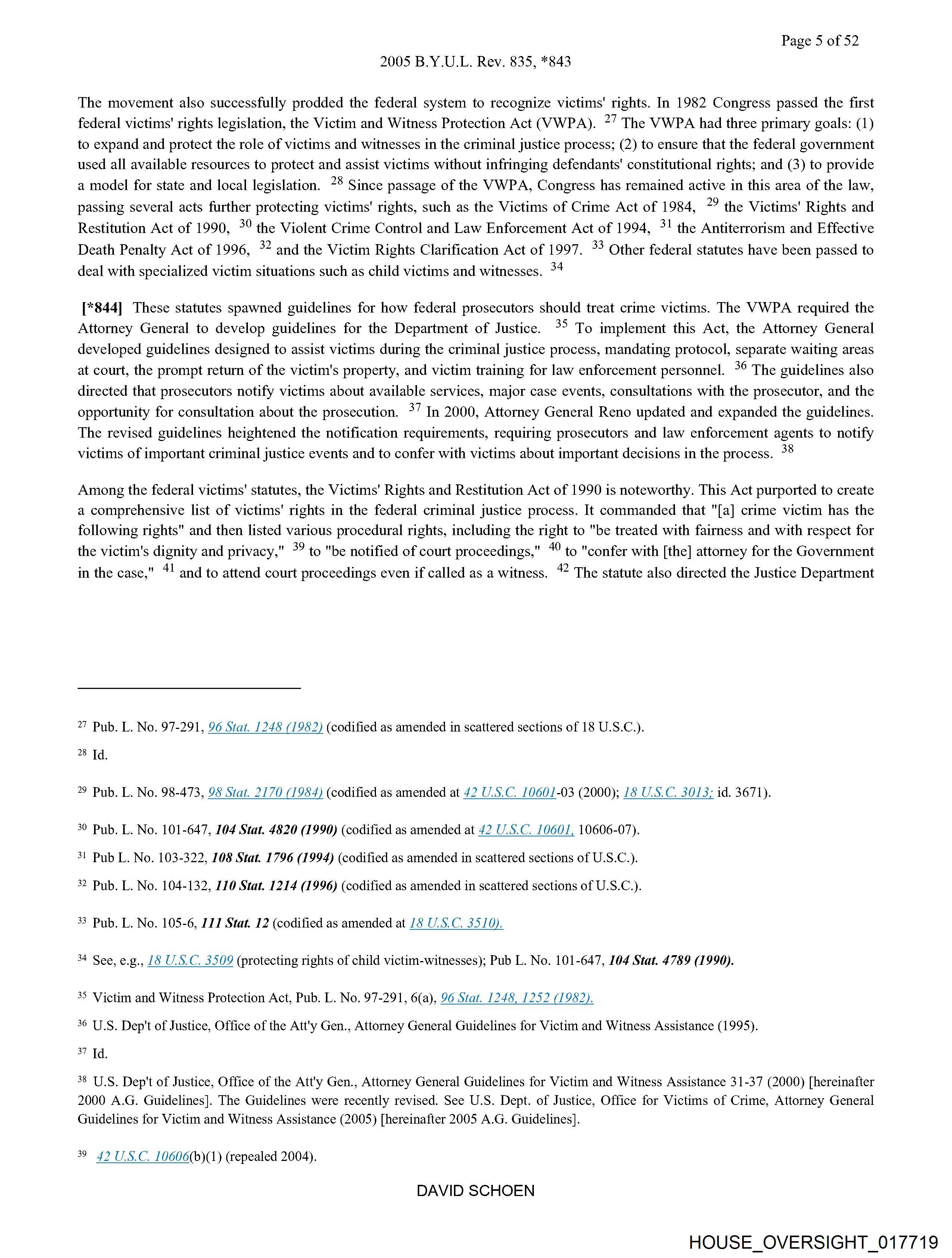
HOUSE_OVERSIGHT_017719

This document outlines the evolution of victims' rights legislation, which is significant in the context of the Epstein case as it highlights the legal framework that should protect victims of crimes, including sex trafficking. While it does not directly implicate Epstein or his associates, it underscores the systemic issues surrounding victim treatment that may have been exploited in his operations.

🔑 Key Evidence:
  • The VWPA had three primary goals: (1) to expand and protect the role of victims and witnesses in the criminal justice process; (2) to ensure that the federal government used all available resources to protect and assist victims without infringing defendants’ constitutional rights; and (3) to provide a model for state and local legislation.
  • The guidelines also directed that prosecutors notify victims about available services, major case events, consultations with the prosecutor, and the opportunity for consultation about the prosecution.
  • The Victims' Rights and Restitution Act of 1990 purported to create a comprehensive list of victims' rights in the federal criminal justice process.
👥 Connected Entities:
U.S. Congress Department of Justice Victims of Crime Act
From: Bates: HOUSE_OVERSIGHT_017719
No comments yet.
#7 Strength: 5.0/10
Document preview

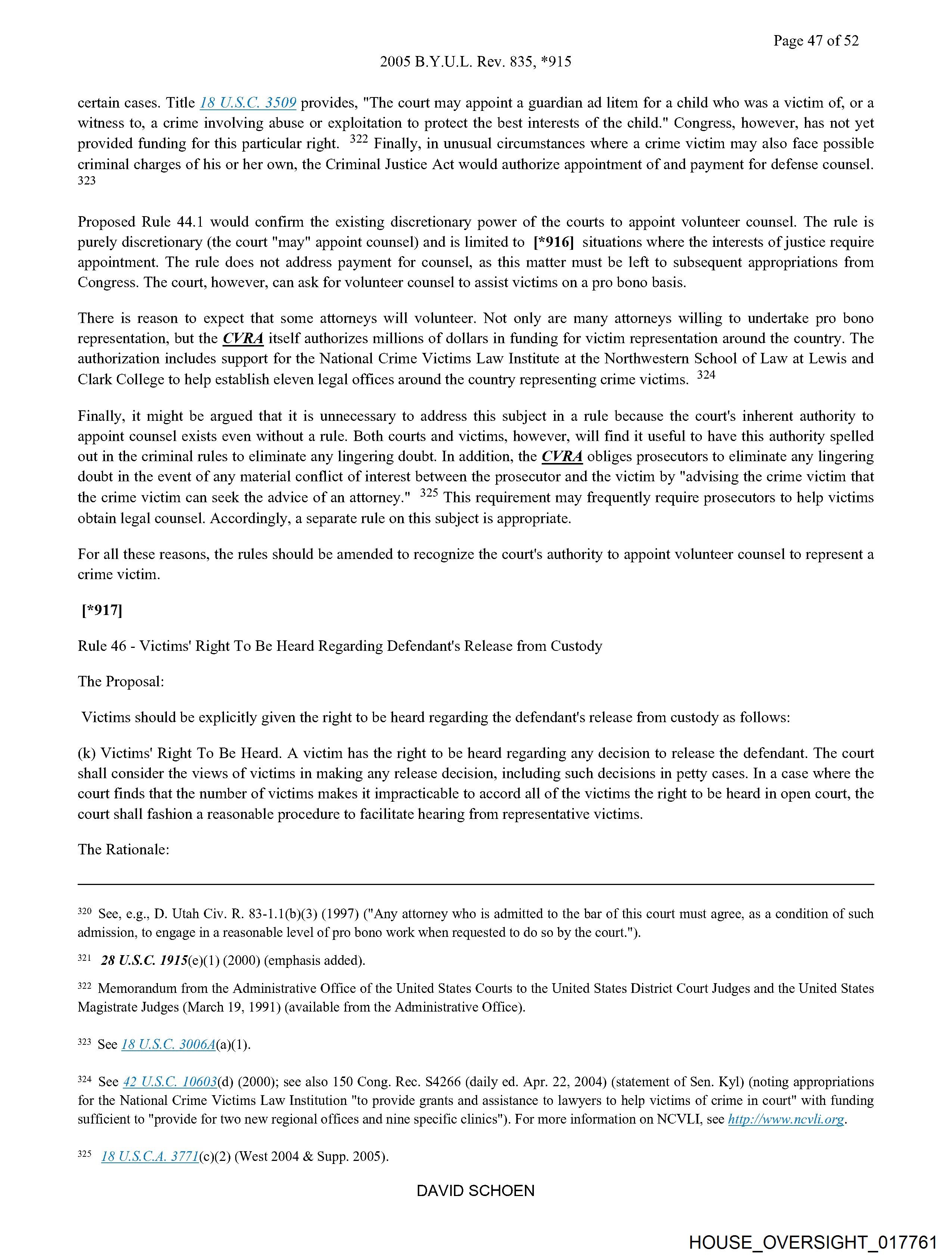
HOUSE_OVERSIGHT_017761

This document outlines the legal framework for victim representation and rights in criminal cases, which is significant in the context of the Epstein investigation as it highlights the systemic issues surrounding victim support and the potential for conflicts of interest. While it does not provide direct evidence of misconduct, it underscores the challenges victims face in seeking justice, particularly in high-profile cases like Epstein's.

🔑 Key Evidence:
  • The court may appoint a guardian ad litem for a child who was a victim of, or a witness to, a crime involving abuse or exploitation to protect the best interests of the child.
  • The CVRA obliges prosecutors to eliminate any lingering doubt in the event of any material conflict of interest between the prosecutor and the victim by 'advising the crime victim that the crime victim can seek the advice of an attorney.'
  • Victims should be explicitly given the right to be heard regarding the defendant's release from custody.
👥 Connected Entities:
National Crime Victims Law Institute Northwestern School of Law at Lewis and Clark College Congress
From: Bates: HOUSE_OVERSIGHT_017761
No comments yet.
#8 Strength: 4.0/10
Document preview

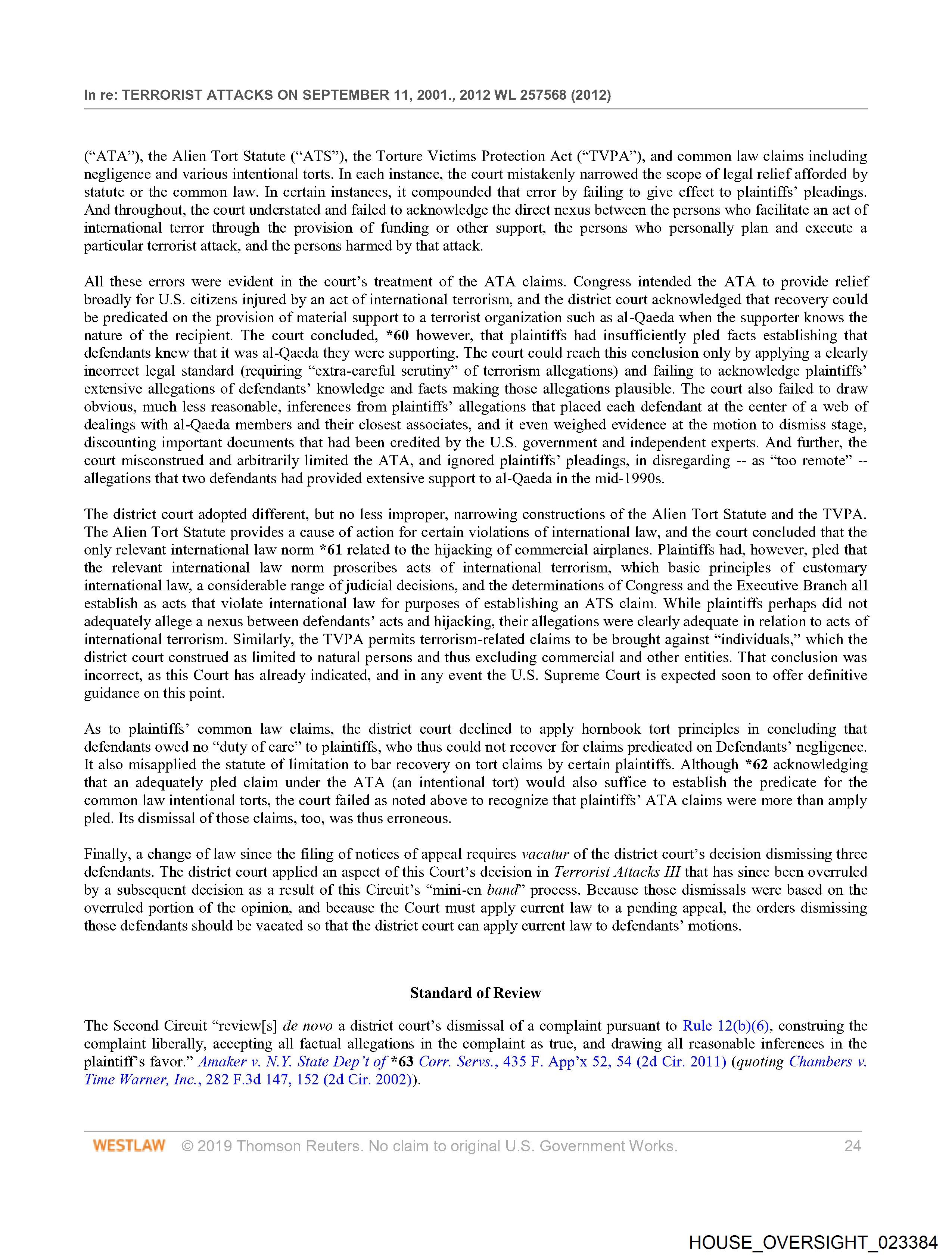
HOUSE_OVERSIGHT_023384

This document primarily discusses legal interpretations related to the Alien Tort Statute and the Anti-Terrorism Act, focusing on the court's handling of claims related to international terrorism. While it does not directly implicate Jeffrey Epstein or his activities, it highlights broader issues of accountability and the legal frameworks that could potentially be applied to cases involving international misconduct, including those related to Epstein's network.

🔑 Key Evidence:
  • The court mistakenly narrowed the scope of legal relief afforded by statute or the common law.
  • The court concluded that plaintiffs had insufficiently pled facts establishing that defendants knew that it was al-Qaeda they were supporting.
  • The court misconstrued and arbitrarily limited the ATA, and ignored plaintiffs’ pleadings.
👥 Connected Entities:
al-Qaeda U.S. government Congress
From: Bates: HOUSE_OVERSIGHT_023384
No comments yet.
#9 Strength: 4.0/10
Document preview

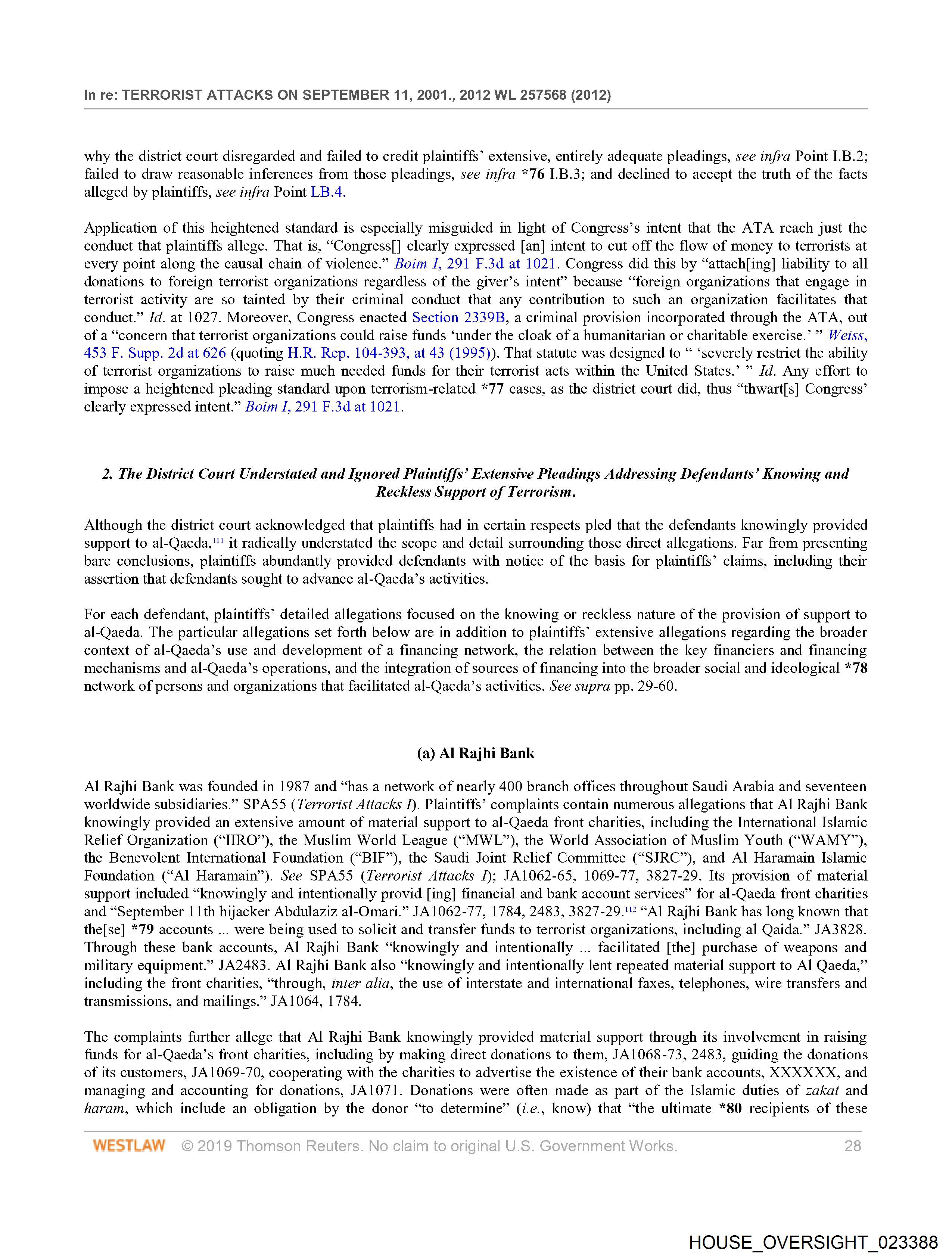
HOUSE_OVERSIGHT_023388

This document primarily discusses legal arguments related to the Anti-Terrorism Act (ATA) and does not directly implicate Jeffrey Epstein or his activities. However, it highlights the potential for financial operations linked to terrorism, which could connect to Epstein's extensive financial dealings and the broader implications of his network.

🔑 Key Evidence:
  • Congress’s intent that the ATA reach just the conduct that plaintiffs allege.
  • Congress did this by 'attach[ing] liability to all donations to foreign terrorist organizations regardless of the giver’s intent.'
  • Plaintiffs abundantly provided defendants with notice of the basis for plaintiffs’ claims, including their assertion that defendants sought to advance al-Qaeda’s activities.
👥 Connected Entities:
Al Rajhi Bank al-Qaeda Congress
From: Bates: HOUSE_OVERSIGHT_023388
No comments yet.
#10 Strength: 5.0/10
Document preview

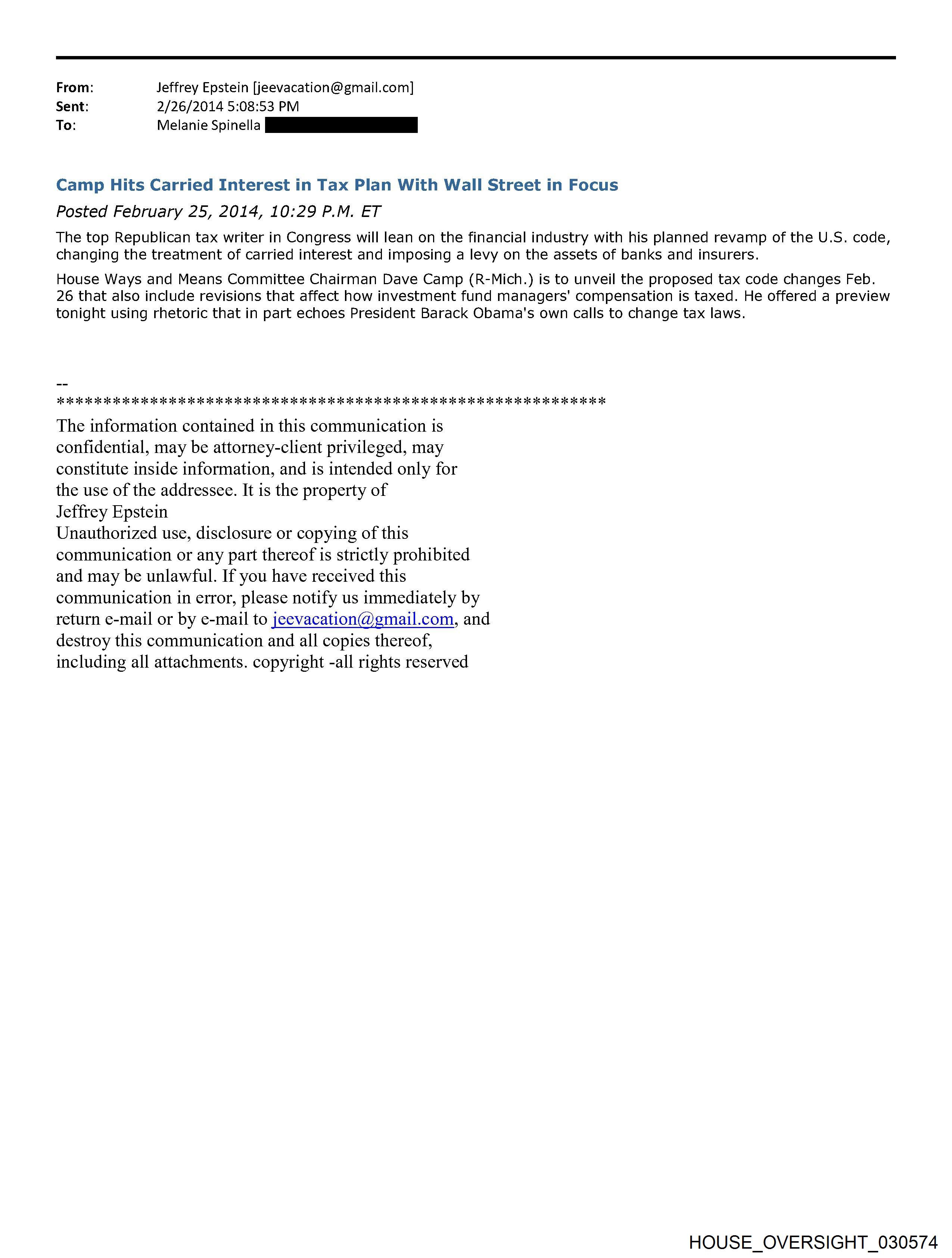
HOUSE_OVERSIGHT_030208

This document discusses the legal implications of indicting a sitting president, which indirectly highlights the complexities of prosecuting high-profile individuals involved in serious criminal activities, such as those associated with Jeffrey Epstein. It raises questions about the intersection of political power and accountability, particularly in cases involving potential misconduct by influential figures.

🔑 Key Evidence:
  • concluding that a president can be indicted does not mean that he or she should be indicted
  • awaiting action by the House of Representatives may in some circumstances be the prudent course
  • some offenses might be seen as better suited for initial consideration by Congress in the impeachment process
👥 Connected Entities:
U.S. Congress Supreme Court Department of Justice
From: Bates: HOUSE_OVERSIGHT_030208
No comments yet.
#11 Strength: 4.0/10
Document preview

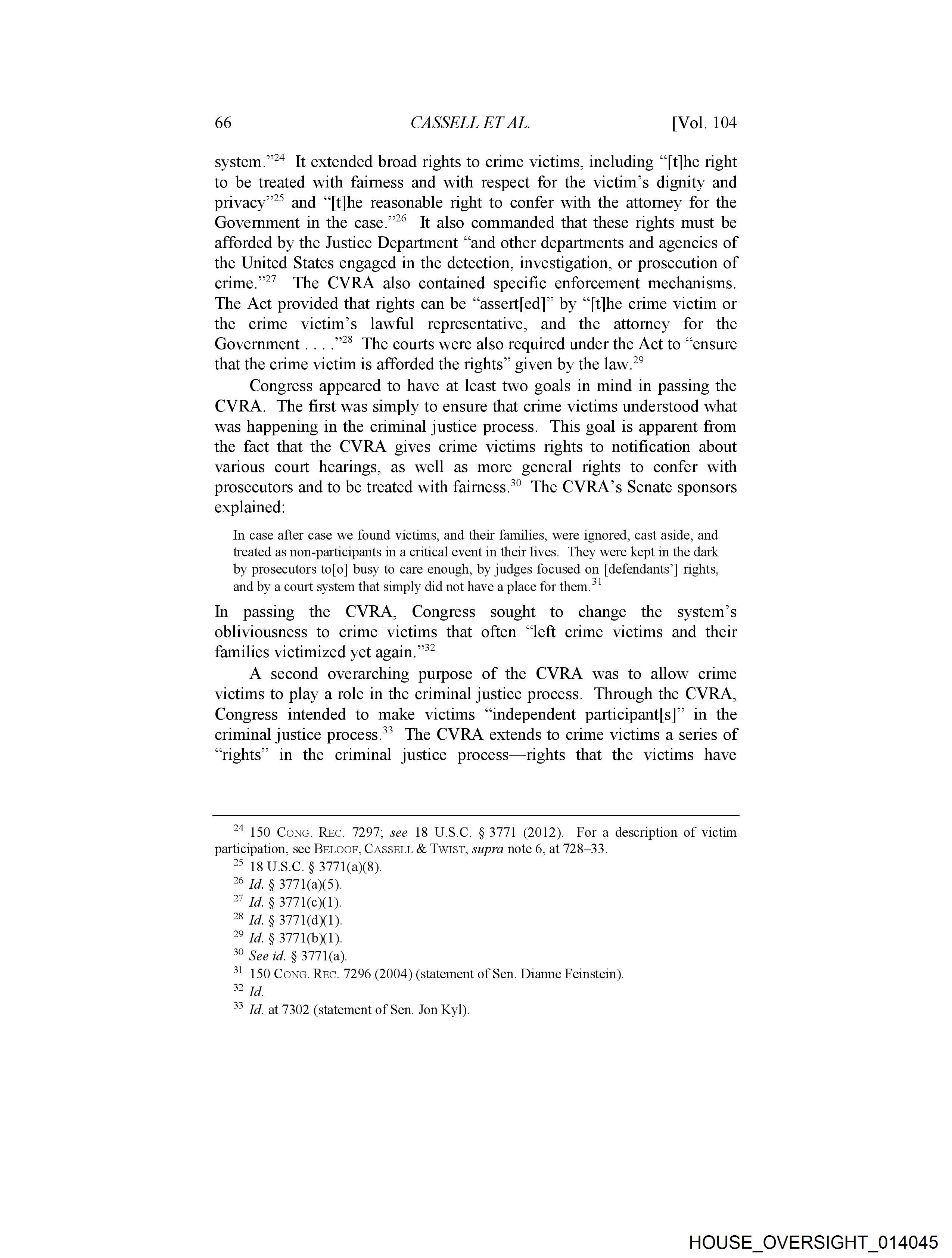
HOUSE_OVERSIGHT_030574

This document primarily discusses proposed changes to the U.S. tax code, specifically regarding carried interest and the financial industry, which reflects Epstein's connections to high finance. While it does not provide direct evidence of criminal activity, it highlights Epstein's engagement with influential political and financial figures, suggesting a network that could facilitate misconduct.

🔑 Key Evidence:
  • The top Republican tax writer in Congress will lean on the financial industry with his planned revamp of the U.S. code.
  • House Ways and Means Committee Chairman Dave Camp (R-Mich.) is to unveil the proposed tax code changes Feb. 26 that also include revisions that affect how investment fund managers’ compensation is taxed.
  • The information contained in this communication is confidential, may be attorney-client privileged, may constitute inside information.
👥 Connected Entities:
Dave Camp Wall Street financial industry U.S. Congress
From: Jeffrey Epstein [jeevacation@gmail.com] Bates: HOUSE_OVERSIGHT_030574
No comments yet.