🔐 Private Research Portal

Epstein Research Portal

Access the full investigative corpus, ranked smoking guns, OCR-linked imagery, and intel briefs.

Front-of-house site Sign In / Sign Up
Same BENED DNA · Investigative Skin
← Back to Entities

📁 Crime Victims' Rights Act (CVRA) Dossier

12 documents connected to this entity

Page 1 of 1 (12 items)
#1 Strength: 4.0/10
Document preview

HOUSE_OVERSIGHT_014685

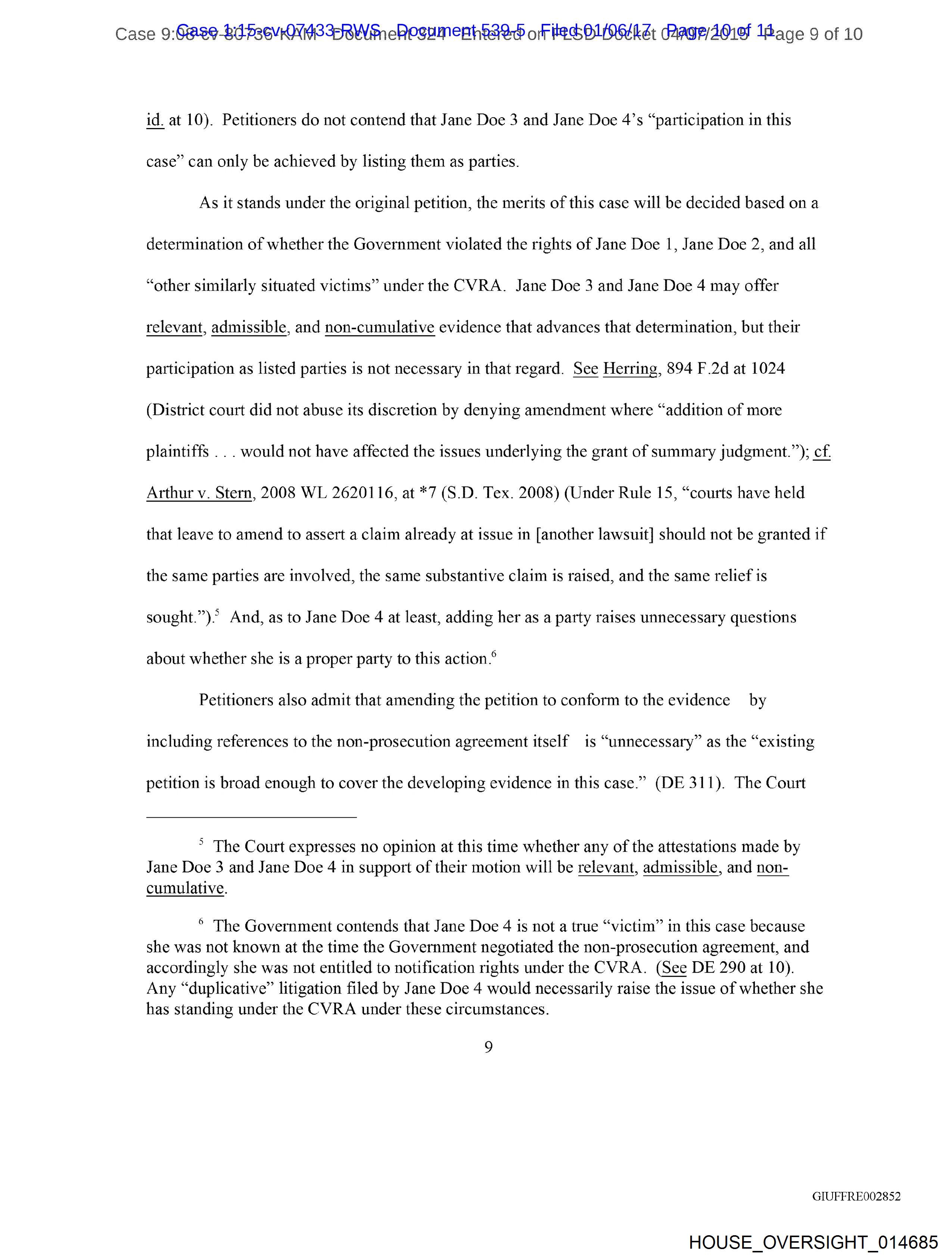
This document highlights the legal complexities surrounding the participation of Jane Doe 3 and Jane Doe 4 in the Epstein case, particularly regarding their status as victims under the Crime Victims' Rights Act (CVRA). It raises questions about the adequacy of the non-prosecution agreement and the implications for victims' rights, but does not provide direct evidence of criminal activity or misconduct.

🔑 Key Evidence:
  • Petitioners do not contend that Jane Doe 3 and Jane Doe 4’s 'participation in this case' can only be achieved by listing them as parties.
  • The Government contends that Jane Doe 4 is not a true 'victim' in this case because she was not known at the time the Government negotiated the non-prosecution agreement.
  • Any 'duplicative' litigation filed by Jane Doe 4 would necessarily raise the issue of whether she has standing under the CVRA under these circumstances.
👥 Connected Entities:
Jane Doe 3 Jane Doe 4 U.S. Government
From: Bates: HOUSE_OVERSIGHT_014685
No comments yet.
#2 Strength: 6.0/10
Document preview

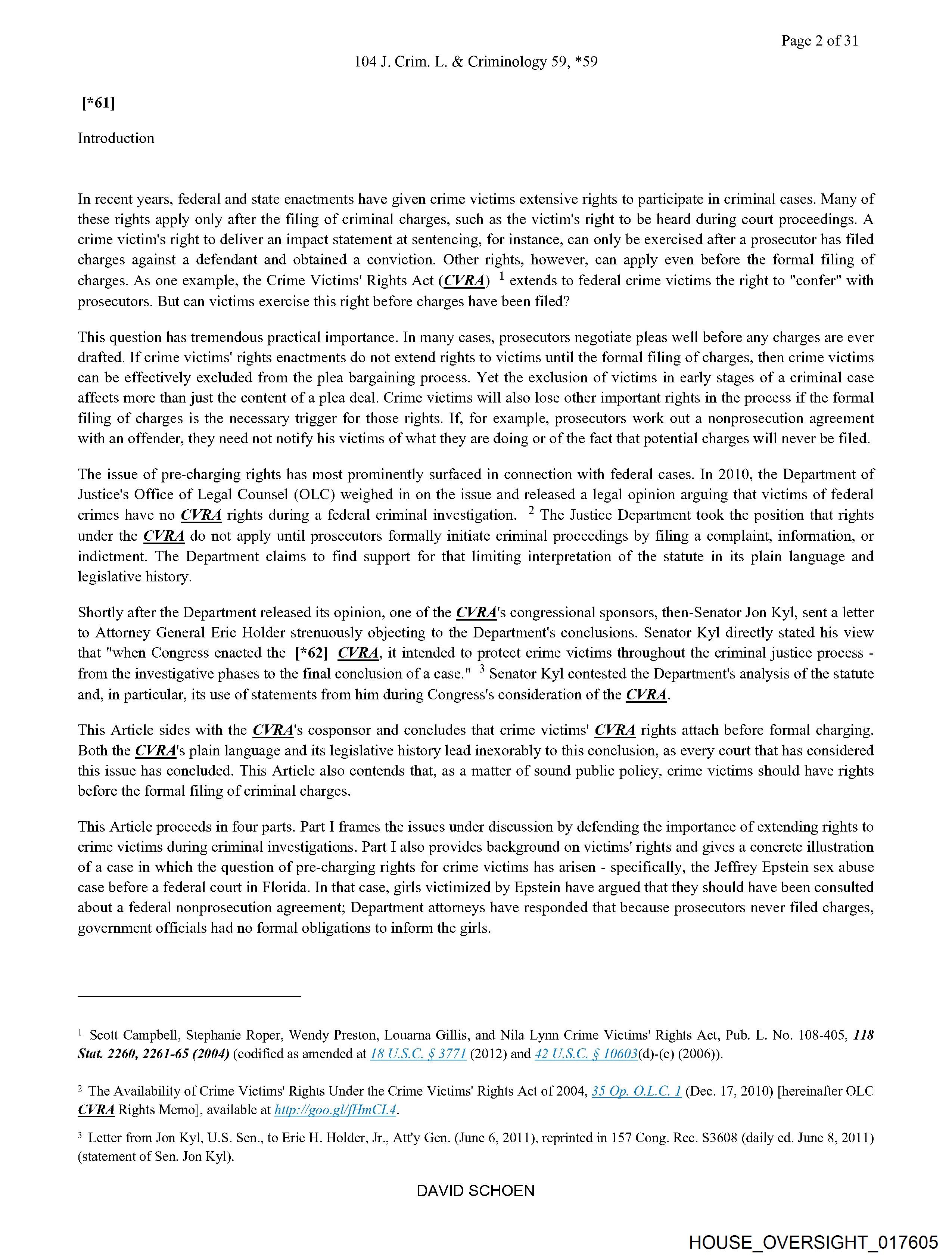
HOUSE_OVERSIGHT_017605

This document highlights the legal complexities surrounding the rights of crime victims, particularly in the context of the Crime Victims' Rights Act (CVRA). It underscores the potential exclusion of victims from the plea bargaining process, which is particularly relevant to the Epstein case, where victims may have been denied their rights during the investigation and prosecution phases.

🔑 Key Evidence:
  • The document discusses the implications of the CVRA and the rights of victims before formal charges are filed, which is crucial in understanding how victims in the Epstein case may have been marginalized.
  • It references the Department of Justice's Office of Legal Counsel (OLC) opinion that victims have no CVRA rights during a federal criminal investigation, which could relate to how Epstein's case was handled.
  • Senator Jon Kyl's objection to the DOJ's interpretation indicates a significant disagreement on victim rights, suggesting that victims in high-profile cases like Epstein's may have been overlooked.
👥 Connected Entities:
Department of Justice Senator Jon Kyl Crime Victims' Rights Act (CVRA)
From: Bates: HOUSE_OVERSIGHT_017605
No comments yet.
#3 Strength: 5.0/10
Document preview

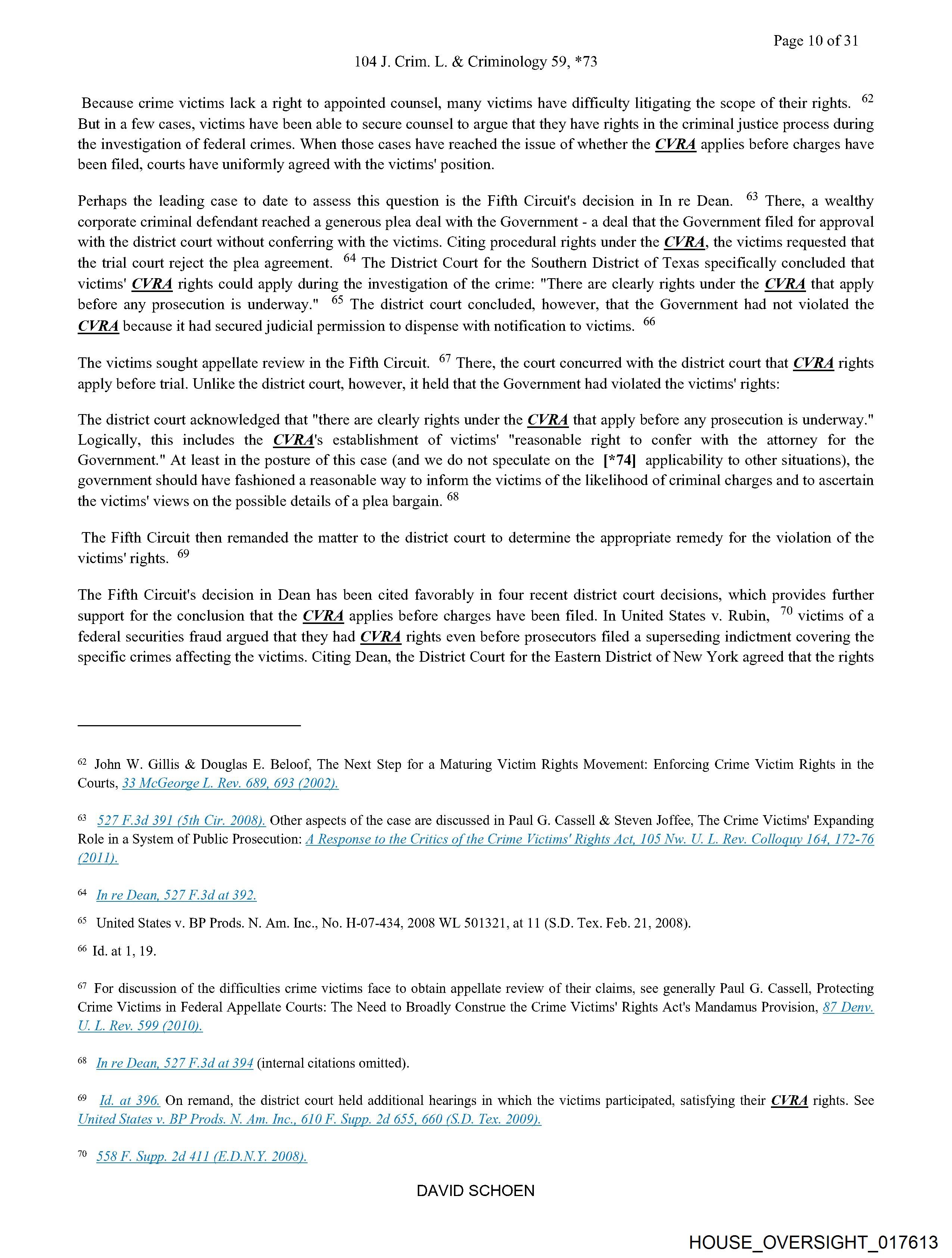
HOUSE_OVERSIGHT_017613

This document highlights the legal framework surrounding victims' rights under the Crime Victims' Rights Act (CVRA), particularly in the context of plea deals and the government's obligations to inform victims. While it does not directly implicate Epstein or his associates, it underscores the challenges victims face in asserting their rights, which is relevant to the broader context of Epstein's case and the treatment of his victims.

🔑 Key Evidence:
  • The Fifth Circuit's decision in In re Dean establishes that victims' CVRA rights apply before any prosecution is underway.
  • The court concluded that the government should have fashioned a reasonable way to inform the victims of the likelihood of criminal charges.
  • The document cites that victims have difficulty litigating the scope of their rights due to the lack of a right to appointed counsel.
👥 Connected Entities:
Fifth Circuit Court Department of Justice Crime Victims' Rights Act (CVRA)
From: Bates: HOUSE_OVERSIGHT_017613
No comments yet.
#4 Strength: 5.0/10
Document preview

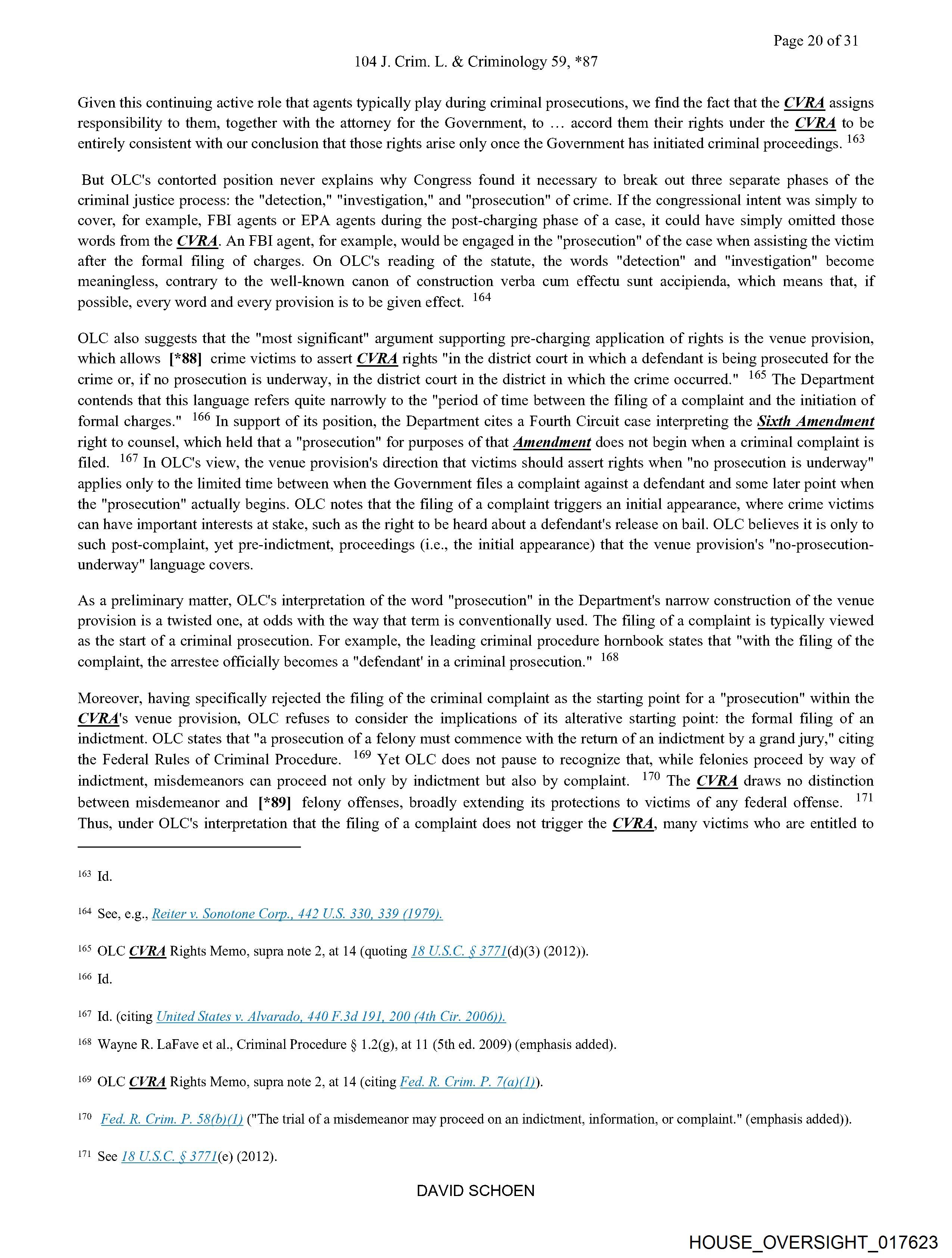
HOUSE_OVERSIGHT_017623

This document highlights the complexities surrounding the rights of crime victims under the Crime Victims' Rights Act (CVRA) and the interpretation of 'prosecution' in legal contexts. While it does not provide direct evidence of misconduct, it raises concerns about the treatment of victims and the potential for governmental oversight failures in the Epstein case.

🔑 Key Evidence:
  • The document discusses the CVRA's assignment of rights to victims only after the initiation of criminal proceedings, which could imply a lack of support for victims during earlier stages of investigation.
  • It critiques the Office of Legal Counsel's (OLC) interpretation of 'prosecution' and suggests that their narrow view undermines the intent of Congress to protect victims throughout the criminal justice process.
  • The mention of the venue provision indicates that victims may have limited recourse to assert their rights, particularly in the pre-charging phase, which could affect how victims of Epstein's trafficking were treated.
👥 Connected Entities:
Office of Legal Counsel (OLC) Department of Justice Crime Victims' Rights Act (CVRA)
From: Bates: HOUSE_OVERSIGHT_017623
No comments yet.
#5 Strength: 5.0/10
Document preview

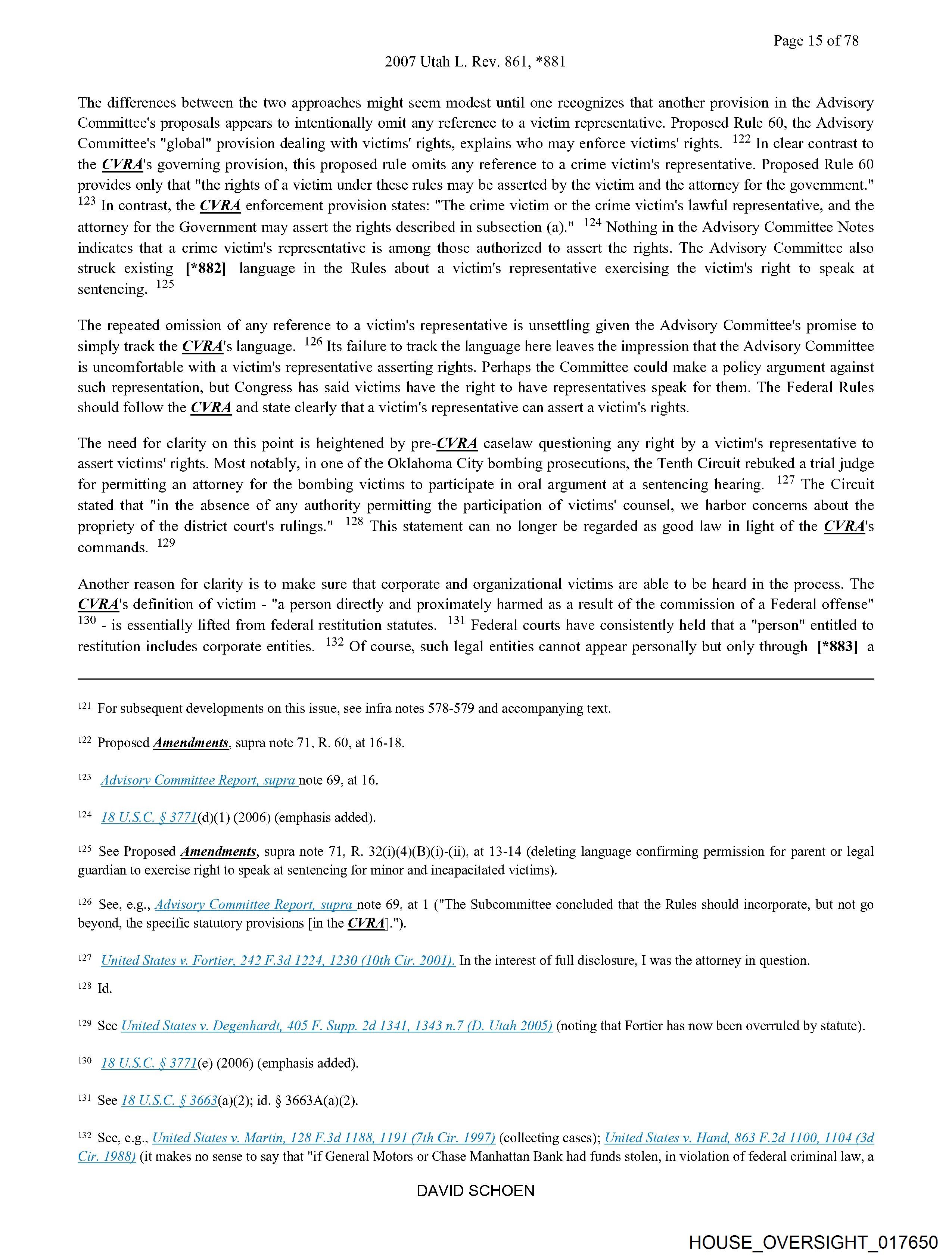
HOUSE_OVERSIGHT_017650

This document highlights significant concerns regarding the rights of victims and their representatives in the context of federal criminal proceedings, particularly in relation to the Crime Victims' Rights Act (CVRA). The omission of victim representatives in proposed rules raises questions about the treatment of victims in cases like Epstein's, where victim intimidation and discrediting were prevalent.

🔑 Key Evidence:
  • The proposed rule omits any reference to a crime victim's representative, which contrasts with the CVRA's enforcement provision that allows for such representation.
  • The Advisory Committee's failure to track the CVRA's language leaves the impression that they are uncomfortable with a victim's representative asserting rights.
  • The document references a Tenth Circuit ruling that rebuked a trial judge for allowing victims' counsel to participate in a sentencing hearing, indicating a historical reluctance to recognize victims' representatives in legal proceedings.
👥 Connected Entities:
Advisory Committee on Rules Crime Victims' Rights Act (CVRA) Federal Courts
From: Bates: HOUSE_OVERSIGHT_017650
No comments yet.
#6 Strength: 5.0/10
Document preview

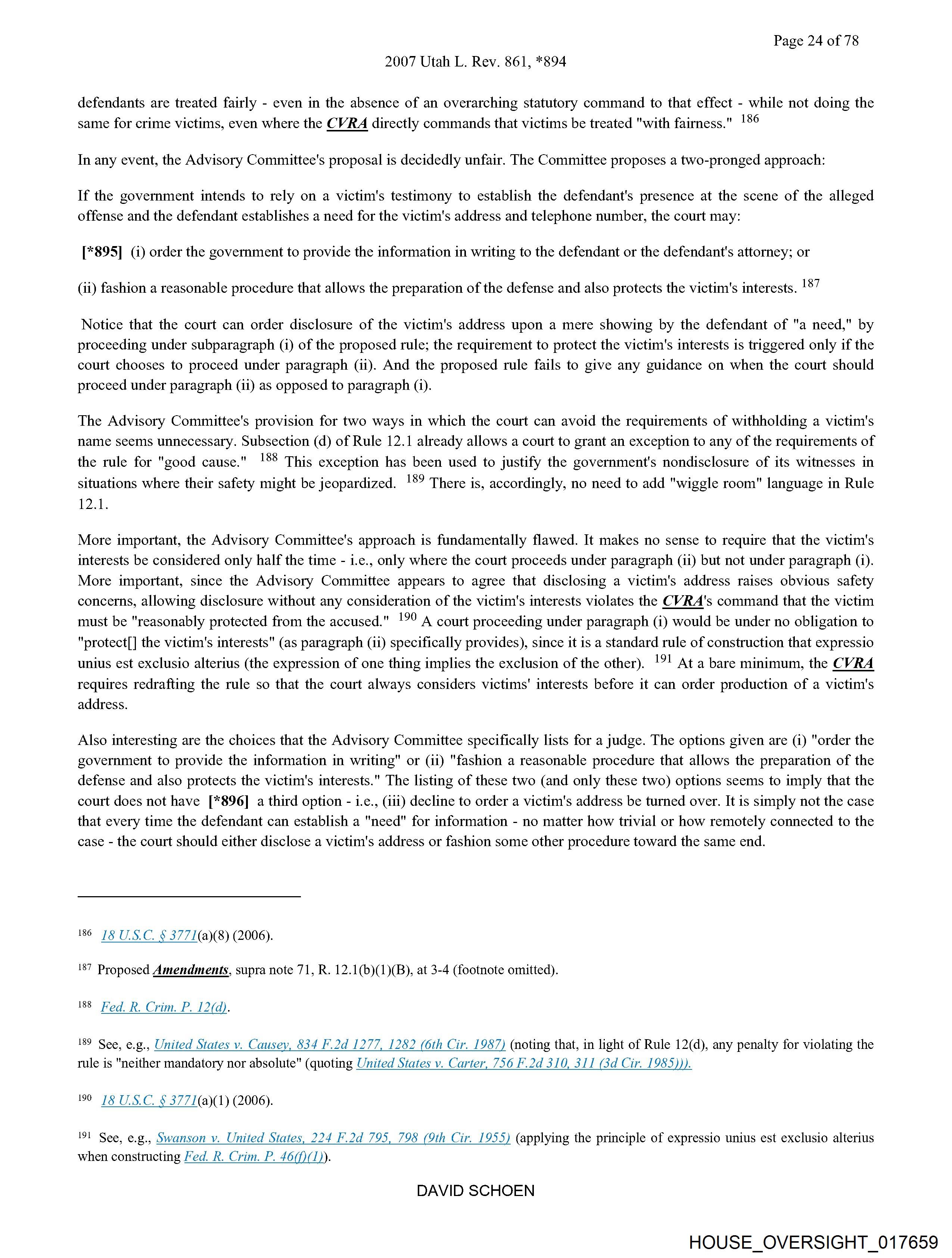
HOUSE_OVERSIGHT_017659

This document highlights procedural concerns regarding the treatment of crime victims, specifically in the context of disclosing their personal information during legal proceedings. While it does not directly implicate individuals in criminal activity, it raises significant issues about victim protection that are relevant to the broader Epstein case, particularly regarding the treatment of victims in high-profile cases.

🔑 Key Evidence:
  • The CVRA directly commands that victims be treated 'with fairness.'
  • The proposed rule allows for the disclosure of a victim's address upon a mere showing by the defendant of 'a need.'
  • The Advisory Committee's approach is fundamentally flawed as it only considers victim interests under certain conditions, potentially endangering them.
👥 Connected Entities:
Advisory Committee on Rules Crime Victims' Rights Act (CVRA) Judicial System
From: Bates: HOUSE_OVERSIGHT_017659
No comments yet.
#7 Strength: 4.0/10
Document preview

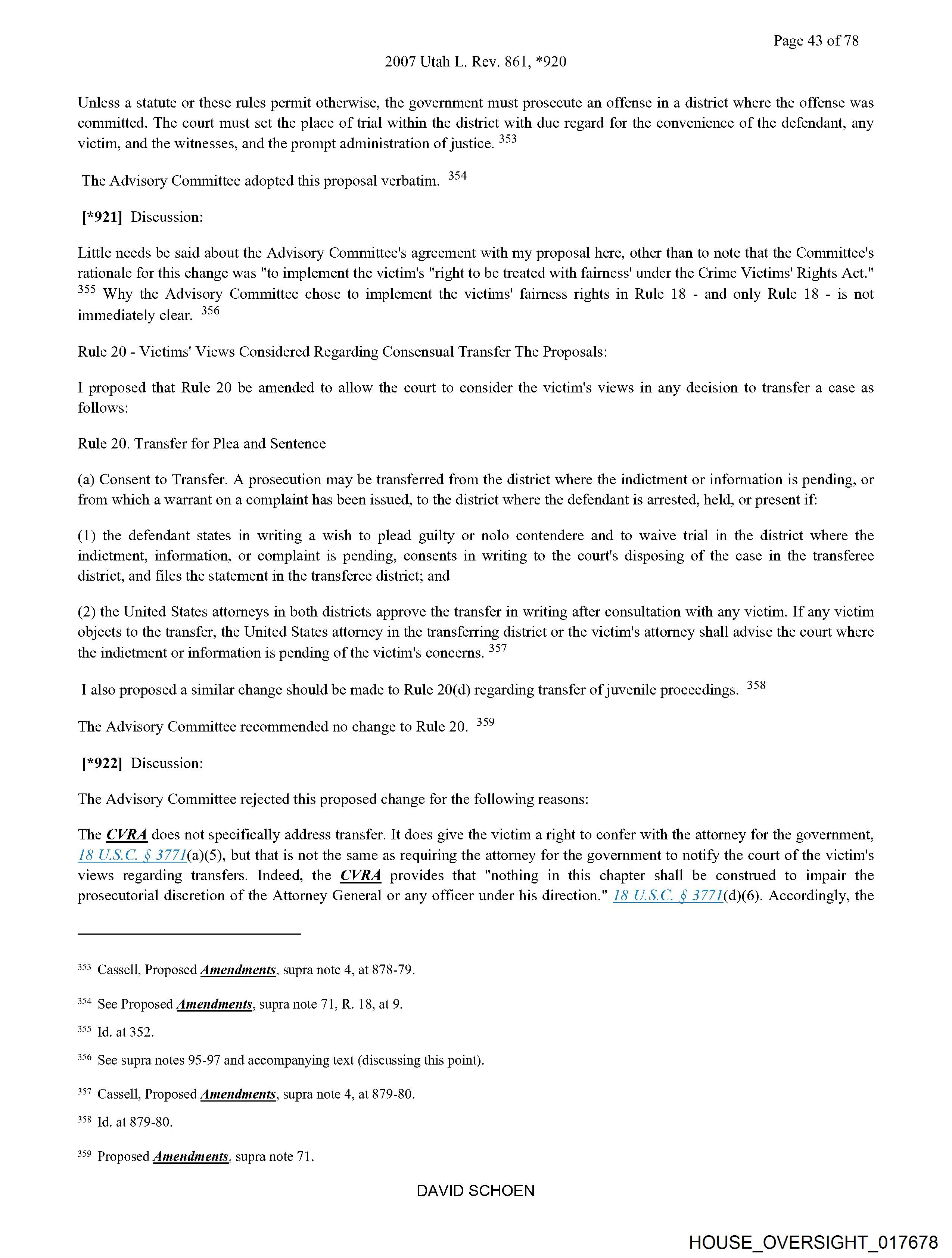
HOUSE_OVERSIGHT_017678

This document primarily discusses procedural rules regarding the rights of victims in the context of criminal prosecutions, particularly focusing on the transfer of cases and the consideration of victims' views. While it does not directly implicate individuals or reveal new evidence of misconduct, it highlights the complexities of victim rights under the Crime Victims' Rights Act (CVRA), which is relevant to understanding the treatment of victims in the Epstein case.

🔑 Key Evidence:
  • The government must prosecute an offense in a district where the offense was committed.
  • The Advisory Committee's rationale for this change was 'to implement the victim's right to be treated with fairness under the Crime Victims' Rights Act.'
  • The CVRA provides that 'nothing in this chapter shall be construed to impair the prosecutorial discretion of the Attorney General or any officer under his direction.'
👥 Connected Entities:
Advisory Committee on Rules Crime Victims' Rights Act (CVRA) U.S. Attorney's Office
From: Bates: HOUSE_OVERSIGHT_017678
No comments yet.
#8 Strength: 5.0/10
Document preview

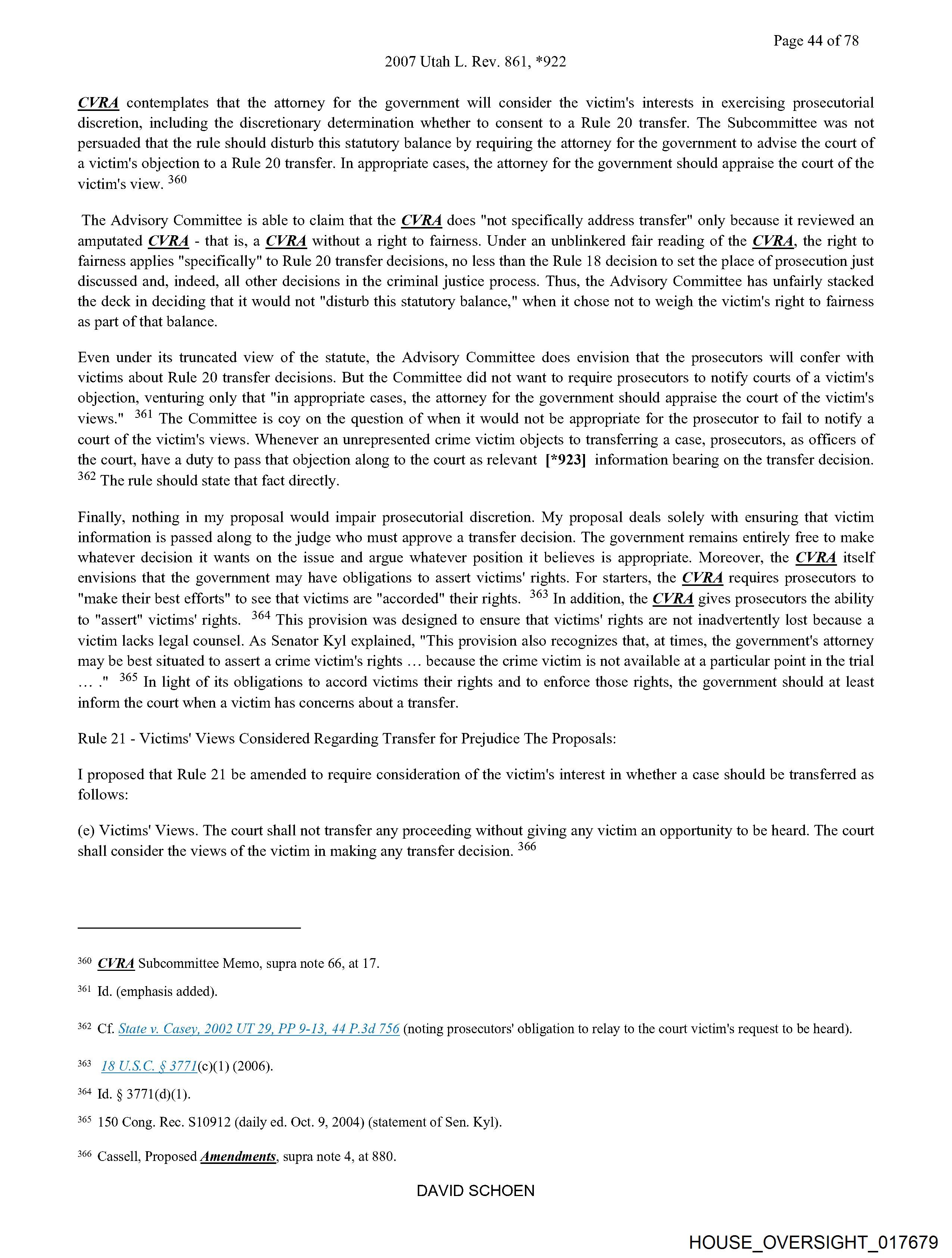
HOUSE_OVERSIGHT_017679

This document highlights the complexities surrounding the rights of victims in the context of prosecutorial discretion, particularly regarding Rule 20 transfers. While it does not provide direct evidence of misconduct related to Epstein, it underscores systemic issues in how victims' rights may be overlooked, which is relevant given the allegations of victim intimidation and discrediting in the Epstein case.

🔑 Key Evidence:
  • The CVRA contemplates that the attorney for the government will consider the victim's interests in exercising prosecutorial discretion.
  • The Advisory Committee has unfairly stacked the deck in deciding that it would not 'disturb this statutory balance,' when it chose not to weigh the victim's right to fairness.
  • Whenever an unrepresented crime victim objects to transferring a case, prosecutors, as officers of the court, have a duty to pass that objection along to the court as relevant information.
👥 Connected Entities:
Victims of Jeffrey Epstein U.S. Department of Justice Advisory Committee on Rules
From: Bates: HOUSE_OVERSIGHT_017679
No comments yet.
#9 Strength: 5.0/10
Document preview

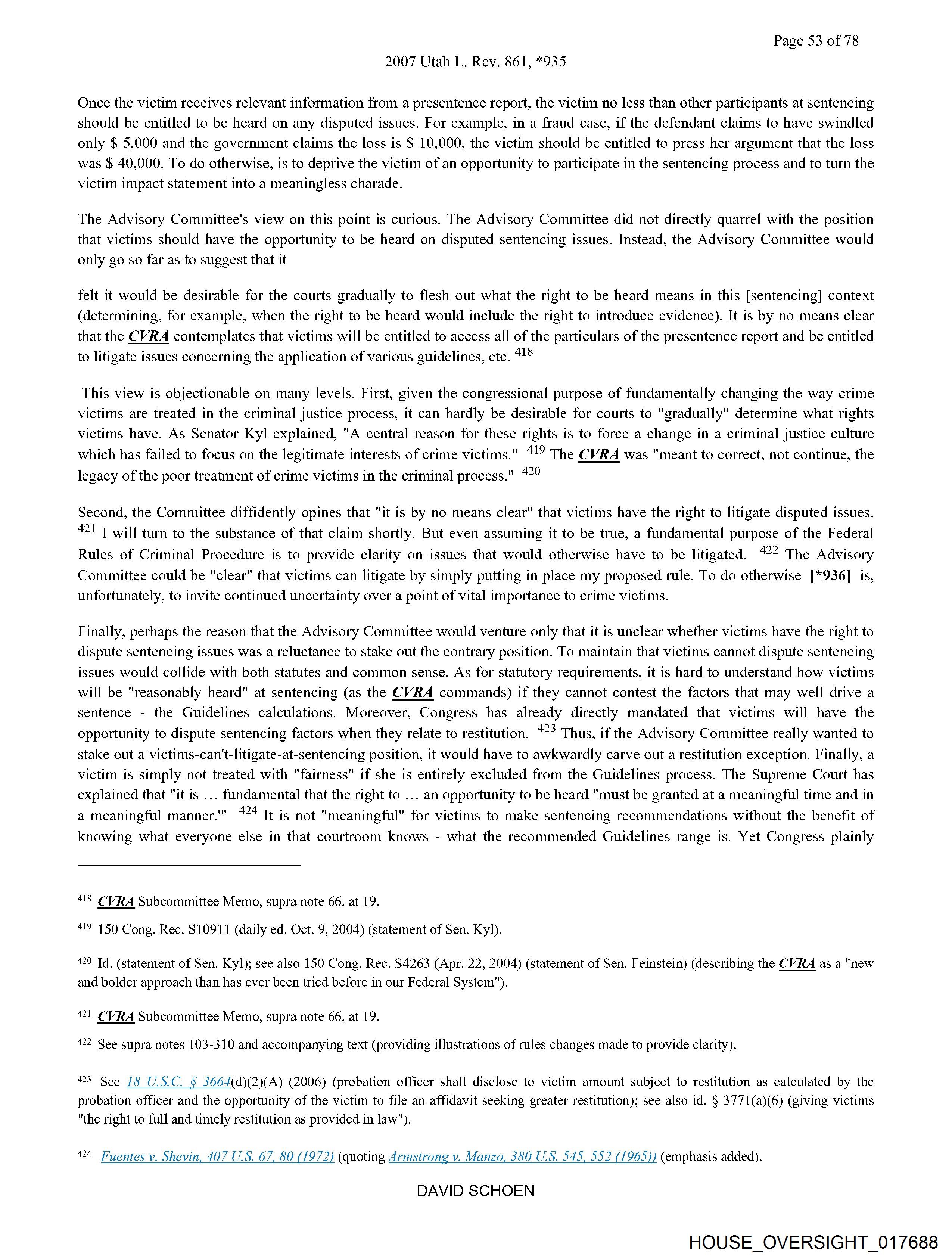
HOUSE_OVERSIGHT_017688

This document highlights the legal complexities surrounding victims' rights in the sentencing process, particularly in the context of the Crime Victims' Rights Act (CVRA). While it does not directly implicate individuals in criminal activity, it underscores systemic issues that may have allowed for the marginalization of victims, which is relevant to the Epstein case given the numerous allegations of victim intimidation and discrediting.

🔑 Key Evidence:
  • The Advisory Committee's view on victims' rights is described as 'curious' and 'objectionable', indicating a reluctance to fully empower victims in the legal process.
  • The document states that the CVRA was 'meant to correct, not continue, the legacy of the poor treatment of crime victims in the criminal process', which is pertinent to the treatment of Epstein's victims.
  • The assertion that it is 'by no means clear' that victims have the right to litigate disputed issues suggests a lack of clarity that could be exploited in cases like Epstein's, where victim voices were crucial.
👥 Connected Entities:
Senator Kyl Advisory Committee on Rules Crime Victims' Rights Act (CVRA)
From: Bates: HOUSE_OVERSIGHT_017688
No comments yet.
#10 Strength: 4.0/10
Document preview

HOUSE_OVERSIGHT_017689

This document discusses the procedural rights of crime victims within the justice system, particularly regarding victim impact statements during sentencing. While it does not directly implicate individuals or organizations in criminal activity, it highlights the complexities of victim rights and the potential for procedural abuses, which are relevant in the context of the Epstein case, where victim testimony and rights were often overlooked.

🔑 Key Evidence:
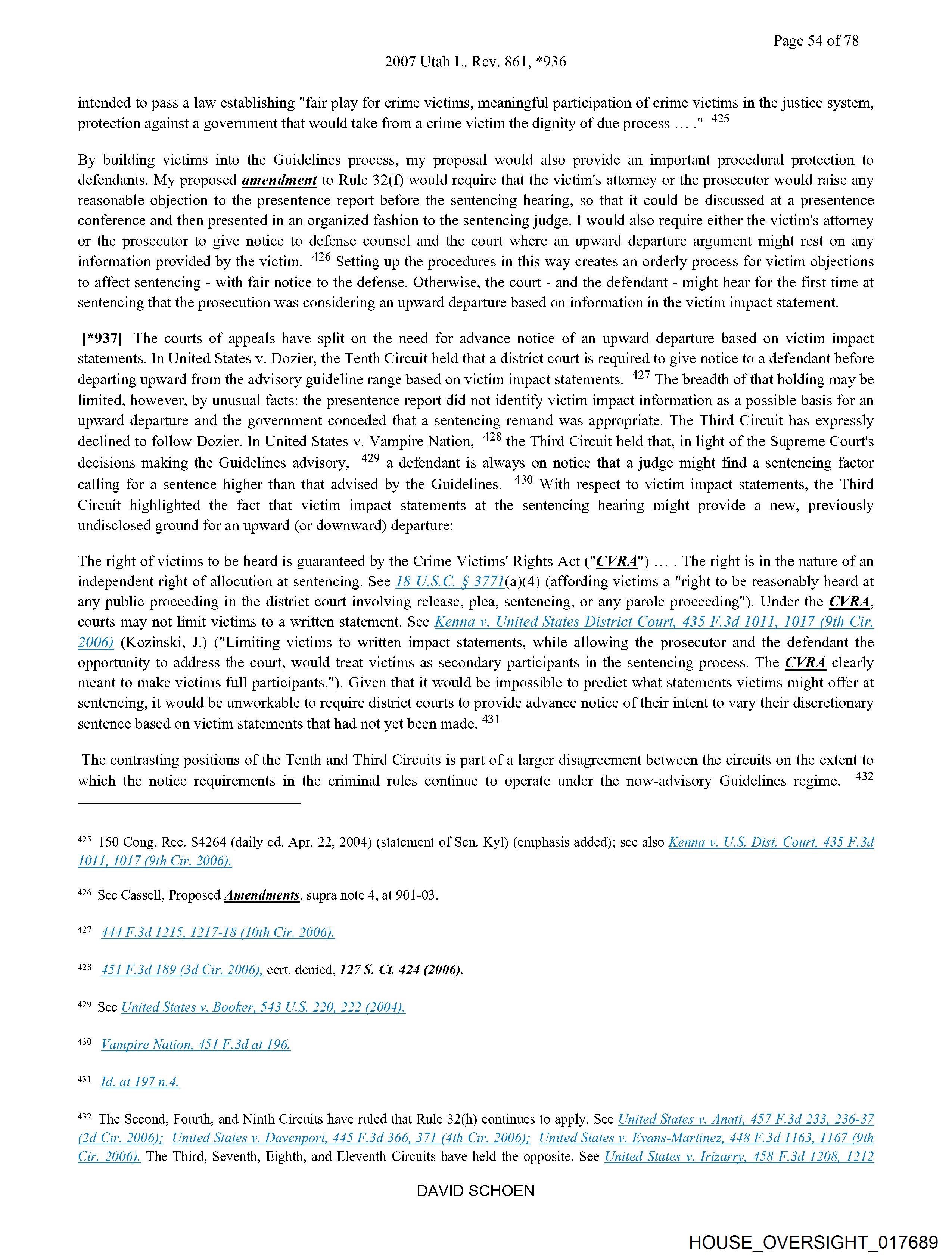
  • The right of victims to be heard is guaranteed by the Crime Victims' Rights Act (CVRA)...
  • My proposed amendment to Rule 32(f) would require that the victim's attorney or the prosecutor would raise any reasonable objection to the presentence report before the sentencing hearing...
  • The courts of appeals have split on the need for advance notice of an upward departure based on victim impact statements.
👥 Connected Entities:
Crime Victims' Rights Act United States Courts of Appeals Victims' attorneys
From: Bates: HOUSE_OVERSIGHT_017689
No comments yet.
#11 Strength: 5.0/10
Document preview

HOUSE_OVERSIGHT_017740

This document outlines proposed amendments to legal rules regarding the treatment of victims in the judicial process, emphasizing their rights under the Crime Victims' Rights Act (CVRA). While it does not directly implicate individuals in criminal activity, it highlights systemic issues in how victims' voices may be marginalized, which is relevant to the broader context of the Epstein case where victim intimidation and discrediting were prevalent.

🔑 Key Evidence:
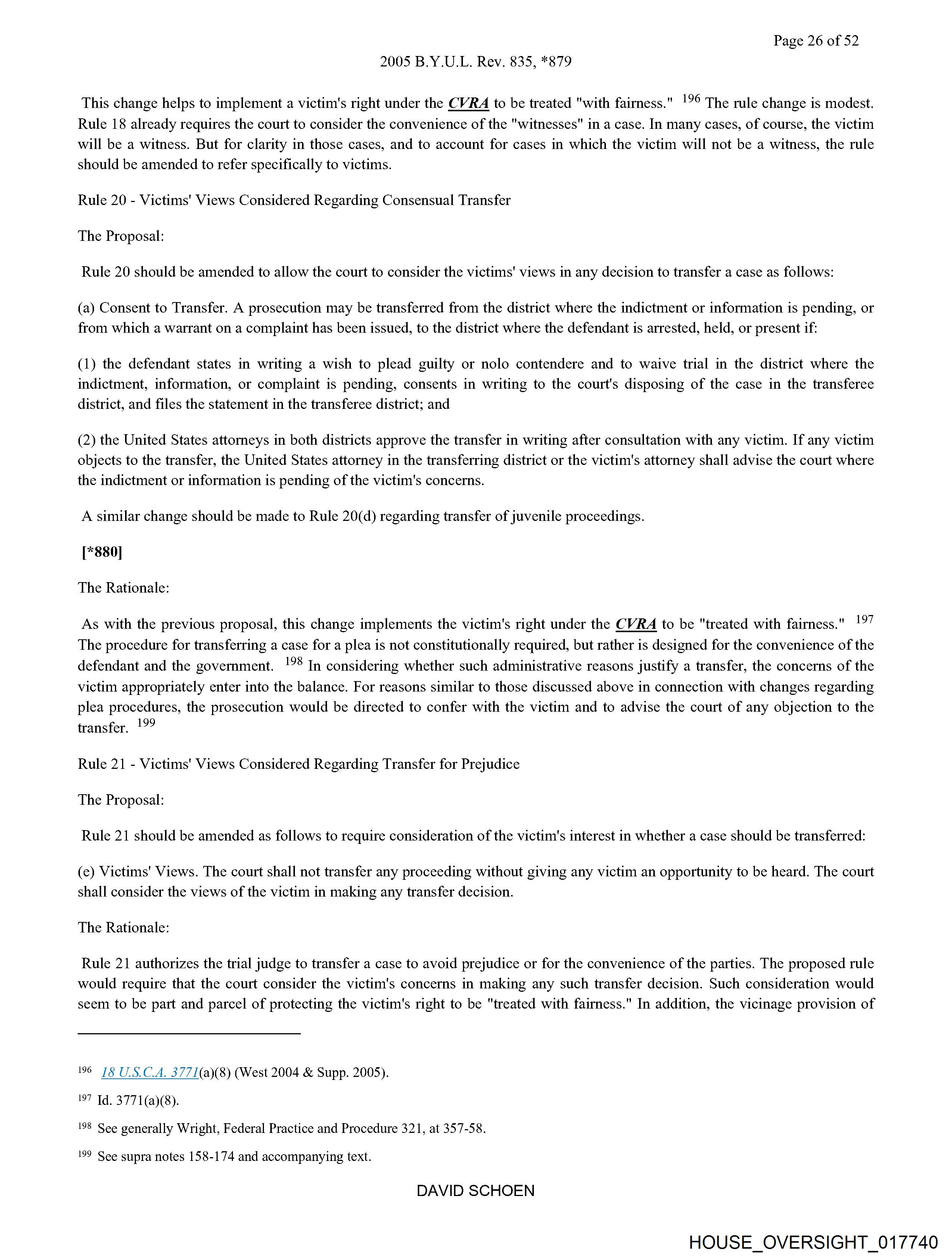
  • The rule change is modest. Rule 18 already requires the court to consider the convenience of the 'witnesses' in a case.
  • Rule 20 should be amended to allow the court to consider the victims' views in any decision to transfer a case.
  • The procedure for transferring a case for a plea is not constitutionally required, but rather is designed for the convenience of the defendant and the government.
👥 Connected Entities:
Crime Victims' Rights Act (CVRA) U.S. Attorneys' Offices Judicial System
From: Bates: HOUSE_OVERSIGHT_017740
No comments yet.
#12 Strength: 5.0/10
Document preview

HOUSE_OVERSIGHT_017748

This document outlines the procedural rights of victims in the federal sentencing process, particularly their right to be heard regarding sentencing recommendations. While it does not directly implicate individuals or reveal new evidence of misconduct, it highlights the importance of victim impact statements in the context of Epstein's case, where victim voices were often marginalized.

🔑 Key Evidence:
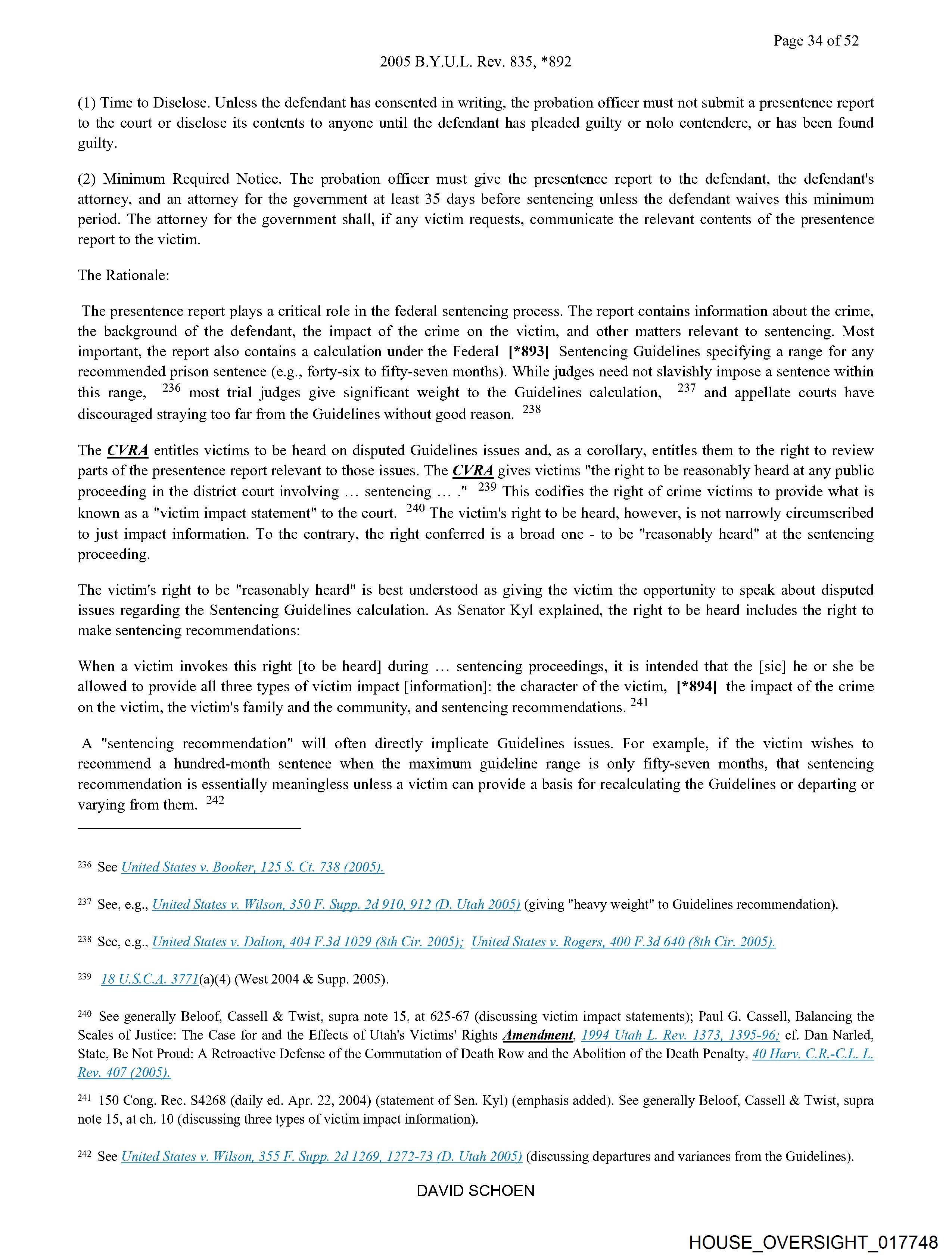
  • The CVRA entitles victims to be heard on disputed Guidelines issues and, as a corollary, entitles them to the right to review parts of the presentence report relevant to those issues.
  • The victim's right to be 'reasonably heard' is best understood as giving the victim the opportunity to speak about disputed issues regarding the Sentencing Guidelines calculation.
  • When a victim invokes this right [to be heard] during ... sentencing proceedings, it is intended that the [sic] he or she be allowed to provide all three types of victim impact [information]: the character of the victim, the impact of the crime on the victim, the victim's family and the community, and sentencing recommendations.
👥 Connected Entities:
Victims of Jeffrey Epstein Federal Sentencing Guidelines Crime Victims' Rights Act (CVRA)
From: Bates: HOUSE_OVERSIGHT_017748
No comments yet.