🔐 Private Research Portal

Epstein Research Portal

Access the full investigative corpus, ranked smoking guns, OCR-linked imagery, and intel briefs.

Front-of-house site Sign In / Sign Up
Same BENED DNA · Investigative Skin
← Back to Entities

📁 FBI Dossier

13 documents connected to this entity

Page 1 of 1 (13 items)
#1 Strength: 5.0/10
Document preview

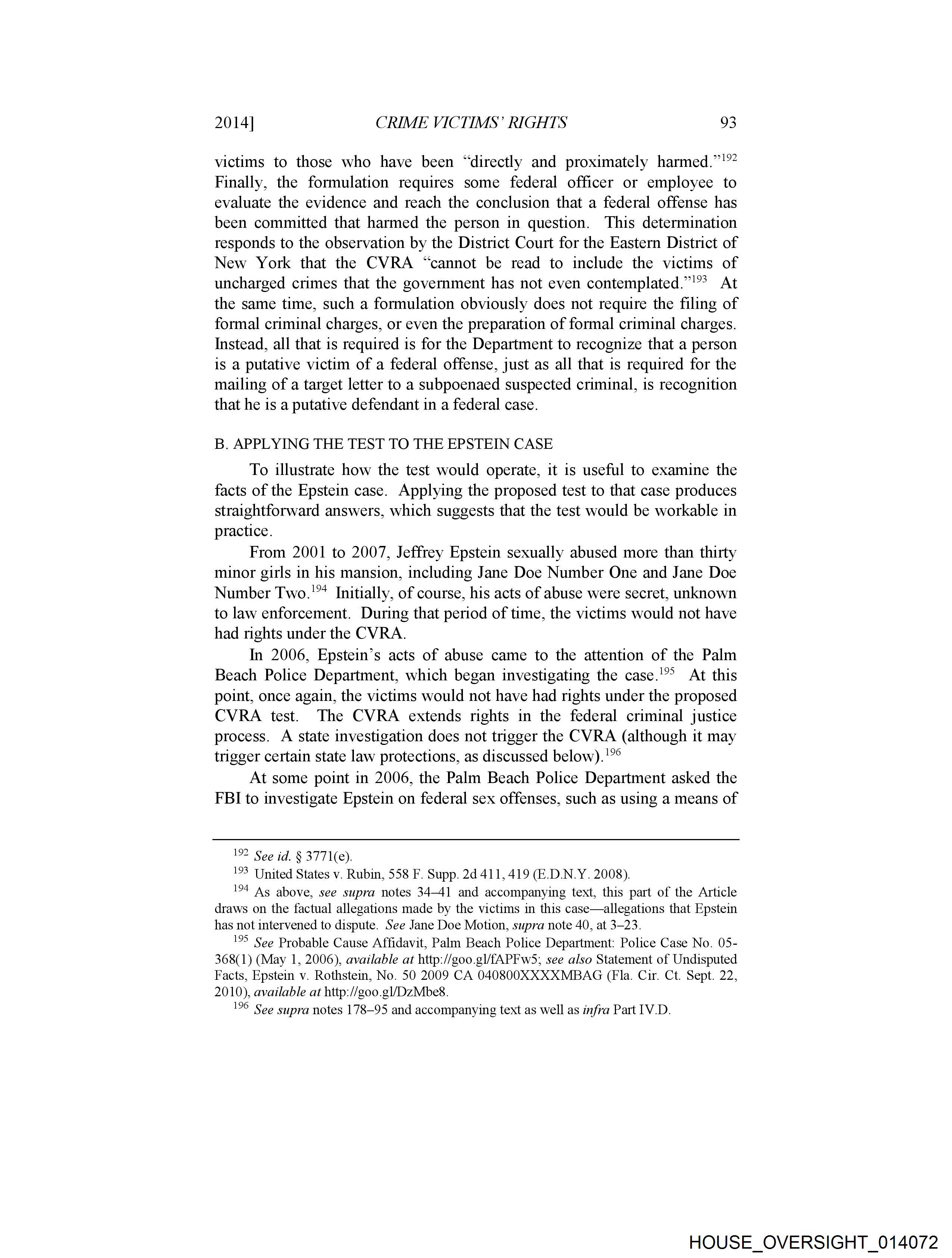
HOUSE_OVERSIGHT_014072

This document outlines the application of the Crime Victims' Rights Act (CVRA) to the Jeffrey Epstein case, highlighting the timeline of abuse and the limitations of victim rights under federal law. While it does not provide direct evidence of misconduct, it underscores the systemic failures in recognizing victims' rights during the investigation of Epstein's crimes.

🔑 Key Evidence:
  • From 2001 to 2007, Jeffrey Epstein sexually abused more than thirty minor girls in his mansion.
  • Initially, of course, his acts of abuse were secret, unknown to law enforcement.
  • In 2006, Epstein’s acts of abuse came to the attention of the Palm Beach Police Department, which began investigating the case.
👥 Connected Entities:
Jeffrey Epstein Palm Beach Police Department FBI
From: Bates: HOUSE_OVERSIGHT_014072
No comments yet.
#2 Strength: 8.0/10
Document preview

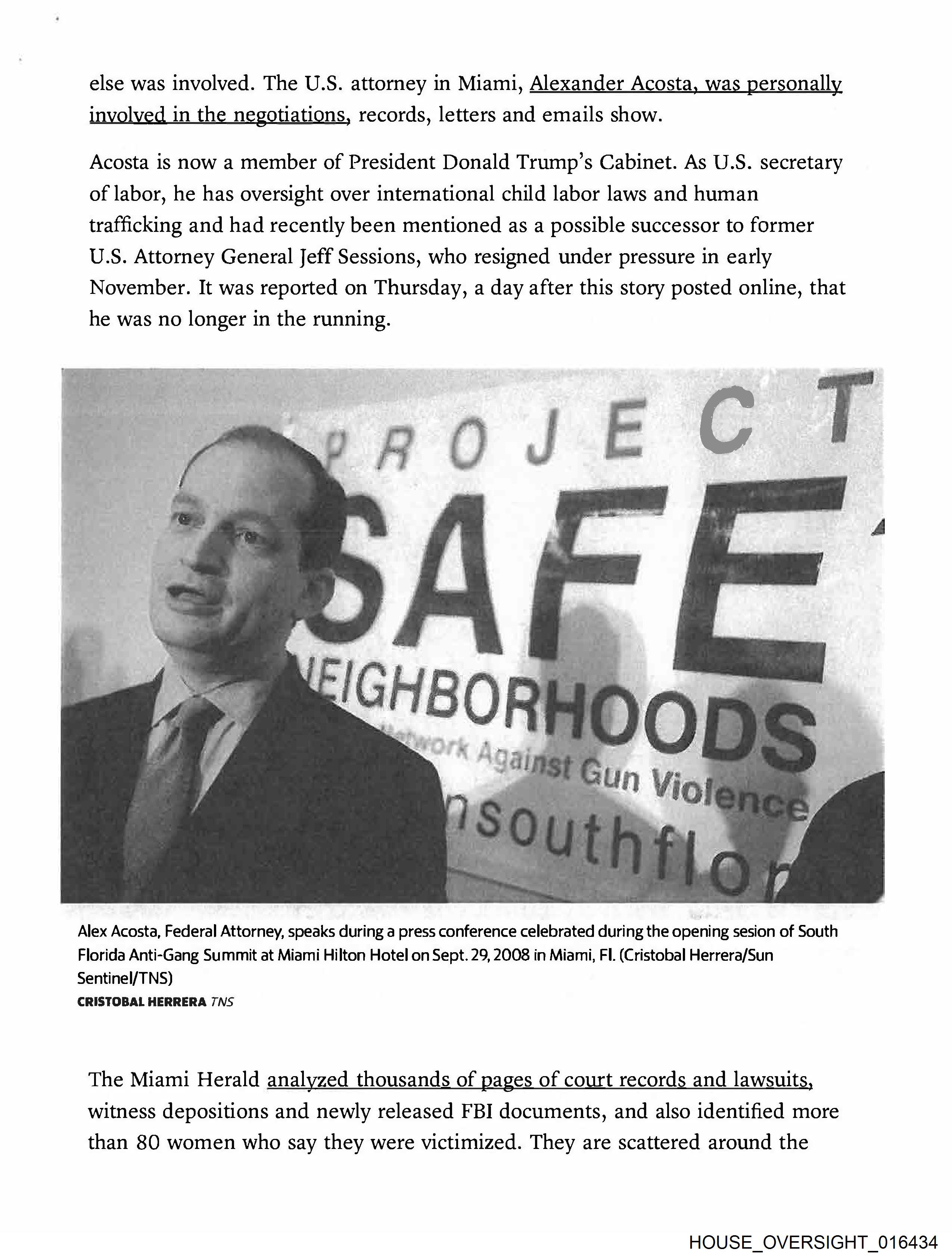
HOUSE_OVERSIGHT_016434

This document highlights the involvement of U.S. Attorney Alexander Acosta in the negotiations surrounding Jeffrey Epstein's plea deal, raising serious questions about potential misconduct and corruption within the justice system. Acosta's later position as Secretary of Labor, overseeing child labor laws and human trafficking, adds a layer of irony and concern regarding his past actions in the Epstein case.

🔑 Key Evidence:
  • The U.S. attorney in Miami, Alexander Acosta, was personally involved in the negotiations, records, letters and emails show.
  • Acosta is now a member of President Donald Trump’s Cabinet.
  • It was reported on Thursday, a day after this story posted online, that he was no longer in the running [for Attorney General].
👥 Connected Entities:
Alexander Acosta President Donald Trump Miami Herald
From: Bates: HOUSE_OVERSIGHT_016434
No comments yet.
#3 Strength: 9.0/10
Document preview

HOUSE_OVERSIGHT_016443

This document reveals significant misconduct in the handling of the Epstein case by law enforcement, particularly the reluctance of State Attorney Krischer to believe the victims and the limited scope of the grand jury investigation. It highlights systemic issues of corruption and the challenges faced by law enforcement in affluent communities when addressing sexual crimes.

🔑 Key Evidence:
  • Recarey drew up probable cause affidavits, charging Epstein, two of his assistants and one recruiter with sex-related crimes.
  • Krischer told him he didn’t believe Epstein’s accusers, and only two of them were called before the state grand jury investigating the case.
  • Reiter took a very public stance against Krischer, writing a letter, which was released to the news media, calling on Krischer to remove himself from the case.
👥 Connected Entities:
Michael Krischer Reiter FBI
From: Bates: HOUSE_OVERSIGHT_016443
No comments yet.
#4 Strength: 9.0/10
Document preview

HOUSE_OVERSIGHT_016451

This document reveals significant misconduct by prosecutors, particularly Alex Acosta, in their handling of the Epstein case, suggesting collusion with Epstein's legal team to minimize the charges against him. It highlights the lengths to which Epstein's defense went to intimidate and manipulate the legal process, raising serious questions about corruption and the protection of powerful individuals.

🔑 Key Evidence:
  • Acosta described what he called a 'year-long assault' on prosecutors by Epstein’s 'army of legal superstars' who investigated individual prosecutors and their families.
  • Documents show that Acosta not only buckled under pressure from Epstein’s lawyers, but he and other prosecutors worked with them to contain the case.
  • Emails show that federal prosecutors kept acquiescing to Epstein’s demands, allowing his lawyers to dictate the terms of each deal.
👥 Connected Entities:
Alex Acosta Alan Dershowitz Prince Andrew
From: Bates: HOUSE_OVERSIGHT_016451
No comments yet.
#5 Strength: 4.0/10
Document preview

HOUSE_OVERSIGHT_017628

This document outlines the Justice Department's policies regarding victim notification and services, which is significant in the context of the Epstein case as it highlights the procedural framework that should have been followed in notifying victims of their rights. However, it does not provide direct evidence of misconduct or corruption related to Epstein's activities.

🔑 Key Evidence:
  • The Department's mandatory policy regarding notification regarding crime victim services under the VRRA.
  • The Department noted that OLC had issued an opinion that the CVRA did not extend rights before the formal filing of charges.
  • The FBI alone reports that it provided more than 190,000 services to victims during the past fiscal year [FY 2011].
👥 Connected Entities:
U.S. Department of Justice FBI Senator Kyl
From: Bates: HOUSE_OVERSIGHT_017628
No comments yet.
#6 Strength: 5.0/10
Document preview

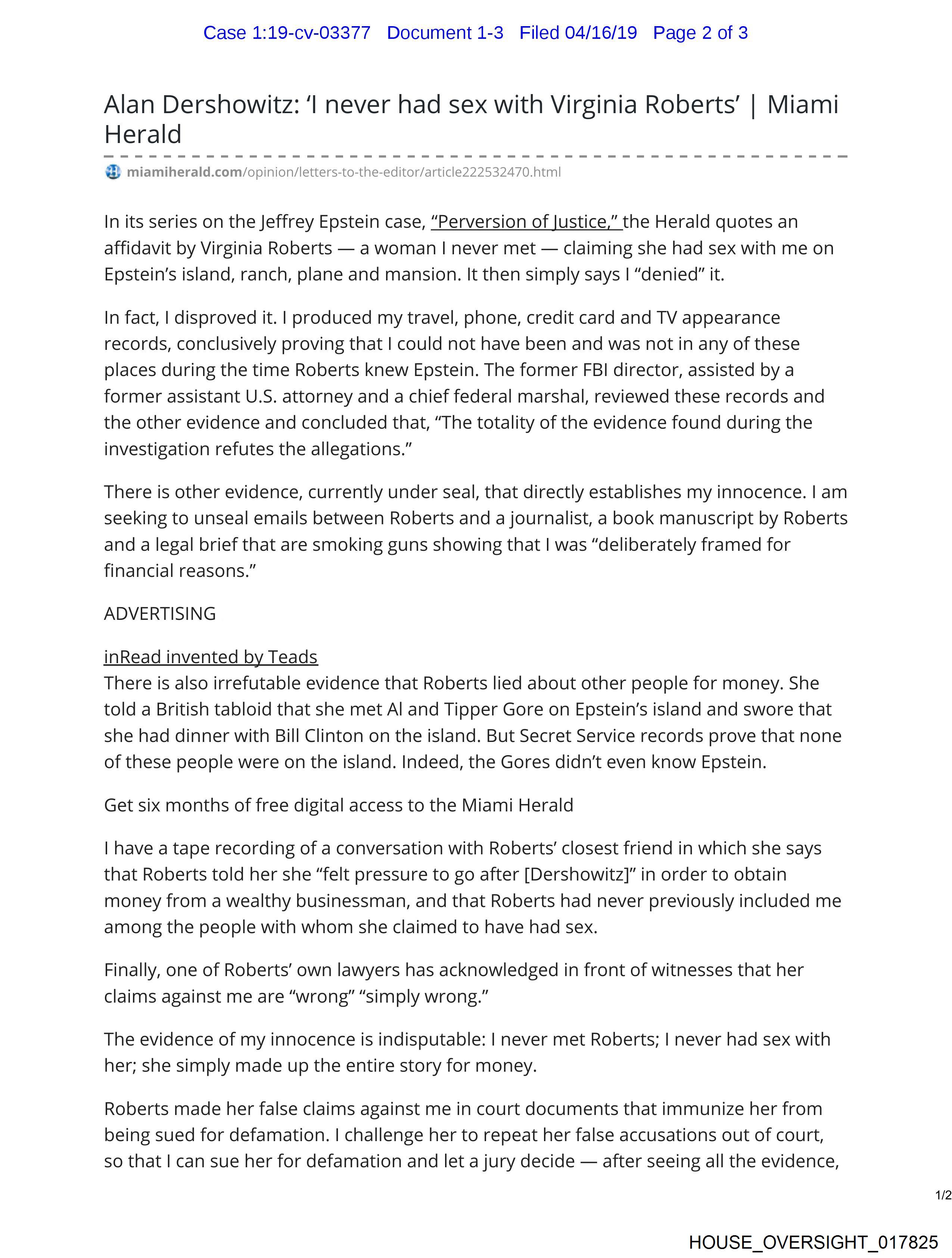
HOUSE_OVERSIGHT_017825

This document is significant as it highlights Alan Dershowitz's vehement denial of allegations made by Virginia Roberts, a key figure in the Epstein case. It reveals potential attempts to discredit victims and suggests a broader narrative of financial motivations behind accusations, which could reflect on the tactics used within the Epstein network.

🔑 Key Evidence:
  • Dershowitz claims he has 'produced my travel, phone, credit card and TV appearance records, conclusively proving that I could not have been and was not in any of these places during the time Roberts knew Epstein.'
  • He states that 'the former FBI director, assisted by a former assistant U.S. attorney and a chief federal marshal, reviewed these records and concluded that, “The totality of the evidence found during the investigation refutes the allegations.”'
  • Dershowitz mentions a tape recording of a conversation with Roberts’ friend, where she claims Roberts felt 'pressure to go after [Dershowitz]' for financial gain.
👥 Connected Entities:
Alan Dershowitz Virginia Roberts Epstein's network
From: Bates: HOUSE_OVERSIGHT_017825
No comments yet.
#7 Strength: 5.0/10
Document preview

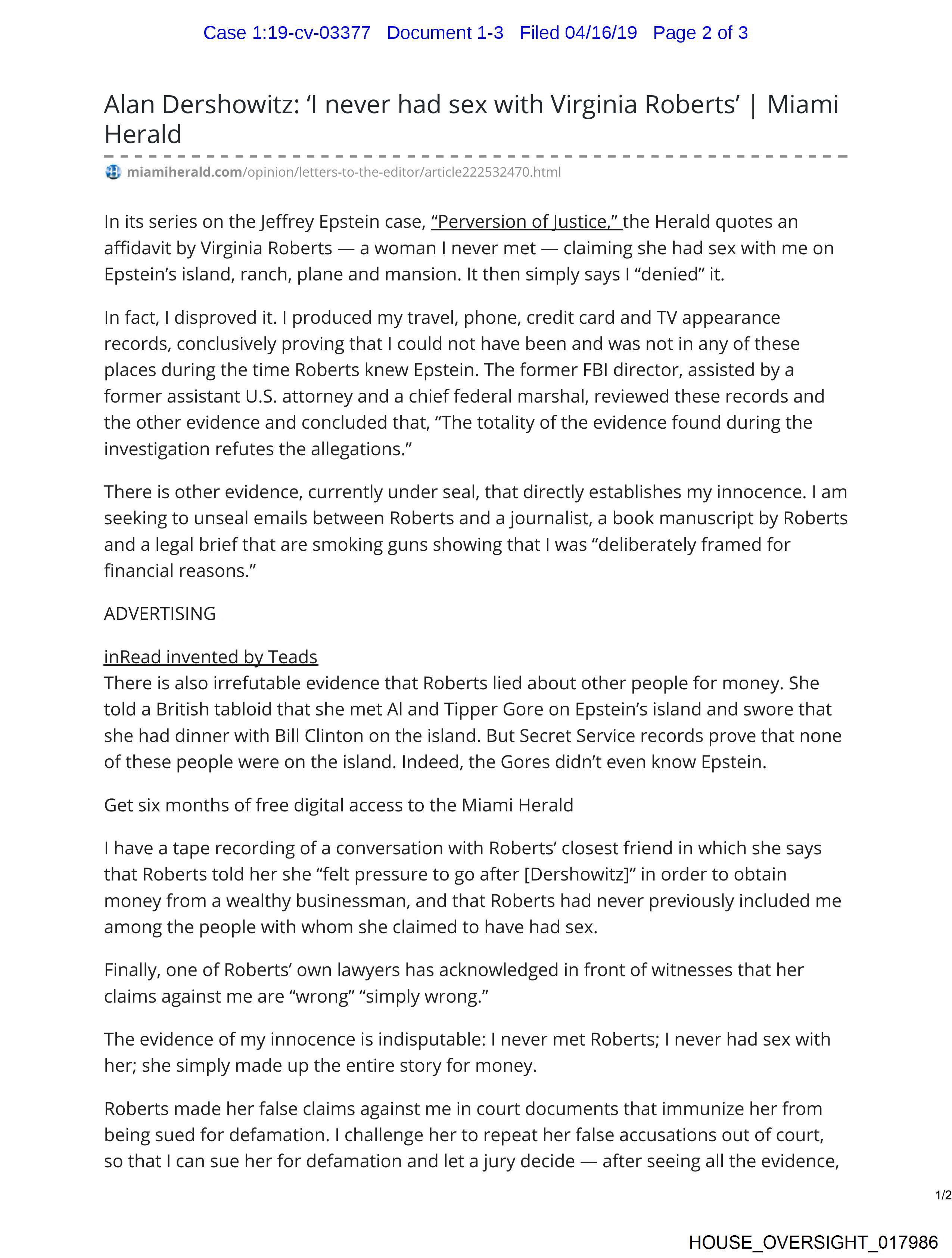
HOUSE_OVERSIGHT_017986

This document is significant as it highlights Alan Dershowitz's vehement denial of allegations made by Virginia Roberts, a key figure in the Epstein case. It reveals the complexities of the legal battles surrounding Epstein's associates and the tactics employed to discredit victims, which are central to understanding the broader implications of the Epstein scandal.

🔑 Key Evidence:
  • Dershowitz claims he has 'produced my travel, phone, credit card and TV appearance records, conclusively proving that I could not have been and was not in any of these places during the time Roberts knew Epstein.'
  • He states that 'the former FBI director, assisted by a former assistant U.S. attorney and a chief federal marshal, reviewed these records and concluded that, “The totality of the evidence found during the investigation refutes the allegations.”'
  • 'I have a tape recording of a conversation with Roberts’ closest friend in which she says that Roberts told her she “felt pressure to go after [Dershowitz]” in order to obtain money from a wealthy businessman.'
👥 Connected Entities:
Alan Dershowitz Virginia Roberts Epstein's legal team
From: Bates: HOUSE_OVERSIGHT_017986
No comments yet.
#8 Strength: 4.0/10
Document preview

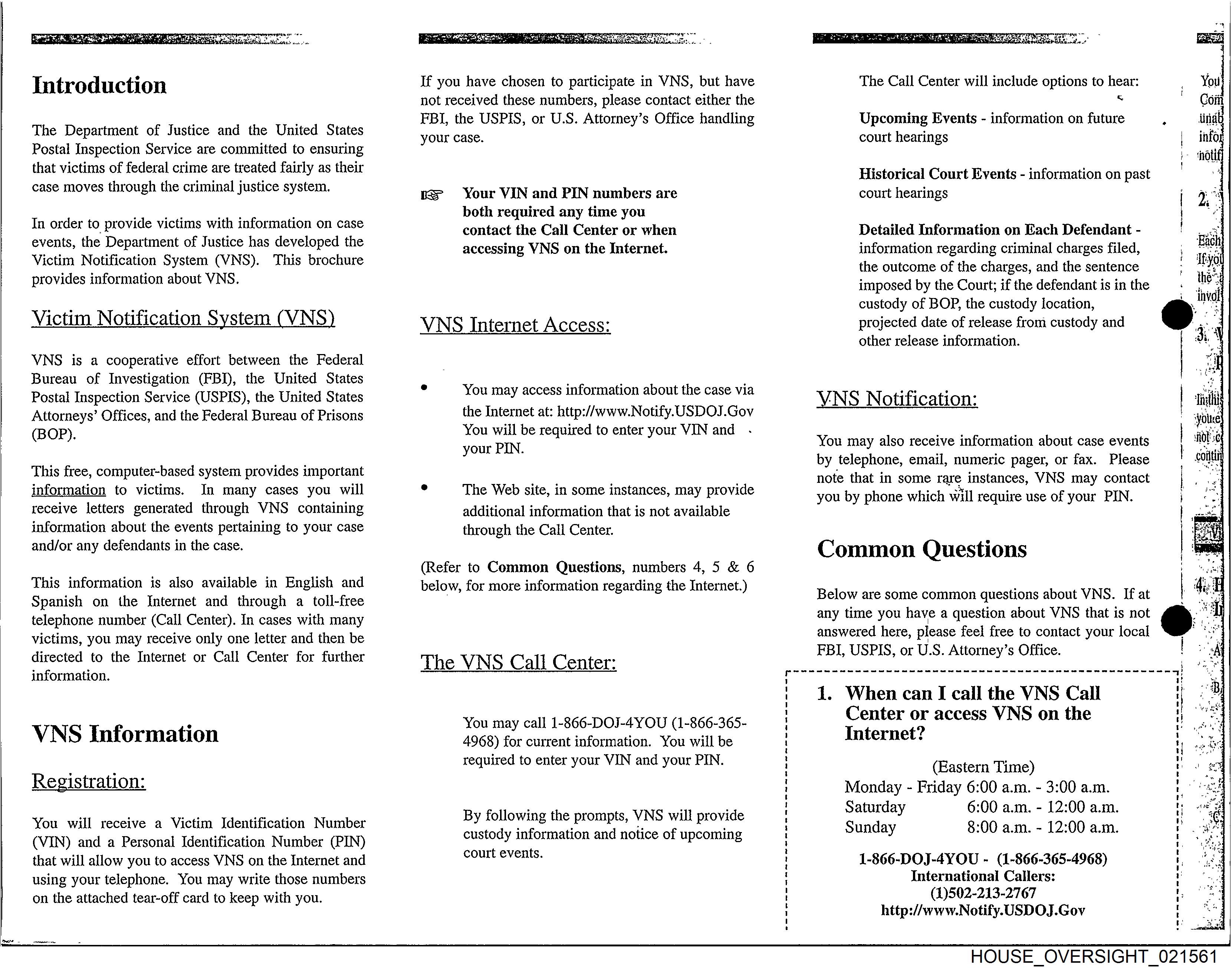
HOUSE_OVERSIGHT_021561

This document outlines the Victim Notification System (VNS) established by the Department of Justice, which is crucial for ensuring that victims of federal crimes, including those related to the Epstein case, are informed about case developments. While it does not directly implicate individuals or reveal misconduct, it highlights the systemic efforts to support victims, which is significant in the context of Epstein's extensive network of abuse.

🔑 Key Evidence:
  • The document mentions the cooperative effort between the FBI, USPIS, U.S. Attorneys’ Offices, and BOP, indicating a structured approach to victim support.
  • It provides details on how victims can access information about their cases, emphasizing the importance of victim rights in the judicial process.
  • The inclusion of a toll-free number and an internet portal for victims to receive updates reflects an organized response to the needs of victims, which is particularly relevant given the scale of Epstein's crimes.
👥 Connected Entities:
Department of Justice Federal Bureau of Investigation (FBI) United States Postal Inspection Service (USPIS)
From: Bates: HOUSE_OVERSIGHT_021561
No comments yet.
#9 Strength: 7.0/10
Document preview

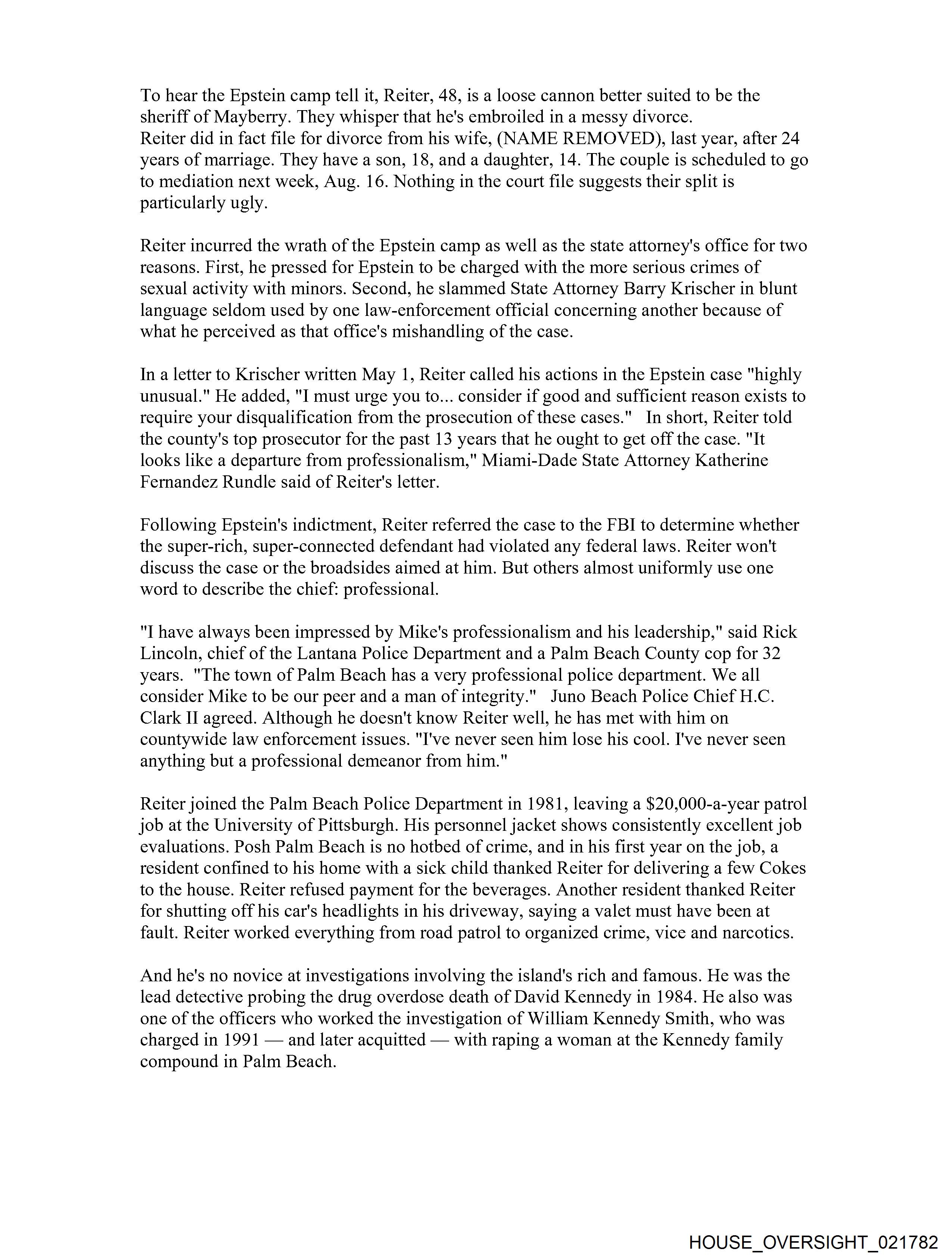
HOUSE_OVERSIGHT_021782

This document highlights the tensions between law enforcement officials regarding the handling of the Epstein case, particularly the actions of Detective Mike Reiter, who sought more serious charges against Epstein. It reveals potential misconduct in the prosecution's approach and raises questions about the integrity of the legal proceedings surrounding Epstein's alleged crimes.

🔑 Key Evidence:
  • Reiter pressed for Epstein to be charged with the more serious crimes of sexual activity with minors.
  • Reiter's letter to State Attorney Barry Krischer criticized his handling of the case, calling it 'highly unusual' and suggesting Krischer's disqualification from prosecution.
  • Miami-Dade State Attorney Katherine Fernandez Rundle described Reiter's letter as a 'departure from professionalism,' indicating internal conflict within the prosecution.
👥 Connected Entities:
Mike Reiter Barry Krischer Katherine Fernandez Rundle
From: Bates: HOUSE_OVERSIGHT_021782
No comments yet.
#10 Strength: 9.0/10
Document preview

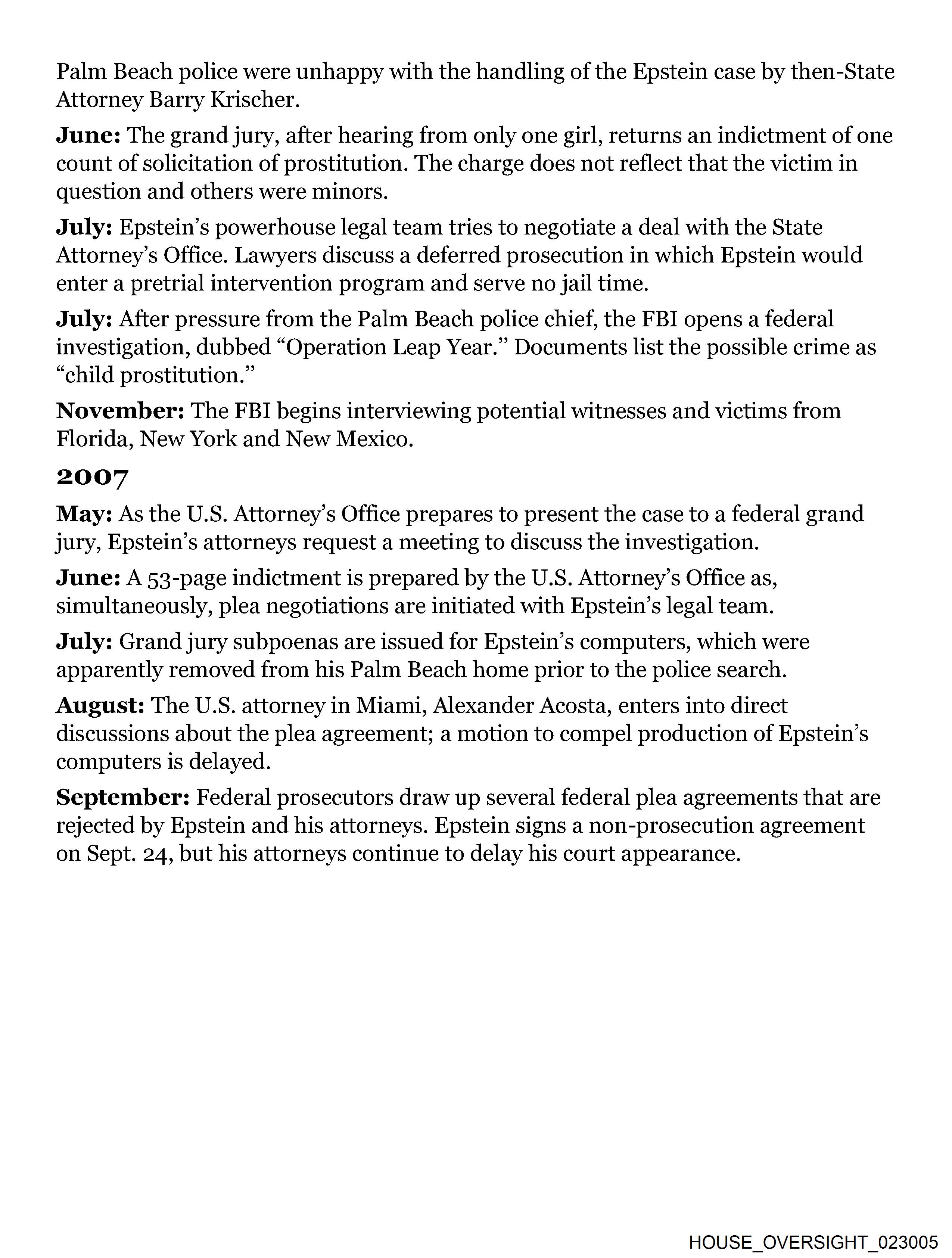
HOUSE_OVERSIGHT_023005

This document reveals significant misconduct in the handling of the Epstein case, particularly highlighting the inadequacies of the legal system in addressing allegations of child prostitution and the influence of Epstein's legal team in negotiating favorable outcomes. The timeline of events illustrates a pattern of potential corruption and complicity among law enforcement and legal authorities.

🔑 Key Evidence:
  • The grand jury, after hearing from only one girl, returns an indictment of one count of solicitation of prostitution. The charge does not reflect that the victim in question and others were minors.
  • Epstein’s powerhouse legal team tries to negotiate a deal with the State Attorney’s Office. Lawyers discuss a deferred prosecution in which Epstein would enter a pretrial intervention program and serve no jail time.
  • After pressure from the Palm Beach police chief, the FBI opens a federal investigation, dubbed 'Operation Leap Year.' Documents list the possible crime as 'child prostitution.'
👥 Connected Entities:
Barry Krischer (State Attorney) Alexander Acosta (U.S. Attorney) Palm Beach Police Department
From: Bates: HOUSE_OVERSIGHT_023005
No comments yet.
#11 Fri, Feb 1, 2019 at 5:18 AM Strength: 8.0/10
Document preview

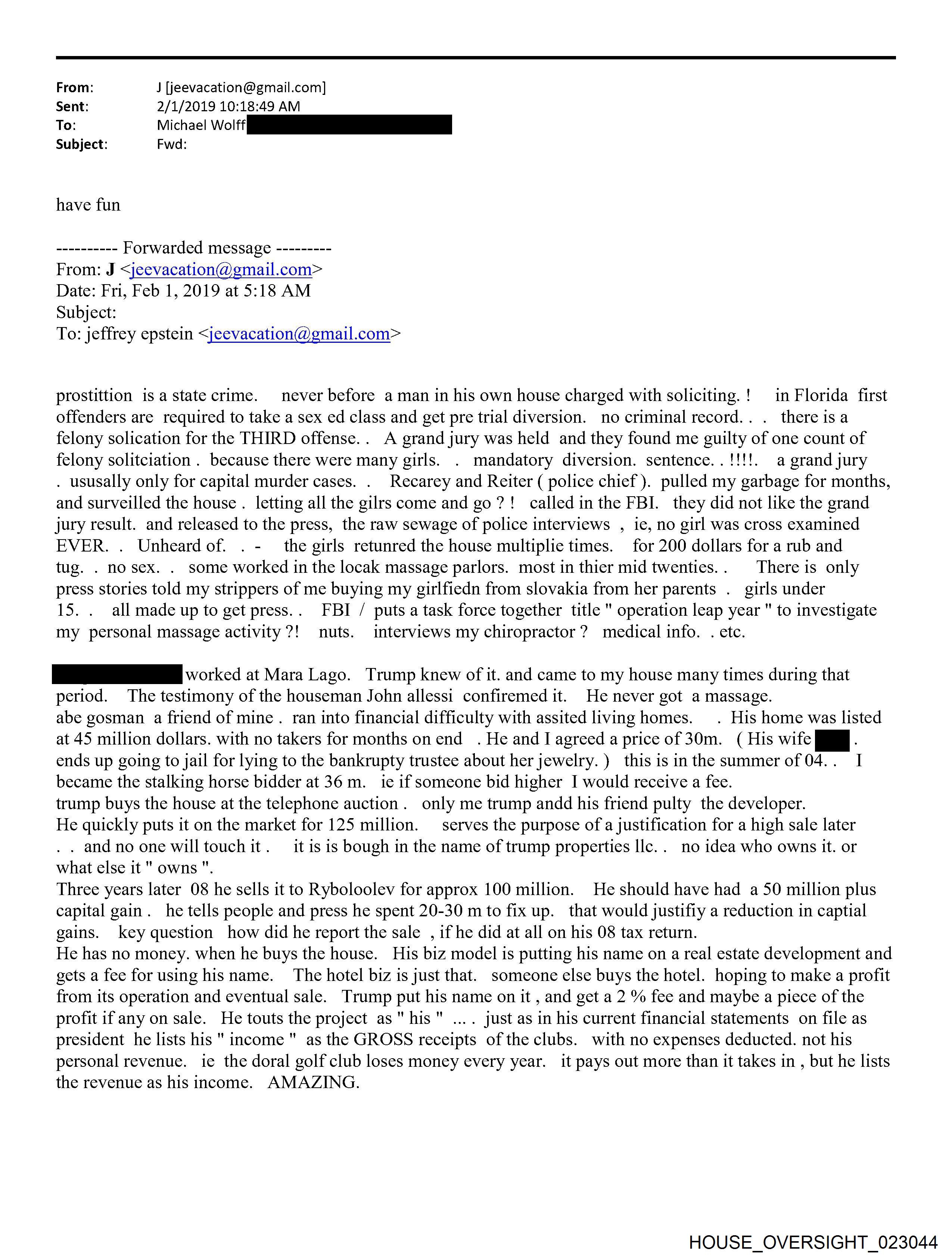
Fwd:

This document reveals potential misconduct involving solicitation and the legal handling of Epstein's activities, suggesting a network of complicity among law enforcement and possibly political figures. It also hints at financial dealings that may involve corruption and manipulation of real estate transactions linked to Epstein and Trump.

🔑 Key Evidence:
  • prostittion isastate crime. never before a man in his own house charged with soliciting.!
  • A grand jury was held and they found me guilty of one count of felony solitciation . because there were many girls.
  • Ey orked at Mara Lago. Trump knew of it. and came to my house many times during that period.
👥 Connected Entities:
Jeffrey Epstein Donald Trump Michael Wolff
From: J [jeevacation@gmail.com] Bates: HOUSE_OVERSIGHT_023044
No comments yet.
#12 Strength: 8.0/10
Document preview

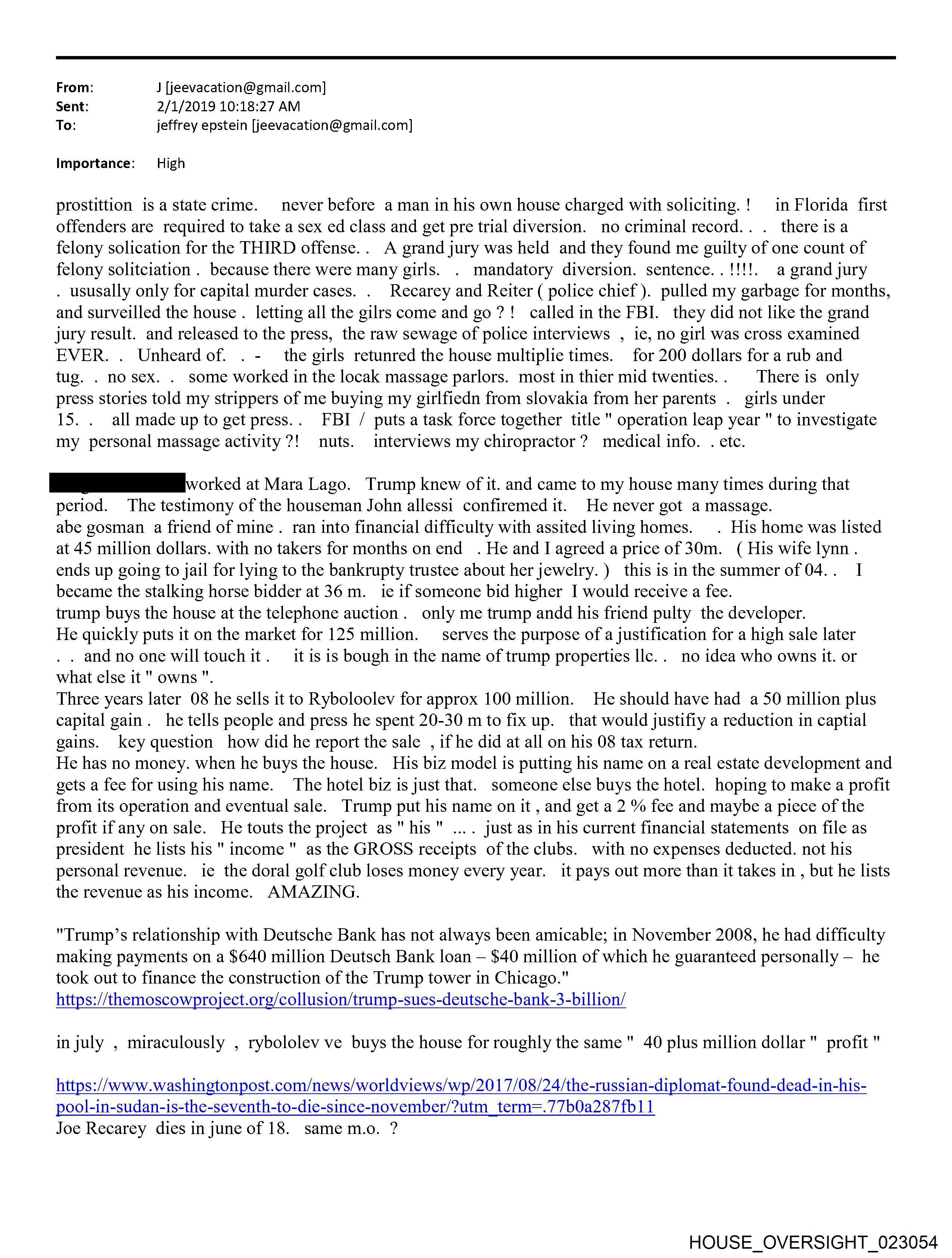
HOUSE_OVERSIGHT_023054

This document reveals significant allegations regarding Jeffrey Epstein's connections to high-profile individuals, including Donald Trump, and suggests potential misconduct related to solicitation and the handling of criminal investigations. It also highlights the questionable financial dealings surrounding real estate transactions that may involve illicit activities.

🔑 Key Evidence:
  • The document mentions a grand jury finding the author guilty of felony solicitation, indicating a serious legal issue related to solicitation activities.
  • It references a task force by the FBI titled 'operation leap year' investigating personal massage activities, suggesting a broader investigation into Epstein's network.
  • The author claims that Trump was aware of the activities at his residence and visited multiple times, indicating potential complicity or knowledge of Epstein's operations.
👥 Connected Entities:
Jeffrey Epstein Donald Trump FBI
From: J [jeevacation@gmail.com] Bates: HOUSE_OVERSIGHT_023054
No comments yet.
#13 Strength: 5.0/10
Document preview

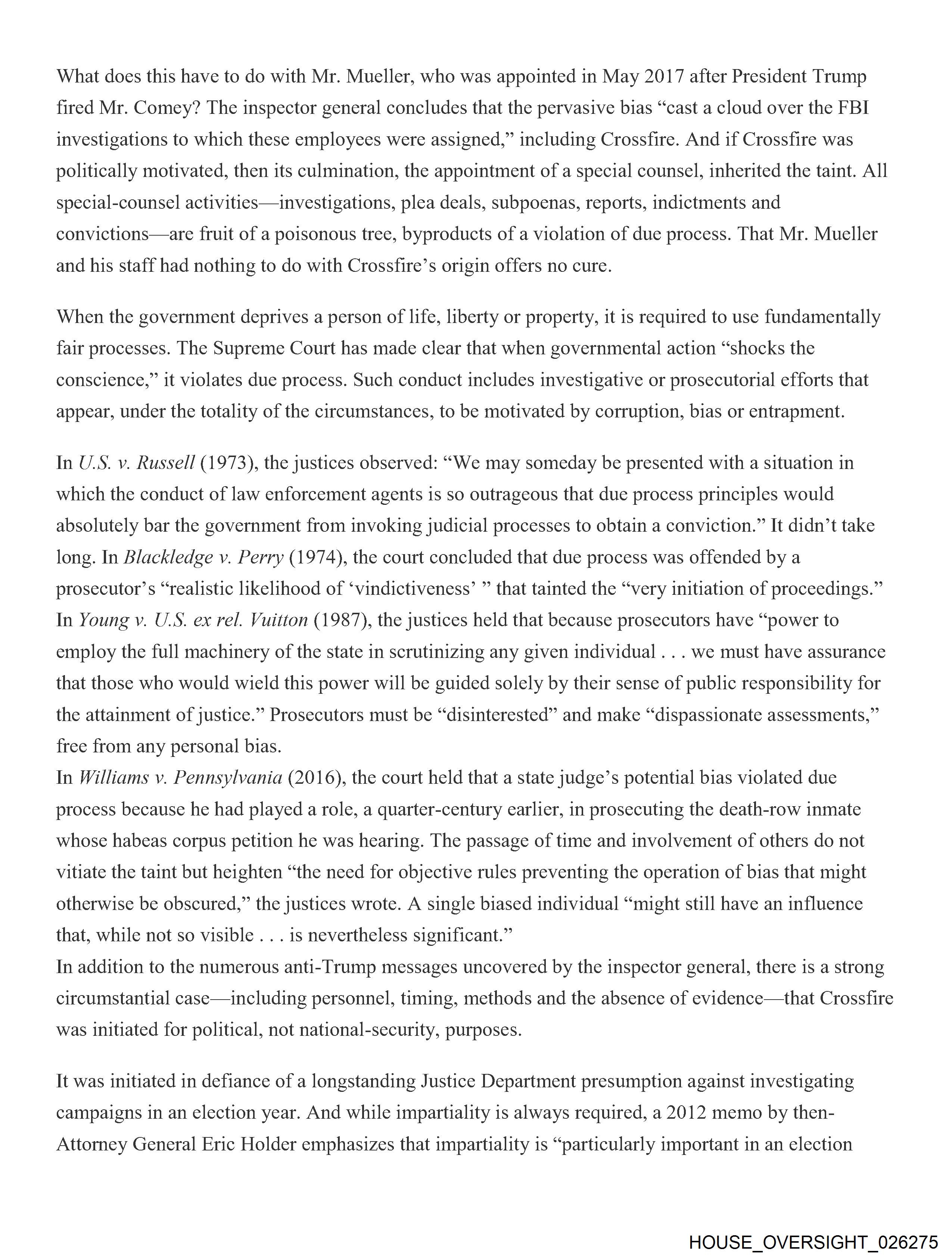
HOUSE_OVERSIGHT_026275

This document discusses the potential bias and misconduct within the FBI and the implications of such actions on due process, particularly in relation to investigations like Crossfire. While it does not directly implicate Epstein or his activities, it raises concerns about the integrity of governmental investigations that could relate to broader issues of corruption and misconduct in high-profile cases, including Epstein's.

🔑 Key Evidence:
  • The inspector general concludes that the pervasive bias 'cast a cloud over the FBI investigations to which these employees were assigned.'
  • All special-counsel activities—investigations, plea deals, subpoenas, reports, indictments and convictions—are fruit of a poisonous tree, byproducts of a violation of due process.
  • The Supreme Court has made clear that when governmental action 'shocks the conscience,' it violates due process.
👥 Connected Entities:
Robert Mueller James Comey FBI
From: Bates: HOUSE_OVERSIGHT_026275
No comments yet.