🔐 Private Research Portal

Epstein Research Portal

Access the full investigative corpus, ranked smoking guns, OCR-linked imagery, and intel briefs.

Front-of-house site Sign In / Sign Up
Same BENED DNA · Investigative Skin
← Back to Entities

📁 Jeffrey Epstein Dossier

5,328 documents connected to this entity

Page 267 of 267 (5,328 items)
#5321 Strength: 5.0/10
Document preview

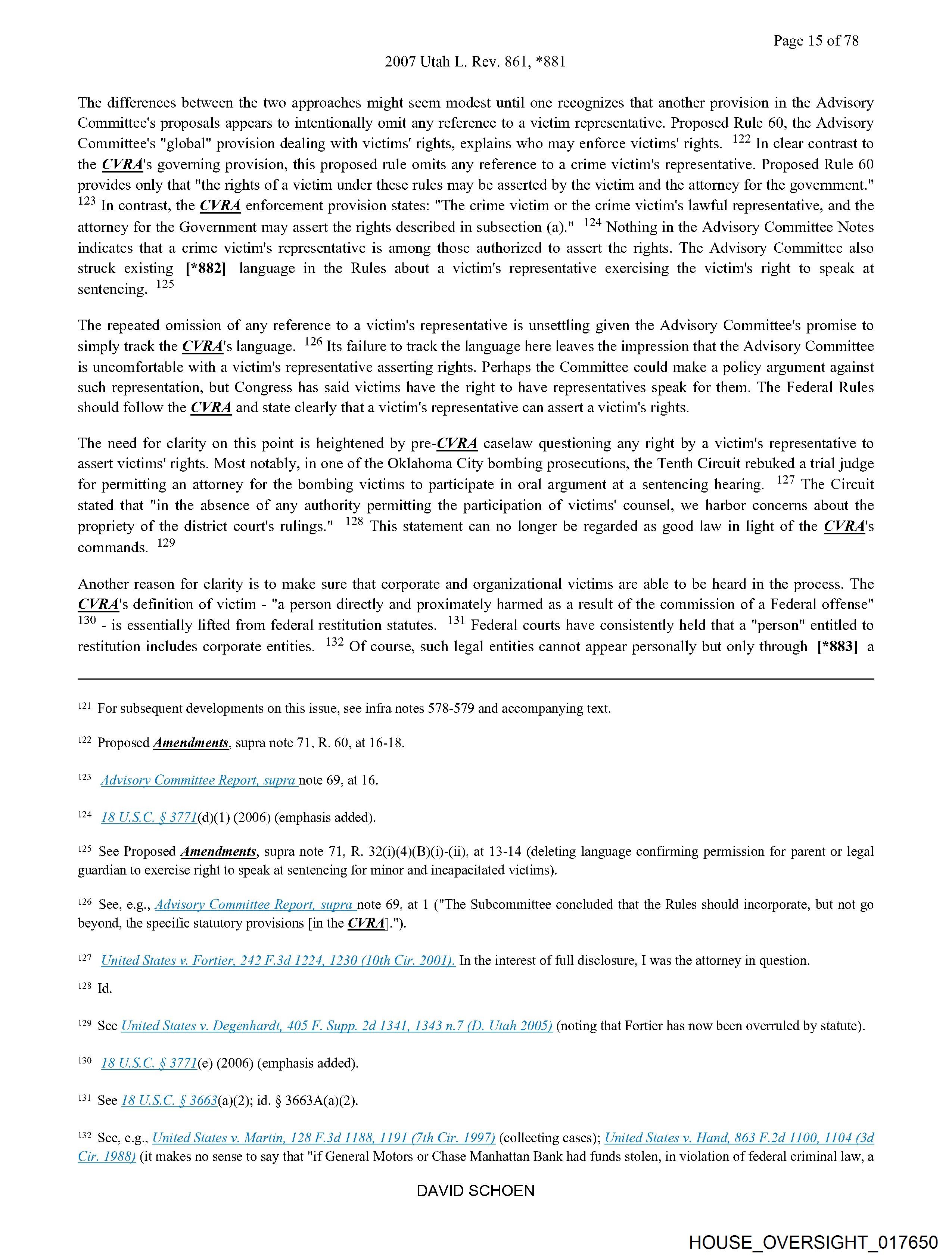
HOUSE_OVERSIGHT_017650

This document highlights significant concerns regarding the rights of victims and their representatives in the context of federal criminal proceedings, particularly in relation to the Crime Victims' Rights Act (CVRA). The omission of victim representatives in proposed rules raises questions about the treatment of victims in cases like Epstein's, where victim intimidation and discrediting were prevalent.

🔑 Key Evidence:
  • The proposed rule omits any reference to a crime victim's representative, which contrasts with the CVRA's enforcement provision that allows for such representation.
  • The Advisory Committee's failure to track the CVRA's language leaves the impression that they are uncomfortable with a victim's representative asserting rights.
  • The document references a Tenth Circuit ruling that rebuked a trial judge for allowing victims' counsel to participate in a sentencing hearing, indicating a historical reluctance to recognize victims' representatives in legal proceedings.
👥 Connected Entities:
Advisory Committee on Rules Crime Victims' Rights Act (CVRA) Federal Courts
From: Bates: HOUSE_OVERSIGHT_017650
No comments yet.
#5322 Strength: 5.0/10
Document preview

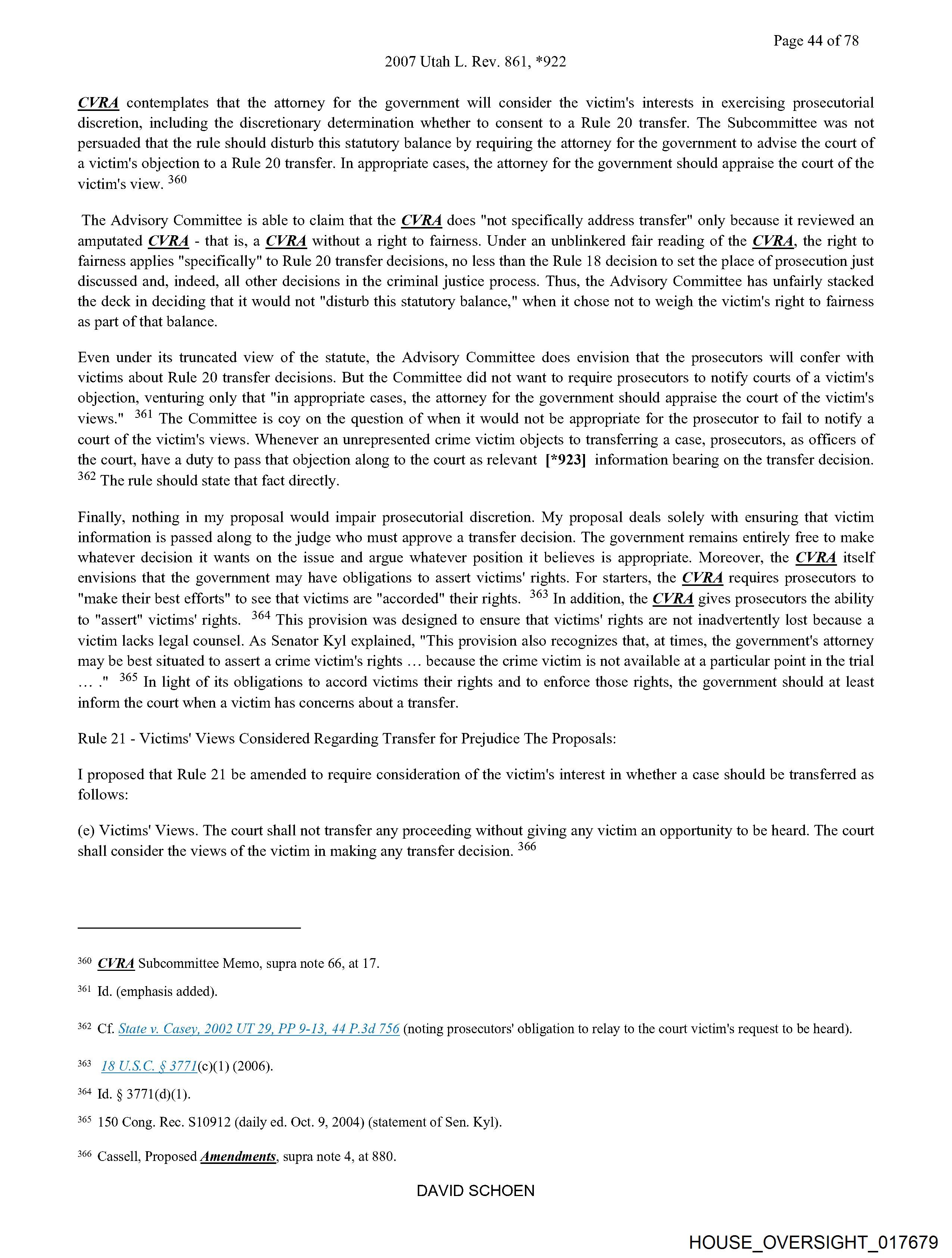
HOUSE_OVERSIGHT_017679

This document highlights the complexities surrounding the rights of victims in the context of prosecutorial discretion, particularly regarding Rule 20 transfers. While it does not provide direct evidence of misconduct related to Epstein, it underscores systemic issues in how victims' rights may be overlooked, which is relevant given the allegations of victim intimidation and discrediting in the Epstein case.

🔑 Key Evidence:
  • The CVRA contemplates that the attorney for the government will consider the victim's interests in exercising prosecutorial discretion.
  • The Advisory Committee has unfairly stacked the deck in deciding that it would not 'disturb this statutory balance,' when it chose not to weigh the victim's right to fairness.
  • Whenever an unrepresented crime victim objects to transferring a case, prosecutors, as officers of the court, have a duty to pass that objection along to the court as relevant information.
👥 Connected Entities:
Victims of Jeffrey Epstein U.S. Department of Justice Advisory Committee on Rules
From: Bates: HOUSE_OVERSIGHT_017679
No comments yet.
#5323 Strength: 4.0/10
Document preview

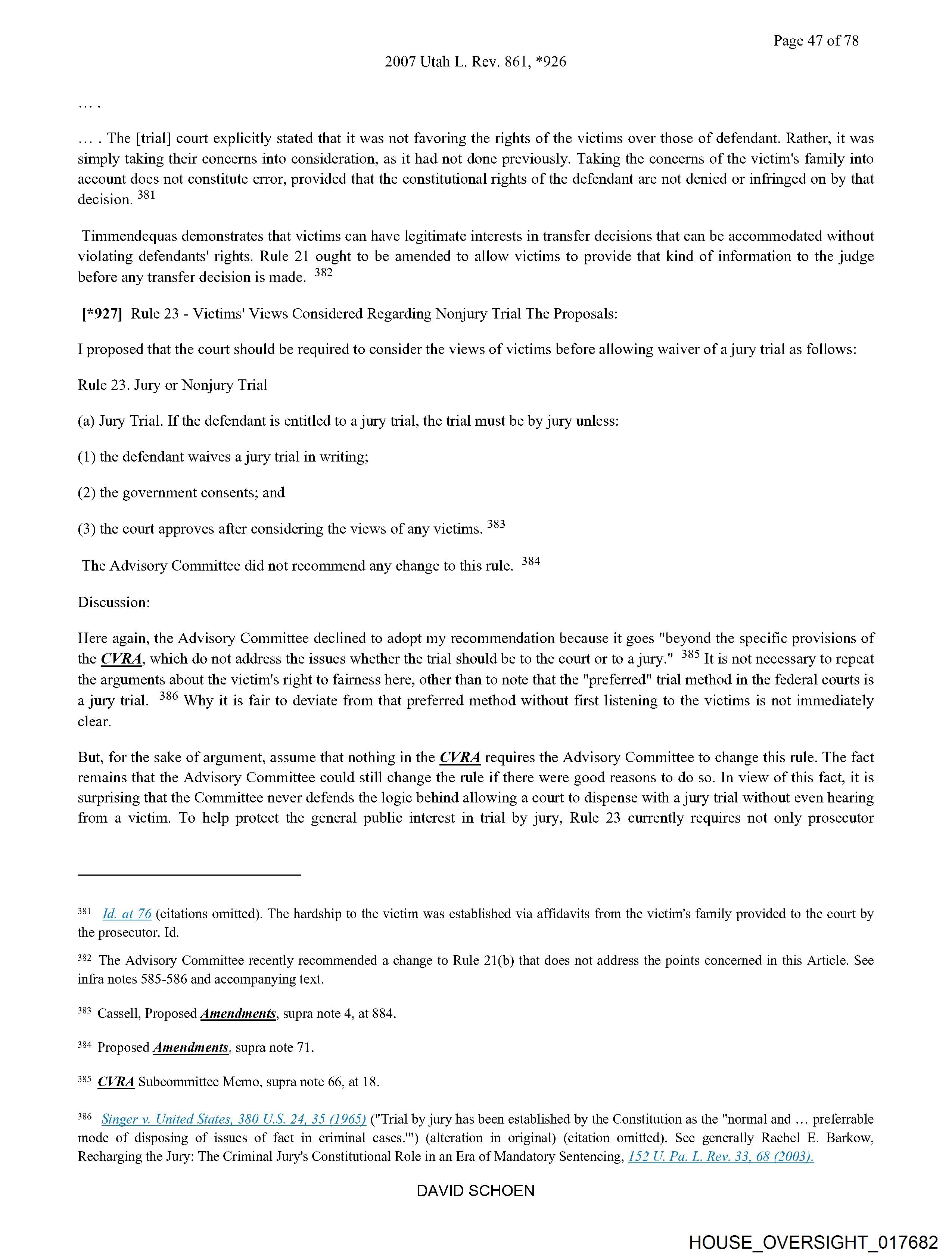
HOUSE_OVERSIGHT_017682

This document discusses the rights of victims in the context of trial procedures, particularly regarding jury trials and the consideration of victims' views. While it does not provide direct evidence of misconduct related to Epstein, it highlights systemic issues in how victims' rights are often overlooked in legal proceedings, which is relevant to the broader context of Epstein's case and the treatment of his victims.

🔑 Key Evidence:
  • The court explicitly stated that it was not favoring the rights of the victims over those of the defendant.
  • Taking the concerns of the victim's family into account does not constitute error, provided that the constitutional rights of the defendant are not denied.
  • The Advisory Committee declined to adopt recommendations that would require consideration of victims' views before waiving a jury trial.
👥 Connected Entities:
Advisory Committee on Rules Victims of Jeffrey Epstein Federal Courts
From: Bates: HOUSE_OVERSIGHT_017682
No comments yet.
#5324 Strength: 5.0/10
Document preview

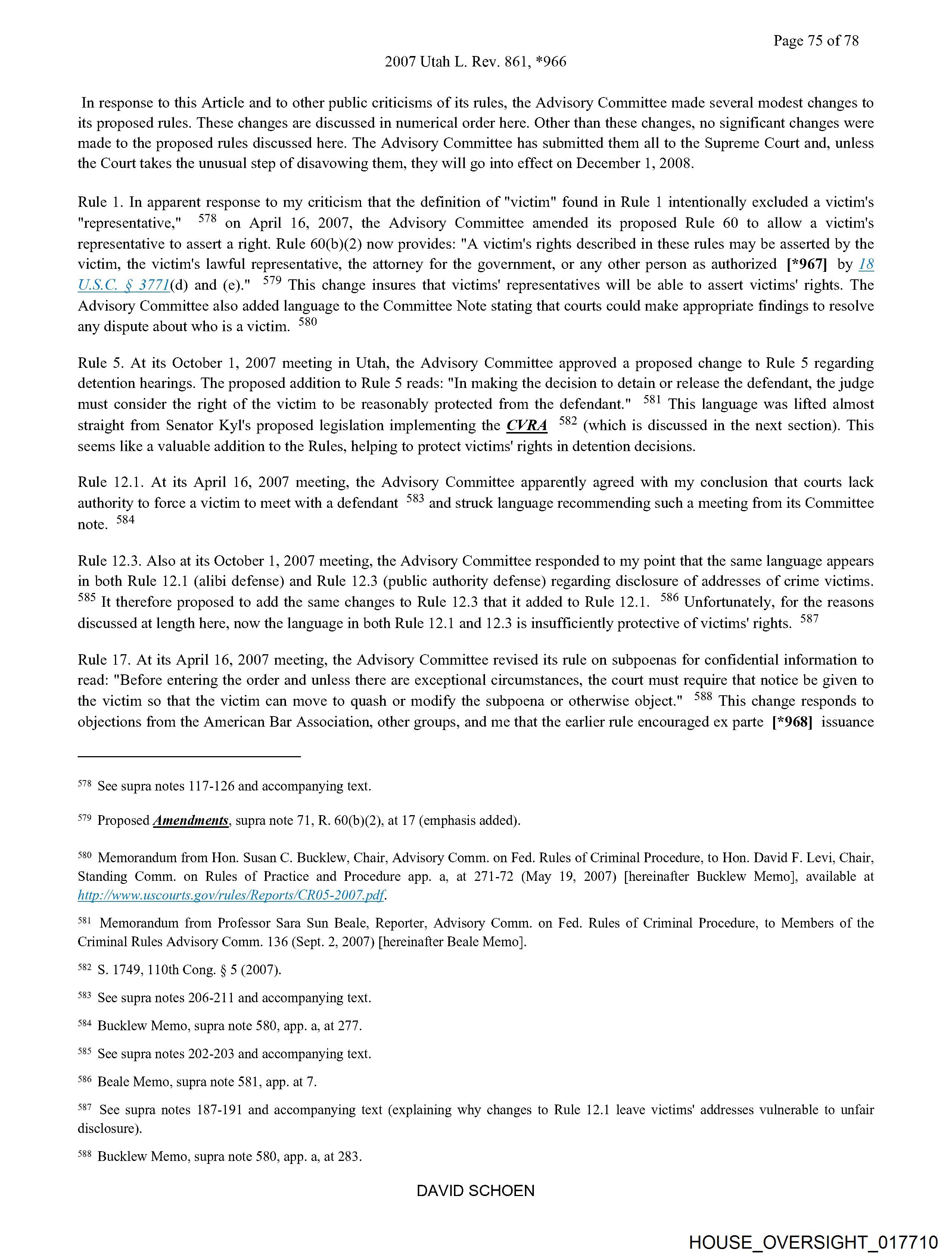
HOUSE_OVERSIGHT_017710

This document outlines proposed changes to rules regarding victims' rights in the legal system, reflecting ongoing discussions about the protection of victims, which is particularly relevant in the context of the Epstein case. While it does not provide direct evidence of misconduct, it highlights systemic issues in how victims are treated, which can be connected to the broader patterns of intimidation and discrediting seen in Epstein's operations.

🔑 Key Evidence:
  • The Advisory Committee amended its proposed Rule 60 to allow a victim's representative to assert a right.
  • Rule 5 states that judges must consider the right of the victim to be reasonably protected from the defendant.
  • The document notes that courts lack authority to force a victim to meet with a defendant, indicating a recognition of victim autonomy.
👥 Connected Entities:
Advisory Committee on Rules Senator Kyl Victims of Jeffrey Epstein
From: Bates: HOUSE_OVERSIGHT_017710
No comments yet.
#5325 Strength: 5.0/10
Document preview

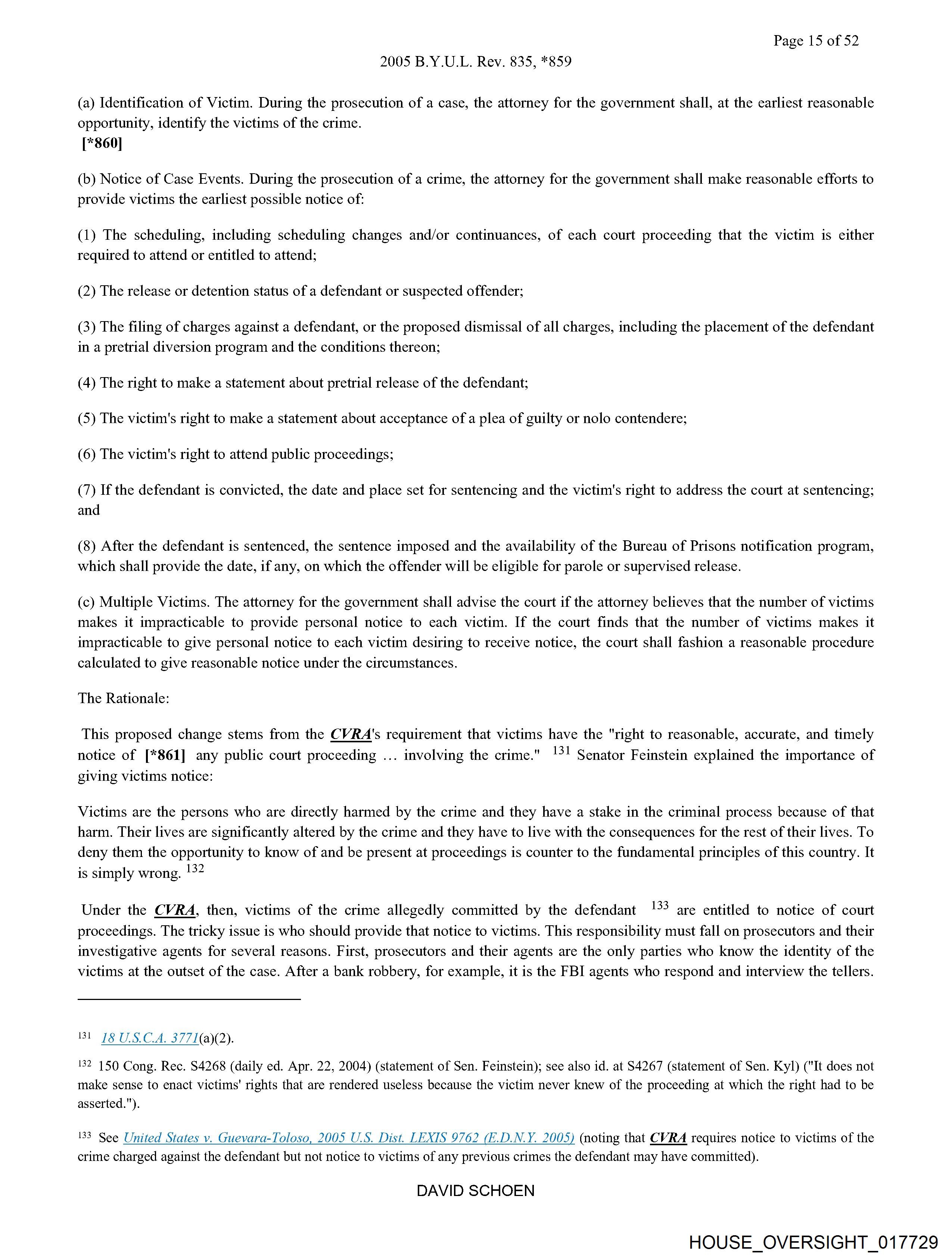
HOUSE_OVERSIGHT_017729

This document outlines the rights of victims in criminal proceedings, emphasizing the importance of timely notice and involvement in the judicial process. While it does not directly implicate individuals or reveal misconduct, it highlights systemic issues regarding victim treatment that are relevant to the Epstein case, particularly in the context of how victims were handled during the prosecution of Epstein and his associates.

🔑 Key Evidence:
  • The attorney for the government shall, at the earliest reasonable opportunity, identify the victims of the crime.
  • Victims are the persons who are directly harmed by the crime and they have a stake in the criminal process because of that harm.
  • Under the CVRA, then, victims of the crime allegedly committed by the defendant are entitled to notice of court proceedings.
👥 Connected Entities:
Senator Dianne Feinstein Victims of Jeffrey Epstein U.S. Department of Justice
From: Bates: HOUSE_OVERSIGHT_017729
No comments yet.
#5326 Strength: 4.0/10
Document preview

HOUSE_OVERSIGHT_017741

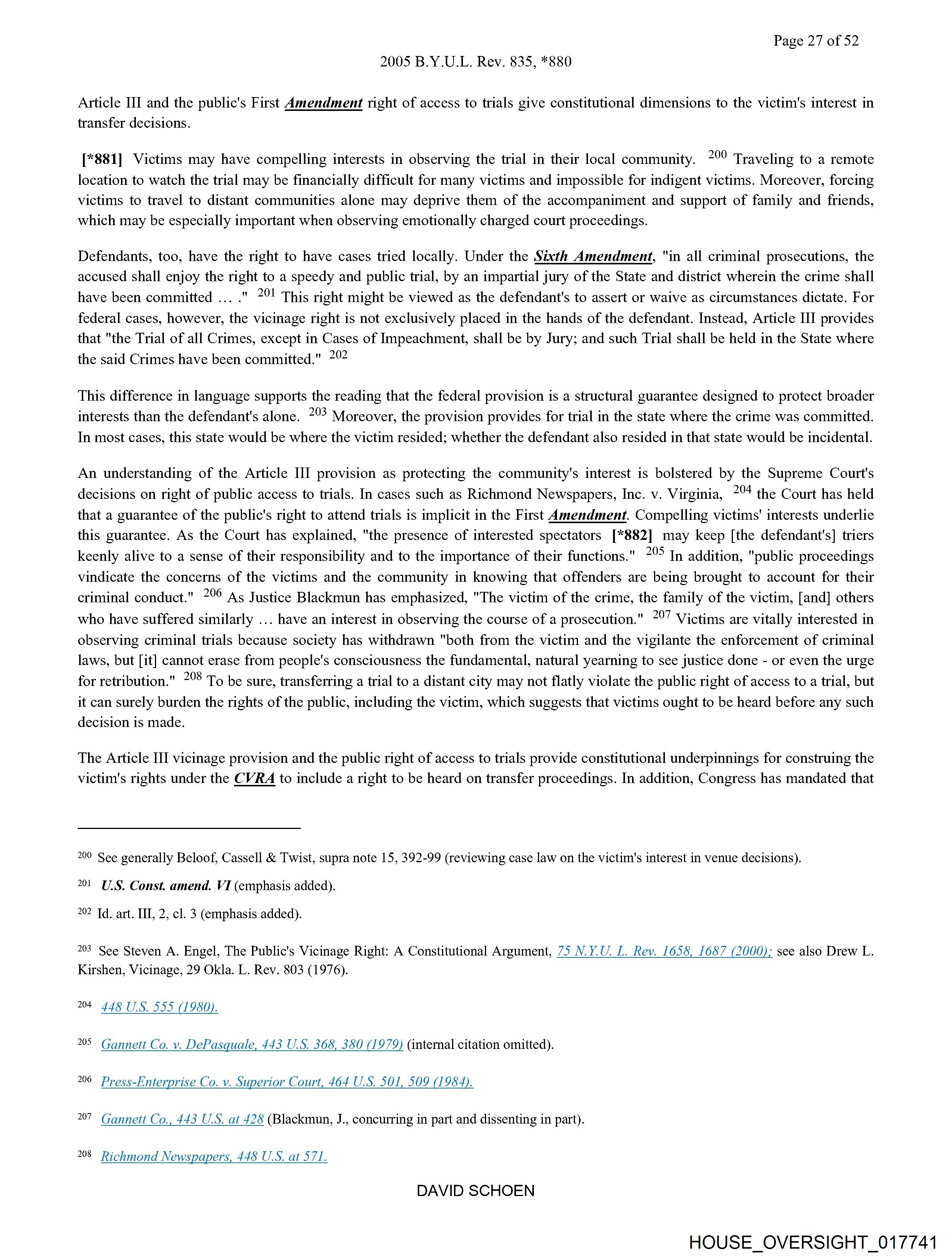
This document discusses the constitutional rights of victims in the context of trial proceedings, emphasizing their interest in observing trials locally. While it does not provide direct evidence of misconduct related to Jeffrey Epstein, it highlights the broader implications of victim rights and access to justice, which are critical in understanding the dynamics of the Epstein case and the treatment of victims.

🔑 Key Evidence:
  • Victims may have compelling interests in observing the trial in their local community.
  • Traveling to a remote location to watch the trial may be financially difficult for many victims and impossible for indigent victims.
  • The presence of interested spectators may keep the defendant's triers keenly alive to a sense of their responsibility.
👥 Connected Entities:
Victims of Jeffrey Epstein Judicial system Supreme Court (Richmond Newspapers, Inc. v. Virginia case)
From: Bates: HOUSE_OVERSIGHT_017741
No comments yet.
#5327 Strength: 5.0/10
Document preview

HOUSE_OVERSIGHT_017748

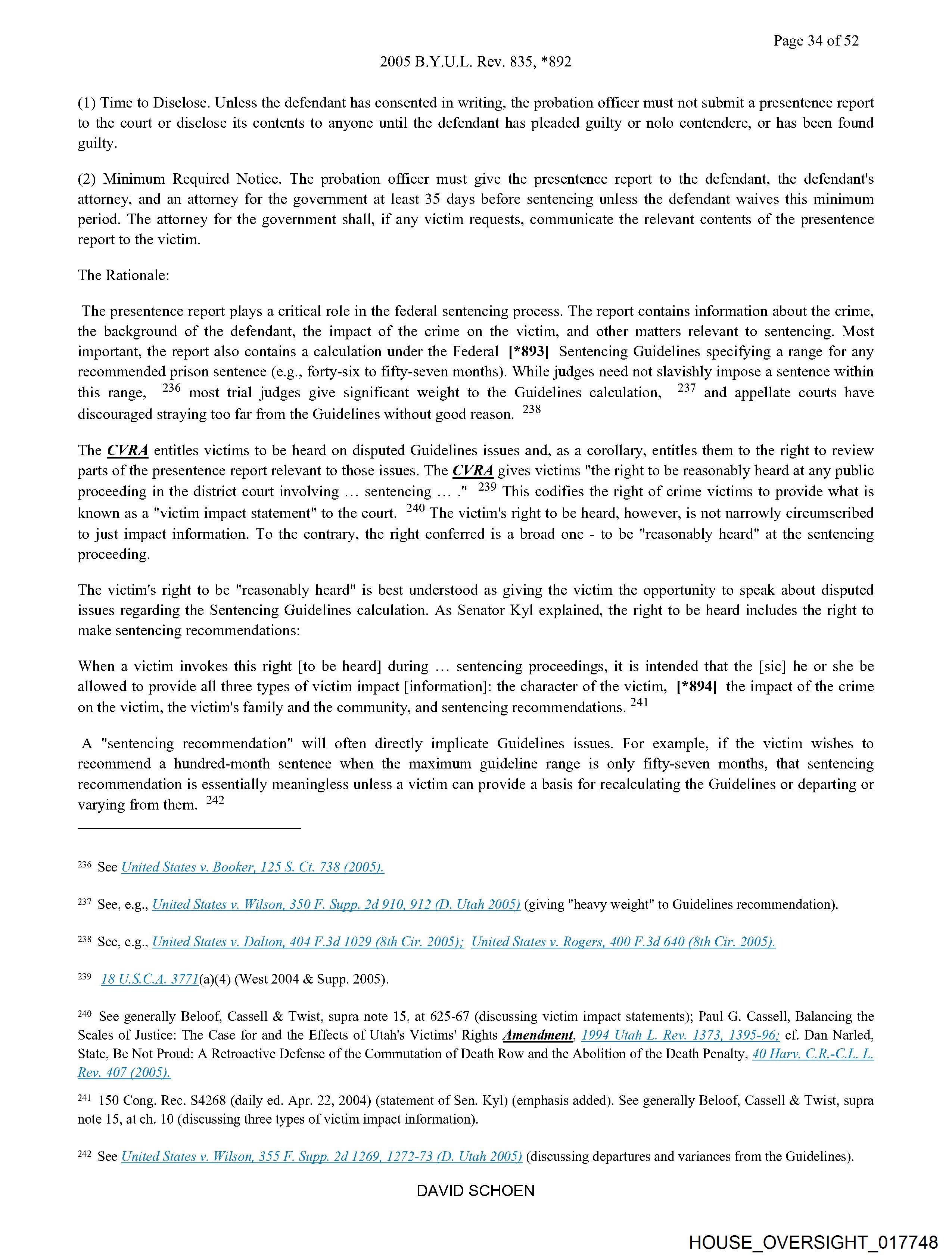
This document outlines the procedural rights of victims in the federal sentencing process, particularly their right to be heard regarding sentencing recommendations. While it does not directly implicate individuals or reveal new evidence of misconduct, it highlights the importance of victim impact statements in the context of Epstein's case, where victim voices were often marginalized.

🔑 Key Evidence:
  • The CVRA entitles victims to be heard on disputed Guidelines issues and, as a corollary, entitles them to the right to review parts of the presentence report relevant to those issues.
  • The victim's right to be 'reasonably heard' is best understood as giving the victim the opportunity to speak about disputed issues regarding the Sentencing Guidelines calculation.
  • When a victim invokes this right [to be heard] during ... sentencing proceedings, it is intended that the [sic] he or she be allowed to provide all three types of victim impact [information]: the character of the victim, the impact of the crime on the victim, the victim's family and the community, and sentencing recommendations.
👥 Connected Entities:
Victims of Jeffrey Epstein Federal Sentencing Guidelines Crime Victims' Rights Act (CVRA)
From: Bates: HOUSE_OVERSIGHT_017748
No comments yet.
#5328 Strength: 5.0/10
Document preview

HOUSE_OVERSIGHT_017753

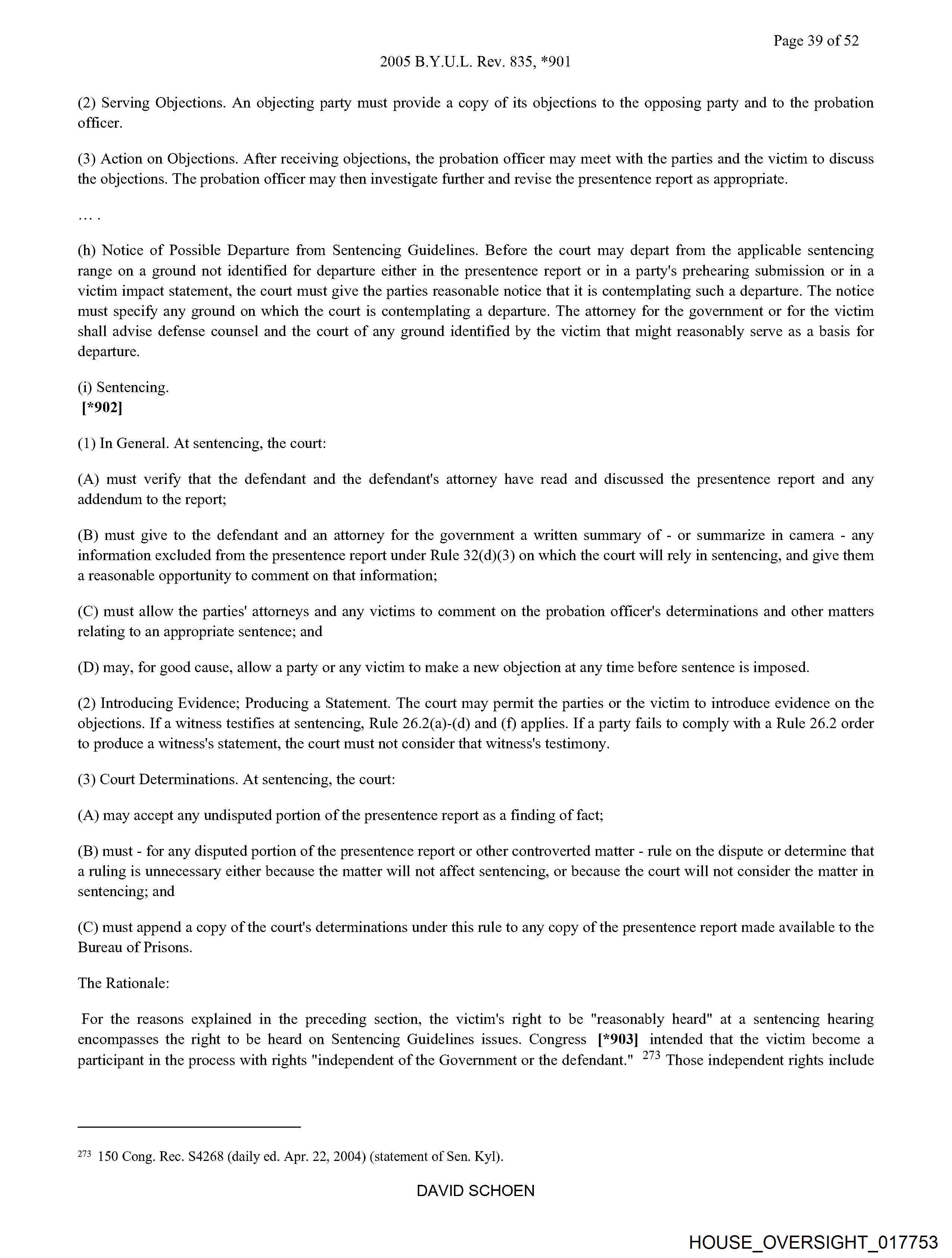
This document outlines procedural aspects of sentencing, particularly the rights of victims to be heard and the obligations of the court regarding presentence reports. While it does not directly implicate individuals in criminal activity, it highlights the legal framework that could be relevant in cases involving Epstein's victims and the judicial process they faced.

🔑 Key Evidence:
  • The document emphasizes the victim's right to be 'reasonably heard' at a sentencing hearing, which is crucial in the context of Epstein's numerous victims.
  • It details the requirement for the court to provide notice of any potential departure from sentencing guidelines, which could relate to how Epstein's case was handled.
  • The mention of the probation officer's role in discussing objections with victims indicates a procedural safeguard that may not have been adequately applied in Epstein's case.
👥 Connected Entities:
Victims of Jeffrey Epstein U.S. Probation Officers Judicial System
From: Bates: HOUSE_OVERSIGHT_017753
No comments yet.