🔐 Private Research Portal

Epstein Research Portal

Access the full investigative corpus, ranked smoking guns, OCR-linked imagery, and intel briefs.

Front-of-house site Sign In / Sign Up
Same BENED DNA · Investigative Skin
← Back to Entities

📁 U.S. Attorney's Office Dossier

13 documents connected to this entity

Page 1 of 1 (13 items)
#1 Strength: 9.0/10
Document preview

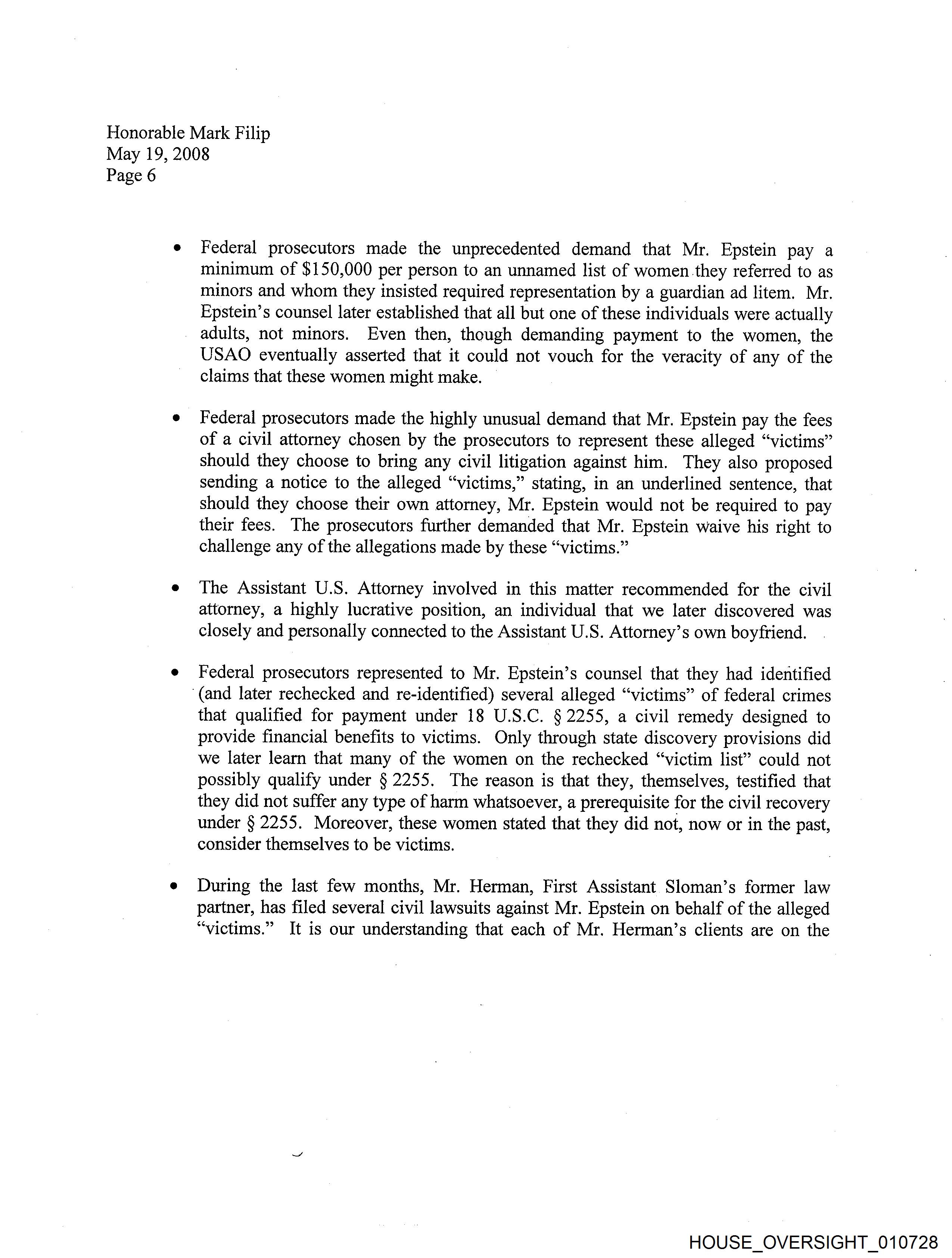
HOUSE_OVERSIGHT_010728

This document reveals significant misconduct by federal prosecutors in their handling of Epstein's case, including coercive demands for payments to alleged victims and questionable connections between prosecutors and civil attorneys. The implications of these actions suggest potential corruption and a failure to uphold justice for the victims involved.

🔑 Key Evidence:
  • Federal prosecutors made the unprecedented demand that Mr. Epstein pay a minimum of $150,000 per person to an unnamed list of women they referred to as minors.
  • The USAO eventually asserted that it could not vouch for the veracity of any of the claims that these women might make.
  • The Assistant U.S. Attorney involved in this matter recommended for the civil attorney, a highly lucrative position, an individual that we later discovered was closely and personally connected to the Assistant U.S. Attorney’s own boyfriend.
👥 Connected Entities:
Mark Filip Assistant U.S. Attorney Mr. Herman (First Assistant Sloman’s former law partner)
From: Bates: HOUSE_OVERSIGHT_010728
No comments yet.
#2 Strength: 9.0/10
Document preview

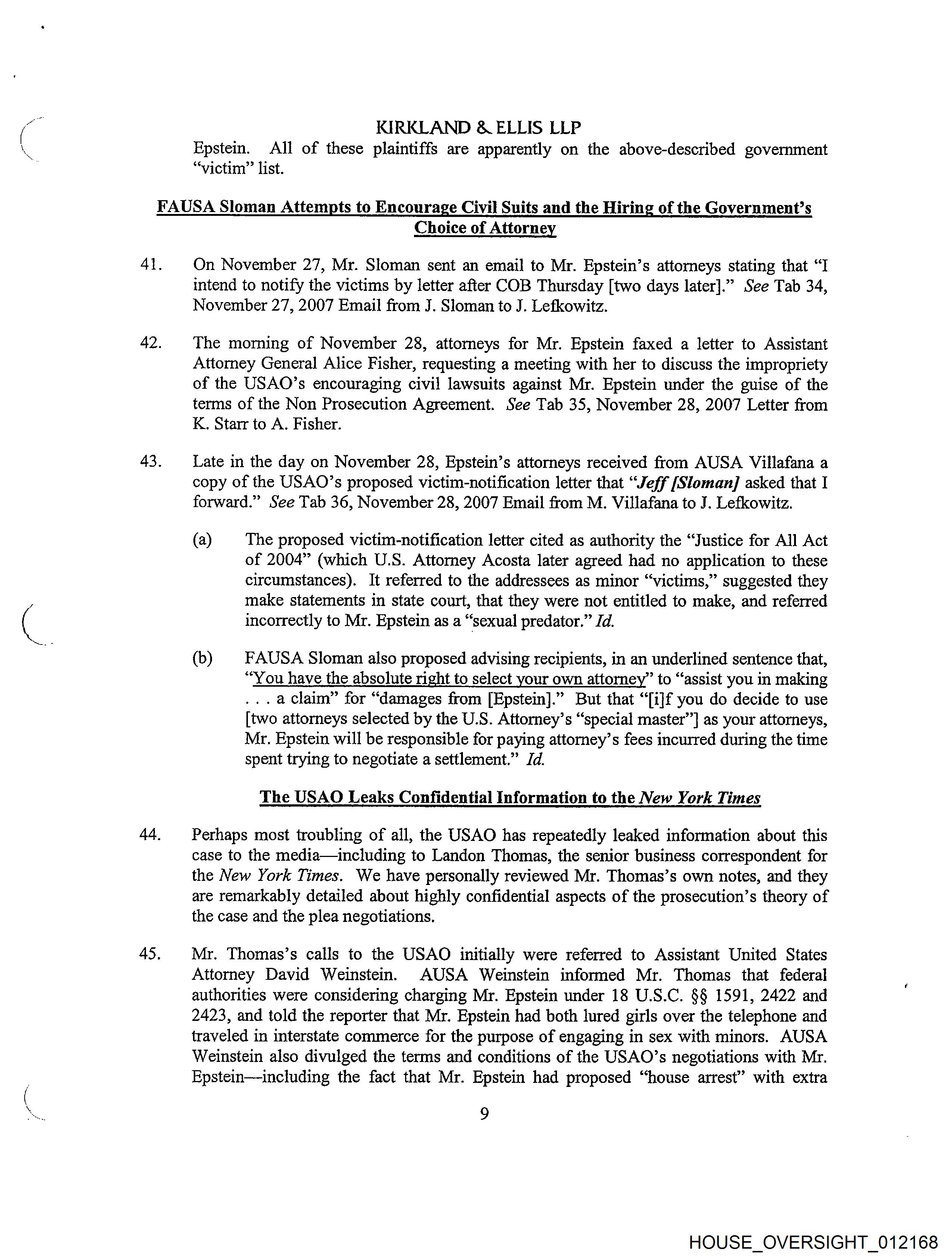
HOUSE_OVERSIGHT_012168

This document reveals significant misconduct by the U.S. Attorney's Office (USAO) in their handling of the Epstein case, including the encouragement of civil lawsuits against Epstein while undermining the victims' rights. It also highlights potential leaks of confidential information to the media, which raises serious ethical concerns regarding the prosecution's integrity.

🔑 Key Evidence:
  • Mr. Sloman sent an email to Mr. Epstein’s attorneys stating that 'I intend to notify the victims by letter after COB Thursday.'
  • Epstein’s attorneys requested a meeting to discuss the impropriety of the USAO’s encouraging civil lawsuits against Mr. Epstein under the guise of the Non Prosecution Agreement.
  • The proposed victim-notification letter incorrectly referred to Mr. Epstein as a 'sexual predator' and suggested that victims make statements in state court that they were not entitled to make.
👥 Connected Entities:
Jeffrey Epstein U.S. Attorney's Office (USAO) Alice Fisher
From: Bates: HOUSE_OVERSIGHT_012168
No comments yet.
#3 Strength: 8.0/10
Document preview

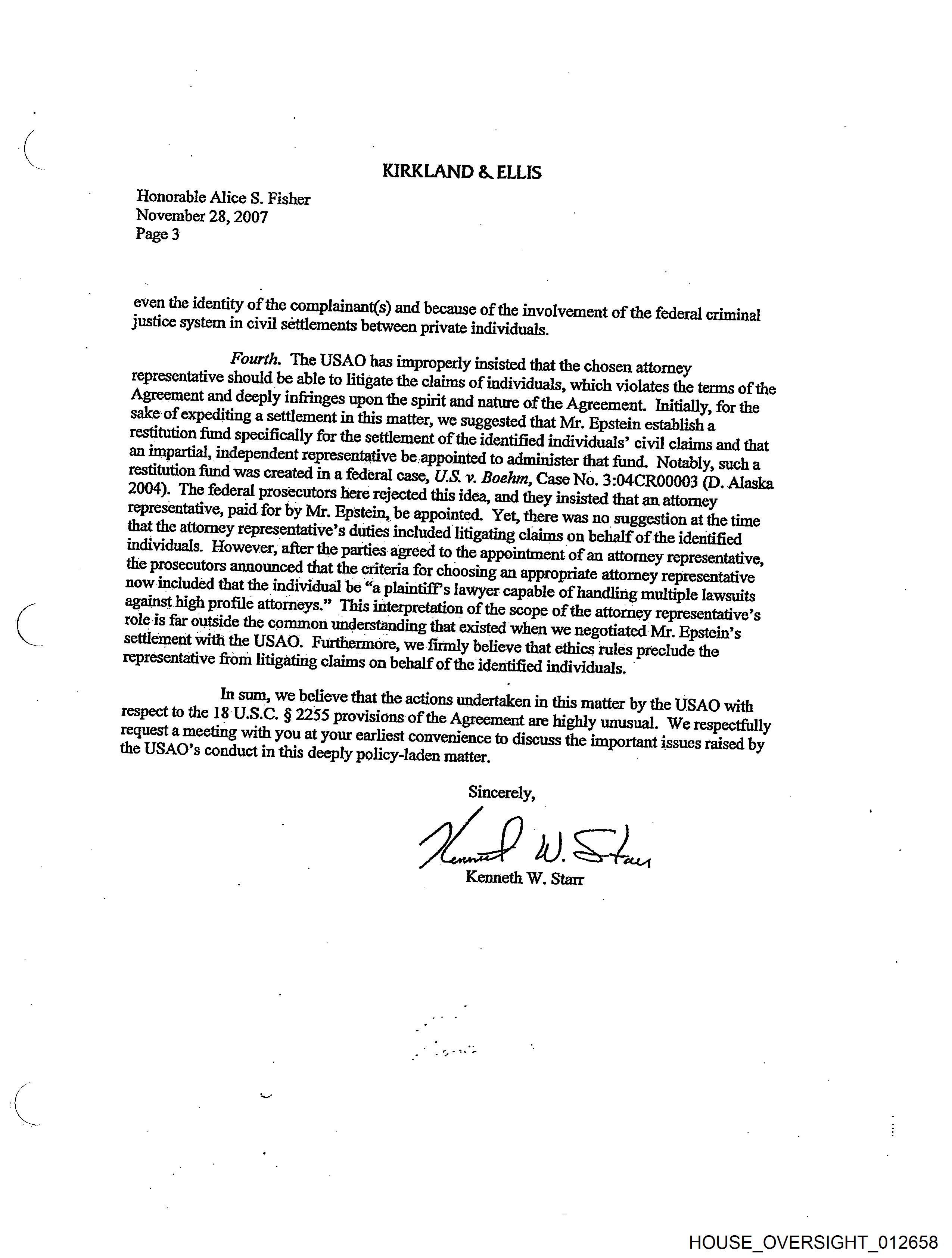
HOUSE_OVERSIGHT_012658

This document reveals significant concerns regarding the conduct of the U.S. Attorney's Office (USAO) in relation to the settlement agreement involving Jeffrey Epstein. It highlights potential misconduct in the insistence on appointing a specific type of attorney representative, which raises questions about the integrity of the settlement process and the protection of victims' rights.

🔑 Key Evidence:
  • The USAO has improperly insisted that the chosen attorney representative should be able to litigate the claims of individuals, which violates the terms of the Agreement.
  • Initially, for the sake of expediting a settlement, we suggested that Mr. Epstein establish a restitution fund specifically for the settlement of the identified individuals’ civil claims.
  • The prosecutors announced that the criteria for choosing an appropriate attorney representative now included that the individual be 'a plaintiff's lawyer capable of handling multiple lawsuits against high profile attorneys.'
👥 Connected Entities:
Jeffrey Epstein U.S. Attorney's Office Kenneth W. Starr
From: Bates: HOUSE_OVERSIGHT_012658
No comments yet.
#4 Strength: 9.0/10
Document preview

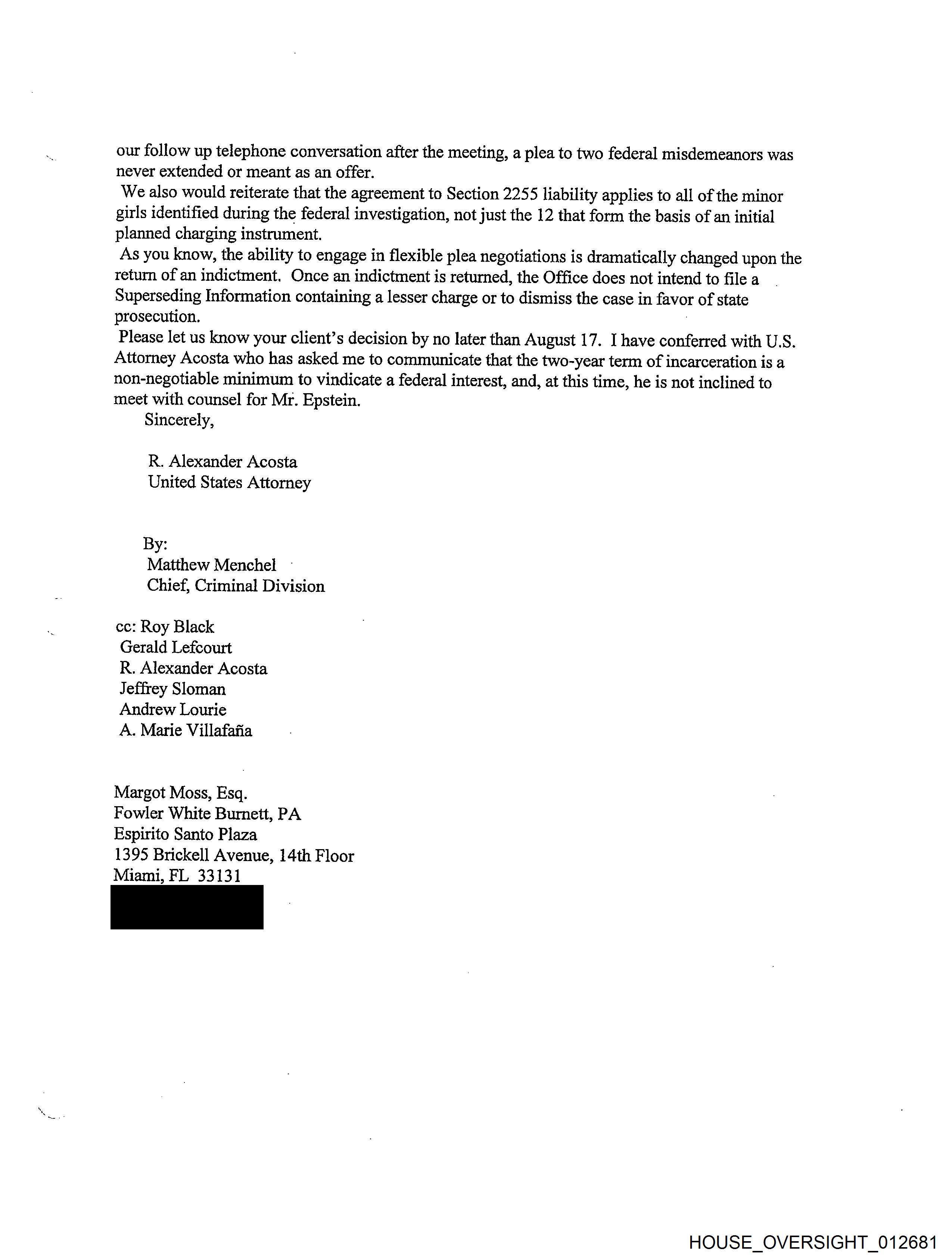
HOUSE_OVERSIGHT_012681

This document reveals a clear intent by federal prosecutors to negotiate a plea deal with Jeffrey Epstein, indicating the serious nature of the charges against him and the involvement of multiple federal officials. The mention of a non-negotiable minimum sentence and the reference to multiple minor victims underscores the gravity of the allegations and the systemic issues within the handling of Epstein's case.

🔑 Key Evidence:
  • the agreement to Section 2255 liability applies to all of the minor girls identified during the federal investigation
  • the two-year term of incarceration is a non-negotiable minimum to vindicate a federal interest
  • the ability to engage in flexible plea negotiations is dramatically changed upon the return of an indictment
👥 Connected Entities:
R. Alexander Acosta Matthew Menchel U.S. Attorney's Office
From: Bates: HOUSE_OVERSIGHT_012681
No comments yet.
#5 Strength: 9.0/10
Document preview

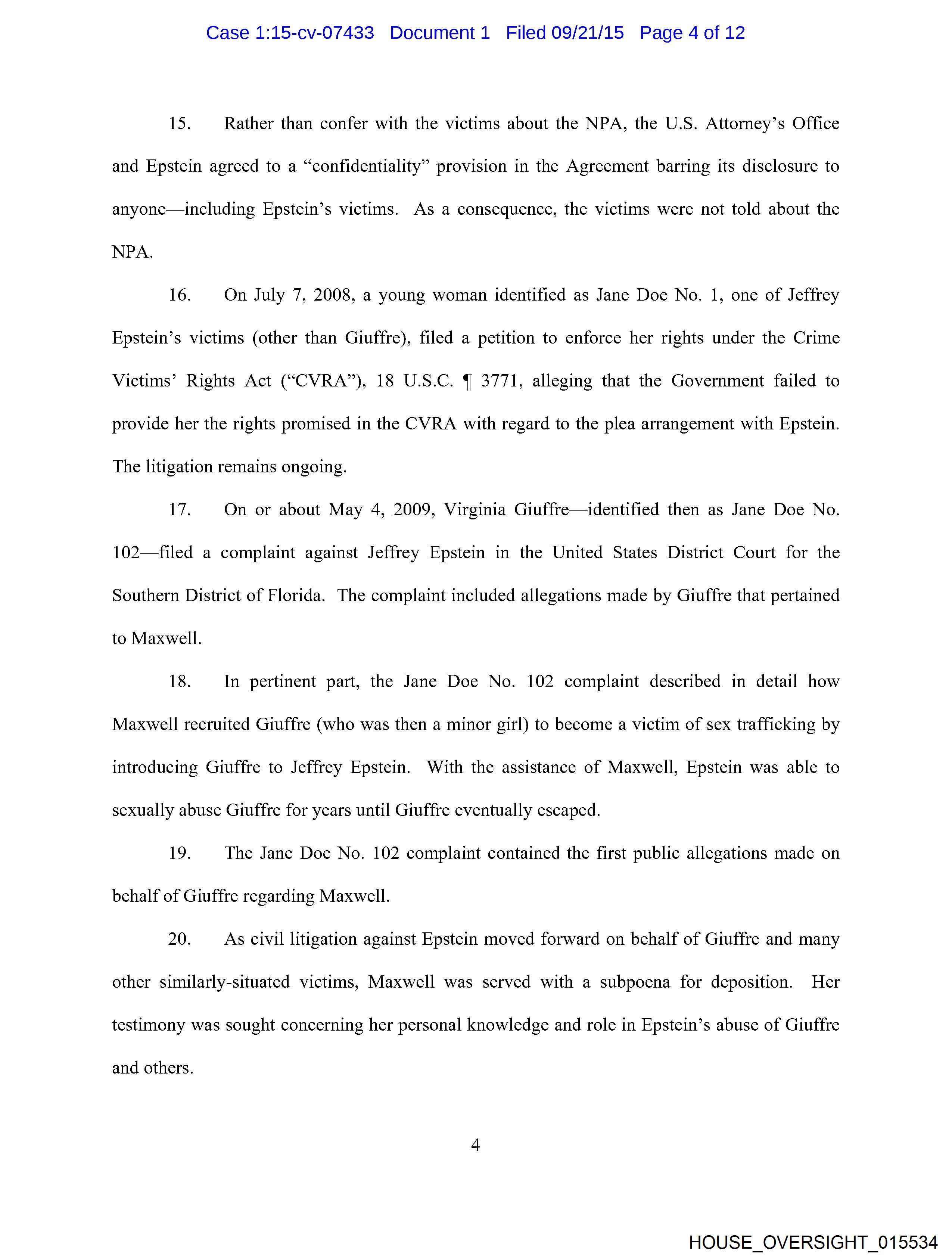
HOUSE_OVERSIGHT_015534

This document reveals significant misconduct by the U.S. Attorney's Office in their handling of Jeffrey Epstein's non-prosecution agreement (NPA), particularly the failure to inform victims about the NPA, which undermines their rights under the Crime Victims’ Rights Act. Additionally, it highlights the role of Ghislaine Maxwell in the recruitment of minors for Epstein's trafficking operations, providing critical context to the broader network of abuse.

🔑 Key Evidence:
  • Rather than confer with the victims about the NPA, the U.S. Attorney’s Office and Epstein agreed to a 'confidentiality' provision in the Agreement barring its disclosure to anyone—including Epstein’s victims.
  • On July 7, 2008, a young woman identified as Jane Doe No. 1... filed a petition to enforce her rights under the Crime Victims’ Rights Act... alleging that the Government failed to provide her the rights promised in the CVRA.
  • The Jane Doe No. 102 complaint described in detail how Maxwell recruited Giuffre (who was then a minor girl) to become a victim of sex trafficking by introducing Giuffre to Jeffrey Epstein.
👥 Connected Entities:
Jeffrey Epstein Ghislaine Maxwell U.S. Attorney's Office
From: Bates: HOUSE_OVERSIGHT_015534
No comments yet.
#6 Strength: 5.0/10
Document preview

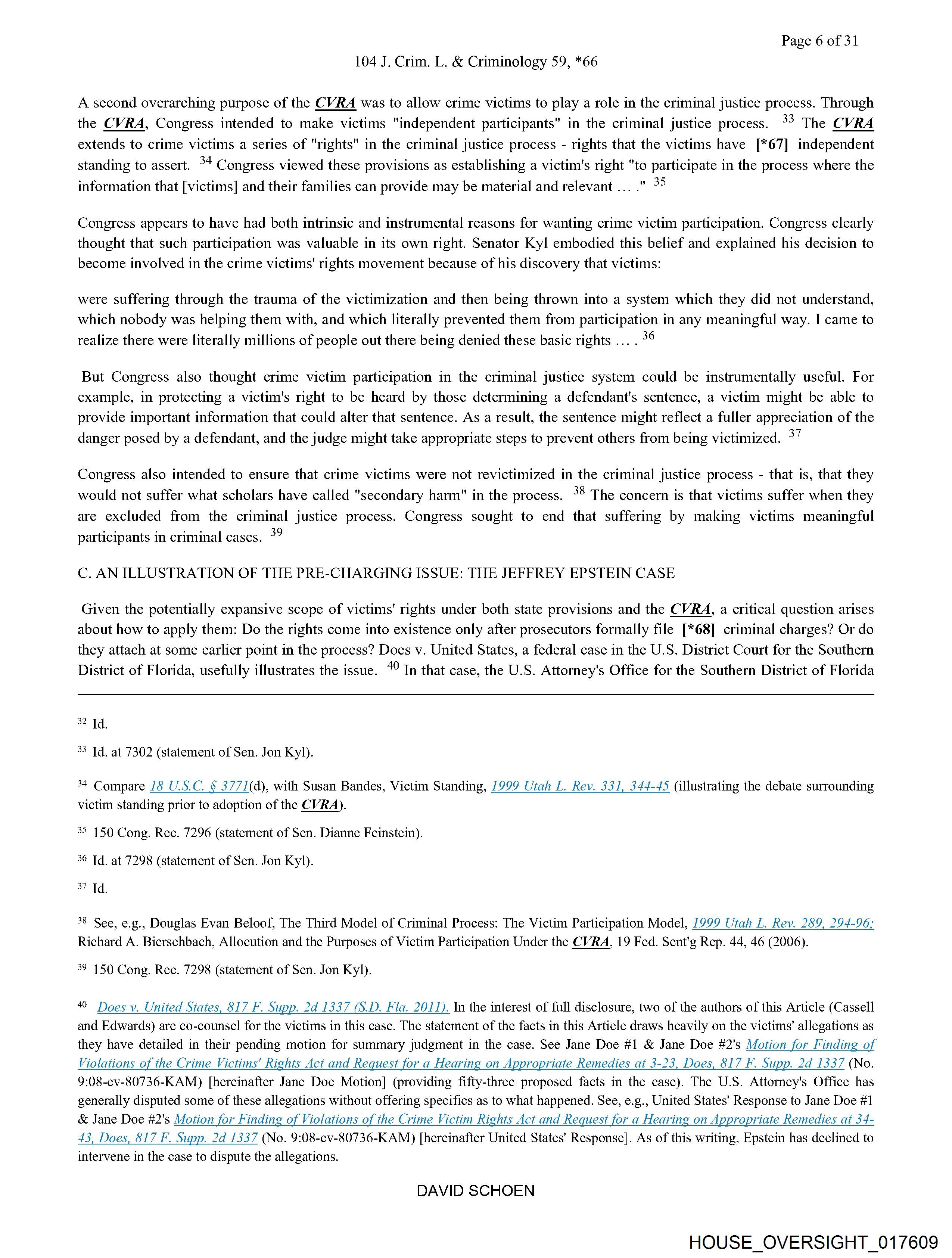
HOUSE_OVERSIGHT_017609

This document highlights the rights of crime victims under the Crime Victims' Rights Act (CVRA) and discusses the importance of victim participation in the criminal justice process. While it does not provide direct evidence of misconduct, it underscores the systemic issues that may have allowed Jeffrey Epstein's alleged crimes to persist without adequate victim support or legal recourse.

🔑 Key Evidence:
  • Congress intended to make victims 'independent participants' in the criminal justice process.
  • Senator Kyl explained his involvement in the crime victims’ rights movement due to the suffering of victims being denied basic rights.
  • The document raises the question of when victims' rights come into existence, particularly in the context of the Epstein case.
👥 Connected Entities:
Senator Jon Kyl U.S. Attorney's Office for the Southern District of Florida Congress
From: Bates: HOUSE_OVERSIGHT_017609
No comments yet.
#7 Strength: 9.0/10
Document preview

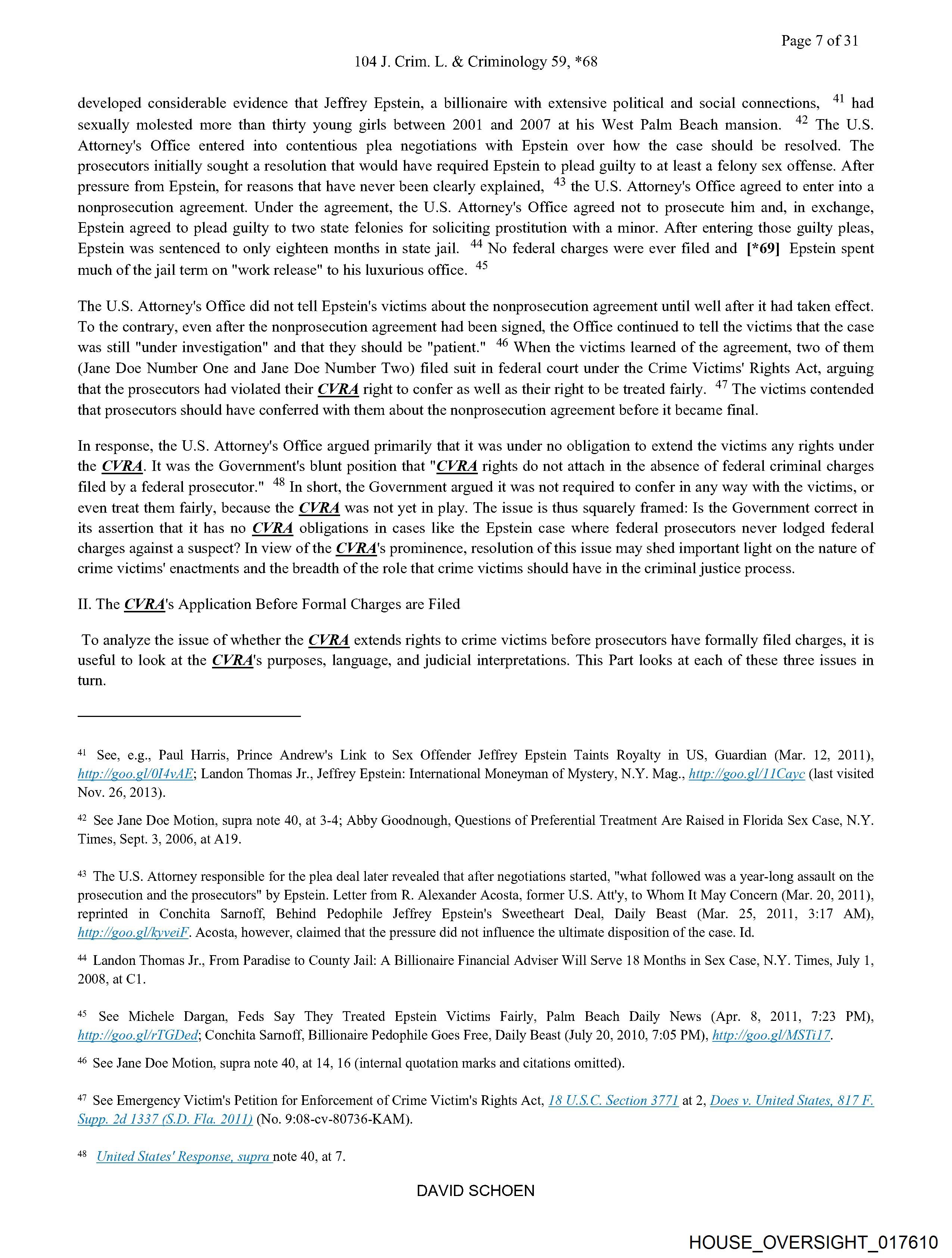
HOUSE_OVERSIGHT_017610

This document reveals significant misconduct by the U.S. Attorney's Office in handling the Epstein case, particularly regarding the nonprosecution agreement that shielded Epstein from federal charges despite overwhelming evidence of his criminal activities. The failure to inform victims about this agreement and the subsequent legal arguments made by the government highlight systemic issues in the treatment of victims' rights within the criminal justice process.

🔑 Key Evidence:
  • The U.S. Attorney's Office entered into a nonprosecution agreement with Epstein, agreeing not to prosecute him despite evidence of sexual molestation of over thirty young girls.
  • The U.S. Attorney's Office did not inform Epstein's victims about the nonprosecution agreement until well after it had taken effect, misleading them about the status of the investigation.
  • The government argued that it was under no obligation to confer with the victims under the Crime Victims’ Rights Act (CVRA) because no federal charges were filed, raising serious questions about the rights of victims in such cases.
👥 Connected Entities:
U.S. Attorney's Office Jane Doe Number One Jane Doe Number Two
From: Bates: HOUSE_OVERSIGHT_017610
No comments yet.
#8 Strength: 4.0/10
Document preview

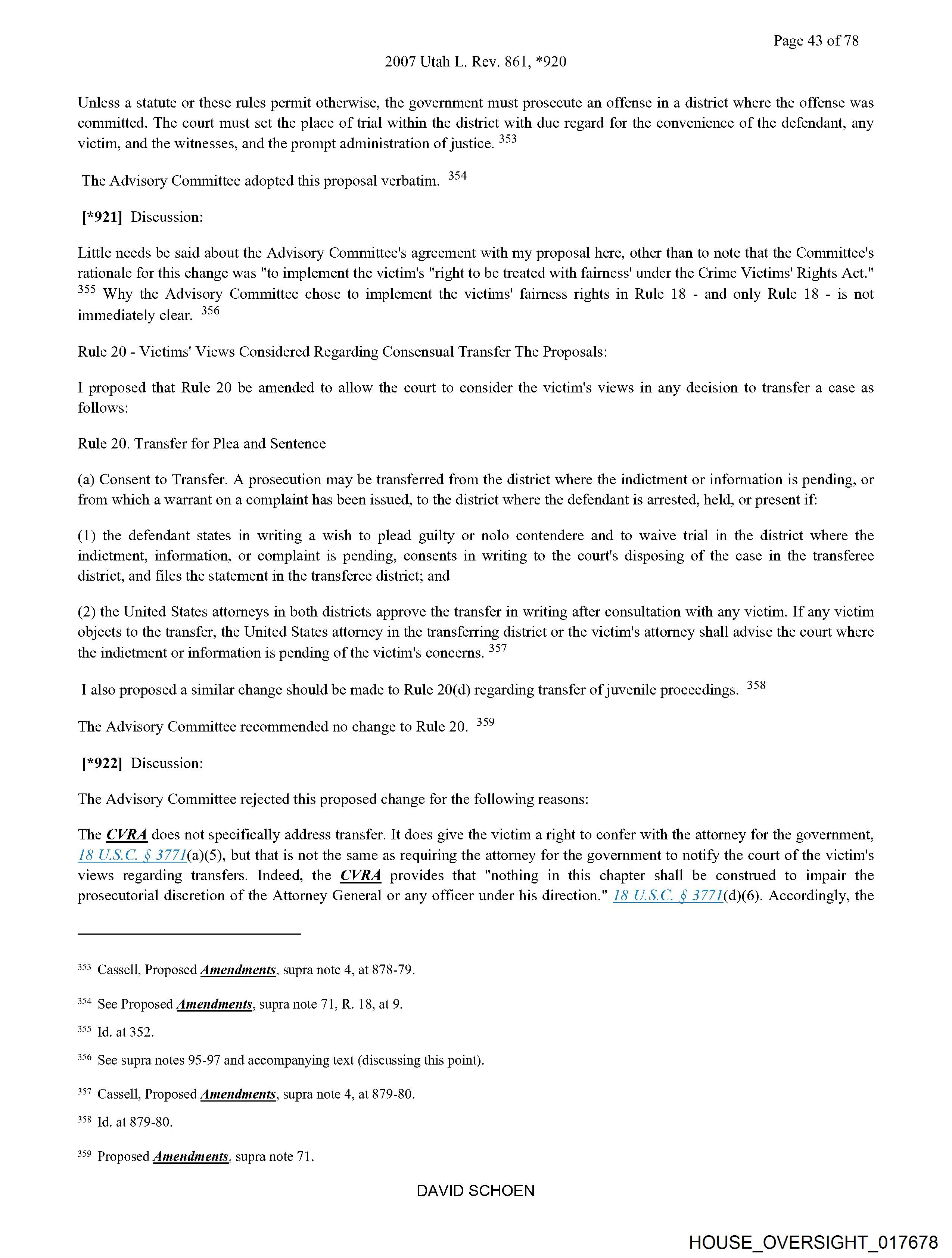
HOUSE_OVERSIGHT_017678

This document primarily discusses procedural rules regarding the rights of victims in the context of criminal prosecutions, particularly focusing on the transfer of cases and the consideration of victims' views. While it does not directly implicate individuals or reveal new evidence of misconduct, it highlights the complexities of victim rights under the Crime Victims' Rights Act (CVRA), which is relevant to understanding the treatment of victims in the Epstein case.

🔑 Key Evidence:
  • The government must prosecute an offense in a district where the offense was committed.
  • The Advisory Committee's rationale for this change was 'to implement the victim's right to be treated with fairness under the Crime Victims' Rights Act.'
  • The CVRA provides that 'nothing in this chapter shall be construed to impair the prosecutorial discretion of the Attorney General or any officer under his direction.'
👥 Connected Entities:
Advisory Committee on Rules Crime Victims' Rights Act (CVRA) U.S. Attorney's Office
From: Bates: HOUSE_OVERSIGHT_017678
No comments yet.
#9 Strength: 5.0/10
Document preview

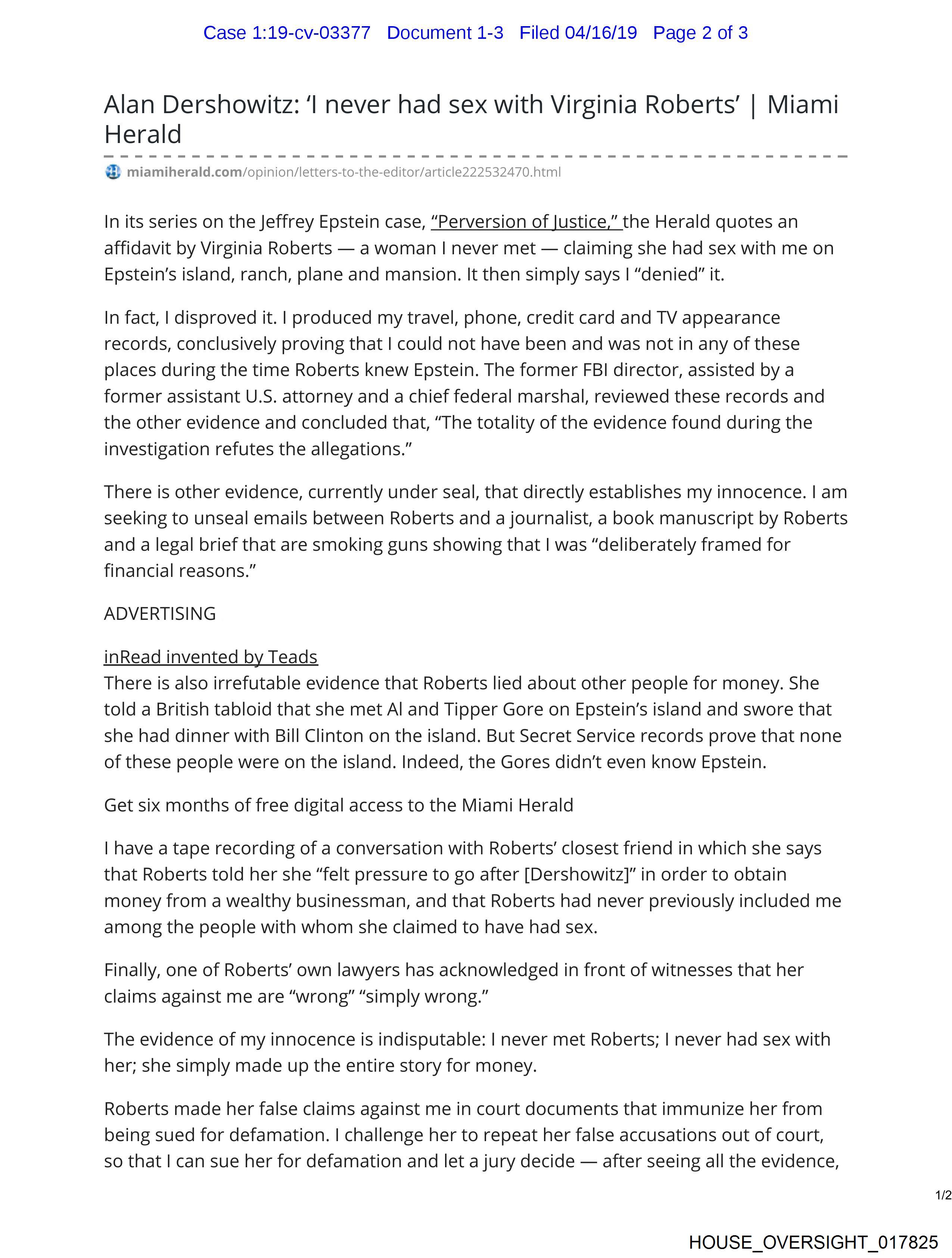
HOUSE_OVERSIGHT_017825

This document is significant as it highlights Alan Dershowitz's vehement denial of allegations made by Virginia Roberts, a key figure in the Epstein case. It reveals potential attempts to discredit victims and suggests a broader narrative of financial motivations behind accusations, which could reflect on the tactics used within the Epstein network.

🔑 Key Evidence:
  • Dershowitz claims he has 'produced my travel, phone, credit card and TV appearance records, conclusively proving that I could not have been and was not in any of these places during the time Roberts knew Epstein.'
  • He states that 'the former FBI director, assisted by a former assistant U.S. attorney and a chief federal marshal, reviewed these records and concluded that, “The totality of the evidence found during the investigation refutes the allegations.”'
  • Dershowitz mentions a tape recording of a conversation with Roberts’ friend, where she claims Roberts felt 'pressure to go after [Dershowitz]' for financial gain.
👥 Connected Entities:
Alan Dershowitz Virginia Roberts Epstein's network
From: Bates: HOUSE_OVERSIGHT_017825
No comments yet.
#10 Strength: 9.0/10
Document preview

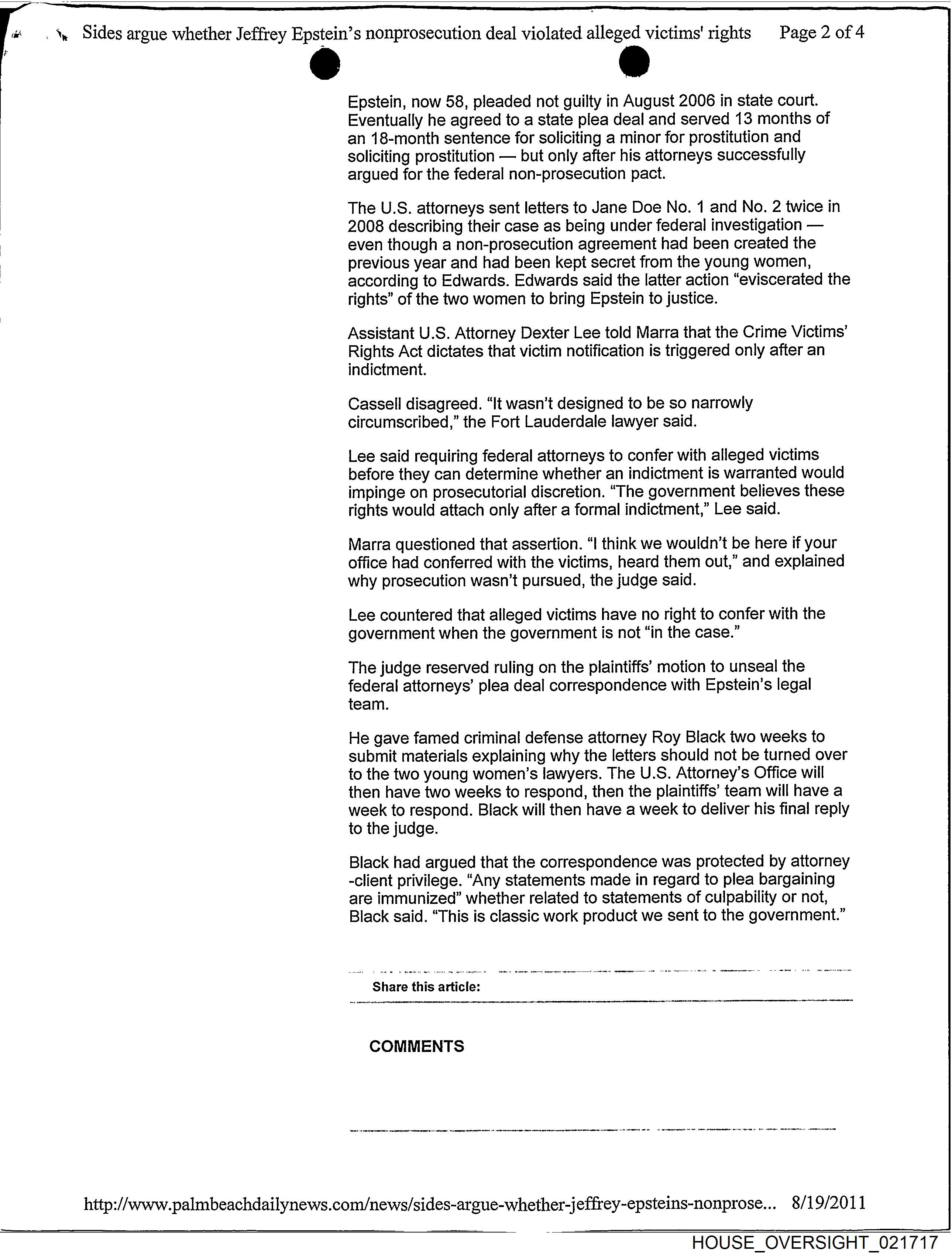
HOUSE_OVERSIGHT_021717

This document highlights significant procedural failures in the handling of Jeffrey Epstein's case, particularly regarding the rights of alleged victims. The correspondence between U.S. attorneys and Epstein's legal team raises serious questions about the transparency and fairness of the judicial process, suggesting potential misconduct in the non-prosecution agreement that may have shielded Epstein from accountability.

🔑 Key Evidence:
  • The U.S. attorneys sent letters to Jane Doe No. 1 and No. 2 twice in 2008 describing their case as being under federal investigation — even though a non-prosecution agreement had been created the previous year and had been kept secret from the young women.
  • Edwards said the latter action 'eviscerated the rights' of the two women to bring Epstein to justice.
  • Assistant U.S. Attorney Dexter Lee stated that the Crime Victims’ Rights Act dictates that victim notification is triggered only after an indictment, which raises concerns about the victims' rights being overlooked.
👥 Connected Entities:
Jeffrey Epstein U.S. Attorney's Office Assistant U.S. Attorney Dexter Lee
From: Bates: HOUSE_OVERSIGHT_021717
No comments yet.
#11 Strength: 8.0/10
Document preview

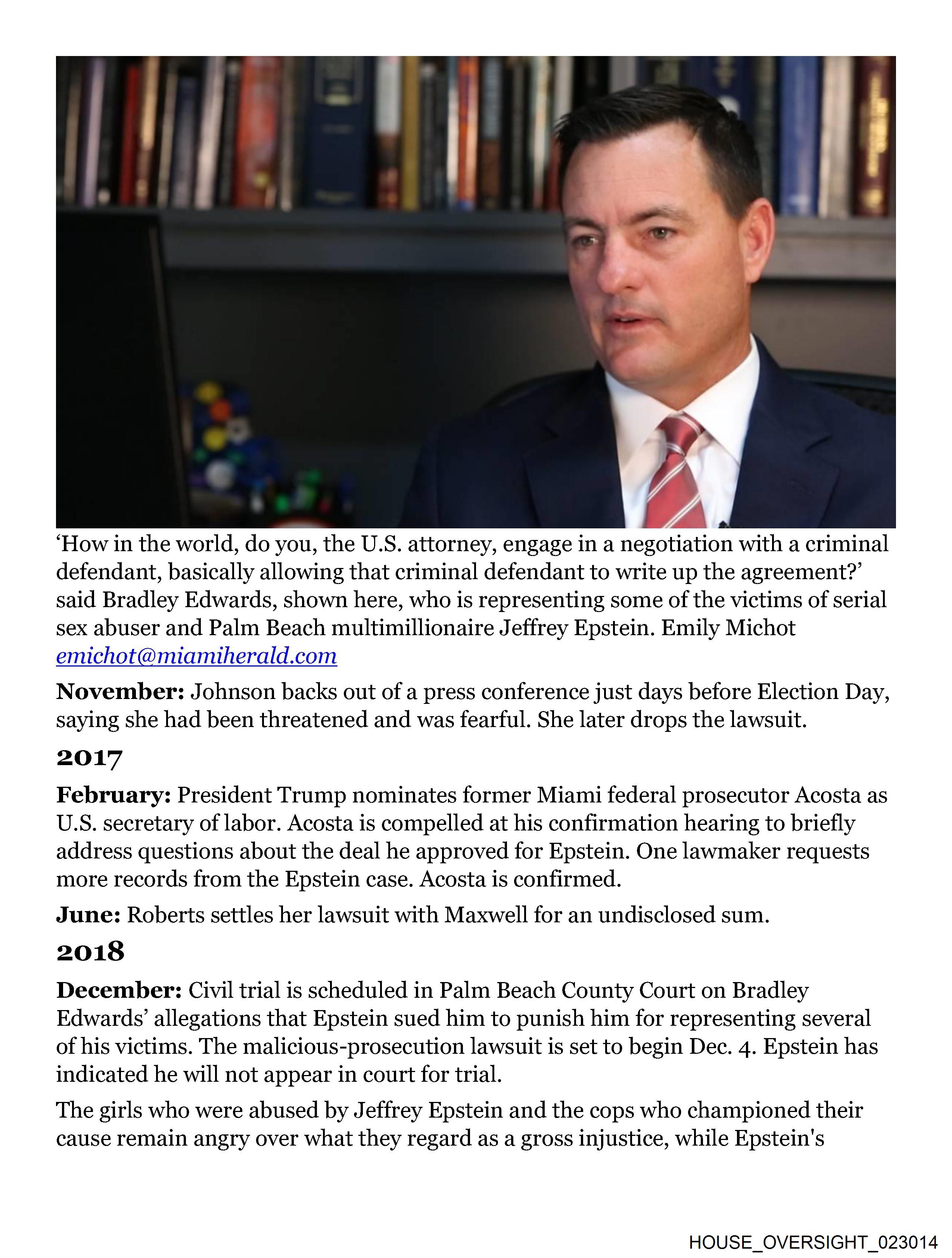
HOUSE_OVERSIGHT_023014

This document highlights significant concerns regarding the handling of Jeffrey Epstein's case, particularly the questionable negotiation practices by U.S. attorneys and the intimidation faced by victims. It underscores systemic issues in the legal process that may have allowed Epstein to evade accountability, revealing potential corruption and misconduct within the judicial system.

🔑 Key Evidence:
  • Bradley Edwards questions the integrity of the negotiation process, stating, 'How in the world, do you, the U.S. attorney, engage in a negotiation with a criminal defendant, basically allowing that criminal defendant to write up the agreement?'
  • The mention of a victim, Johnson, backing out of a press conference due to threats indicates intimidation tactics used against victims.
  • The document references a civil trial set for December 2018 regarding Epstein's alleged malicious prosecution of Edwards for representing victims, suggesting retaliatory actions against those who sought justice.
👥 Connected Entities:
Bradley Edwards U.S. Attorney's Office President Trump
From: Bates: HOUSE_OVERSIGHT_023014
No comments yet.
#12 Strength: 9.0/10
Document preview

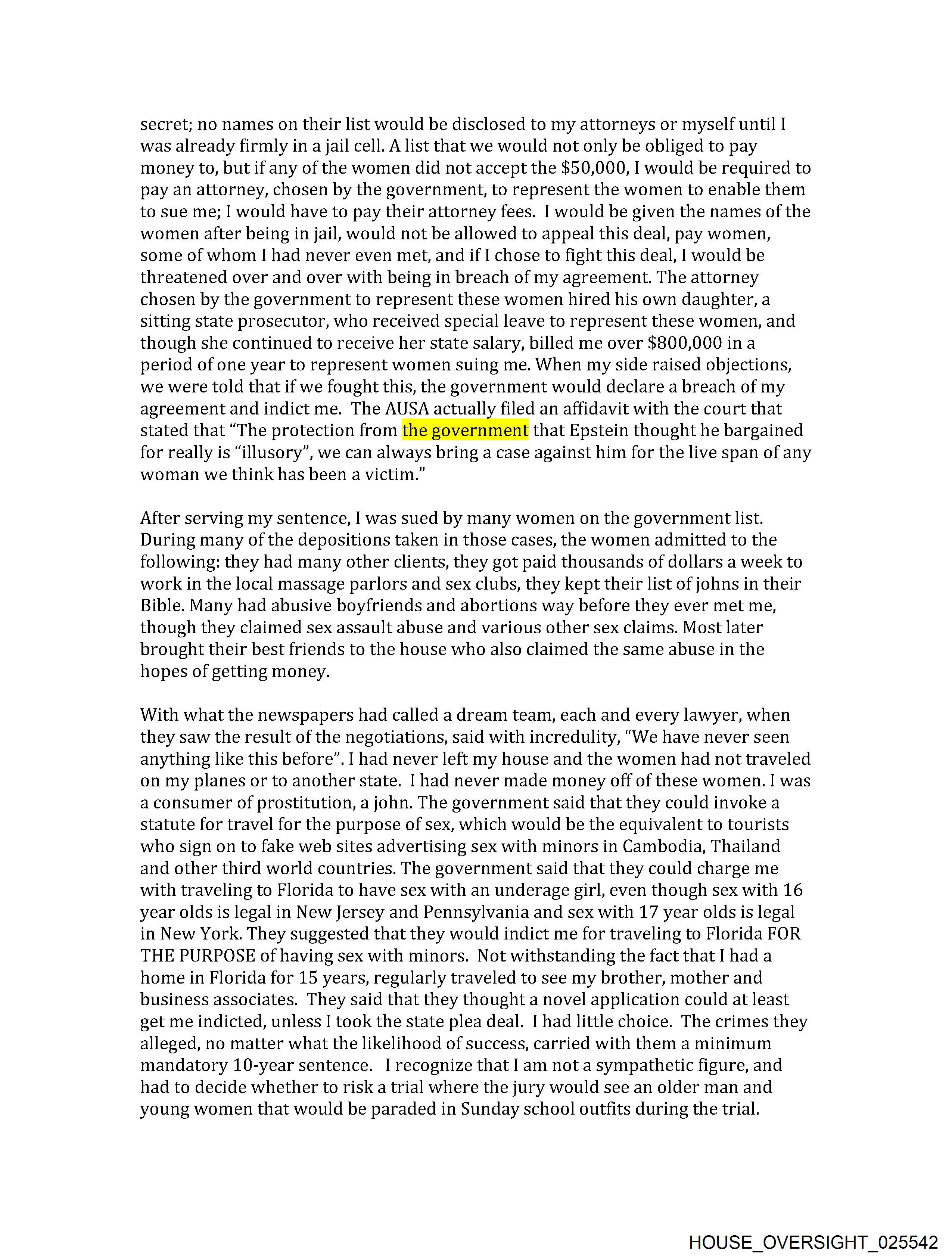
HOUSE_OVERSIGHT_025542

This document reveals significant concerns regarding the legal and financial manipulations surrounding Jeffrey Epstein's case, particularly the coercive tactics employed by the government and the questionable representation of victims. It highlights potential corruption in the legal process and raises serious questions about the integrity of the agreements made with Epstein.

🔑 Key Evidence:
  • A list that we would not only be obliged to pay money to, but if any of the women did not accept the $50,000, I would be required to pay an attorney, chosen by the government, to represent the women to enable them to sue me.
  • The attorney chosen by the government to represent these women hired his own daughter, a sitting state prosecutor, who received special leave to represent these women.
  • The AUSA actually filed an affidavit with the court that stated that 'The protection from the government that Epstein thought he bargained for really is “illusory”.'
👥 Connected Entities:
U.S. Attorney's Office State Prosecutor's Office Victims represented by the government
From: Bates: HOUSE_OVERSIGHT_025542
No comments yet.
#13 Strength: 5.0/10
Document preview

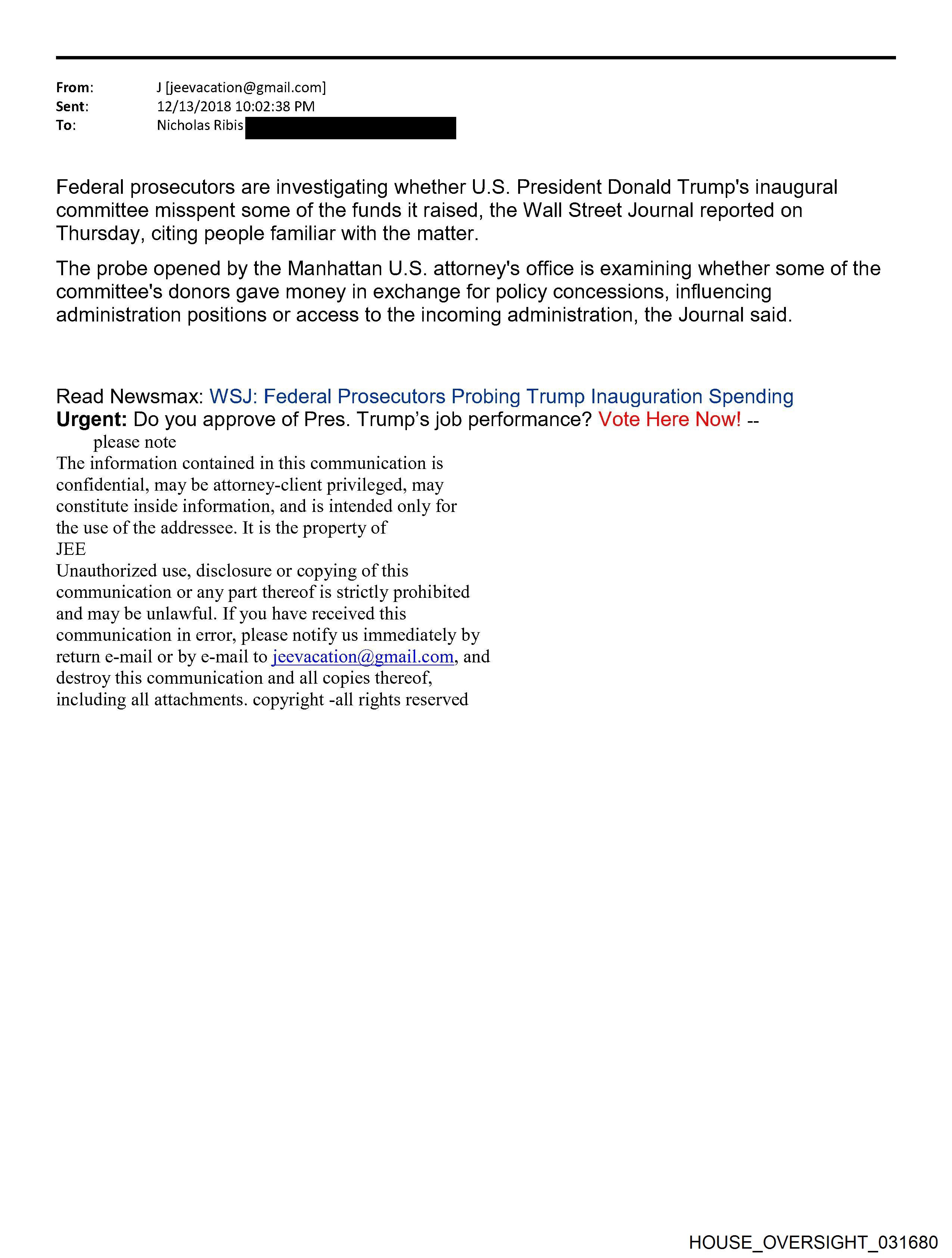
HOUSE_OVERSIGHT_031680

This document highlights an investigation into the Trump inaugural committee's financial activities, suggesting potential misconduct related to donor influence and policy concessions. While it does not directly implicate Epstein or his network, it raises concerns about the intertwining of political and financial interests that could relate to broader investigations involving Epstein's connections.

🔑 Key Evidence:
  • Federal prosecutors are investigating whether U.S. President Donald Trump's inaugural committee misspent some of the funds it raised.
  • The probe is examining whether some of the committee's donors gave money in exchange for policy concessions.
  • The investigation is being conducted by the Manhattan U.S. attorney's office.
👥 Connected Entities:
Donald Trump Trump inaugural committee Manhattan U.S. attorney's office
From: J [jeevacation@gmail.com] Bates: HOUSE_OVERSIGHT_031680
No comments yet.